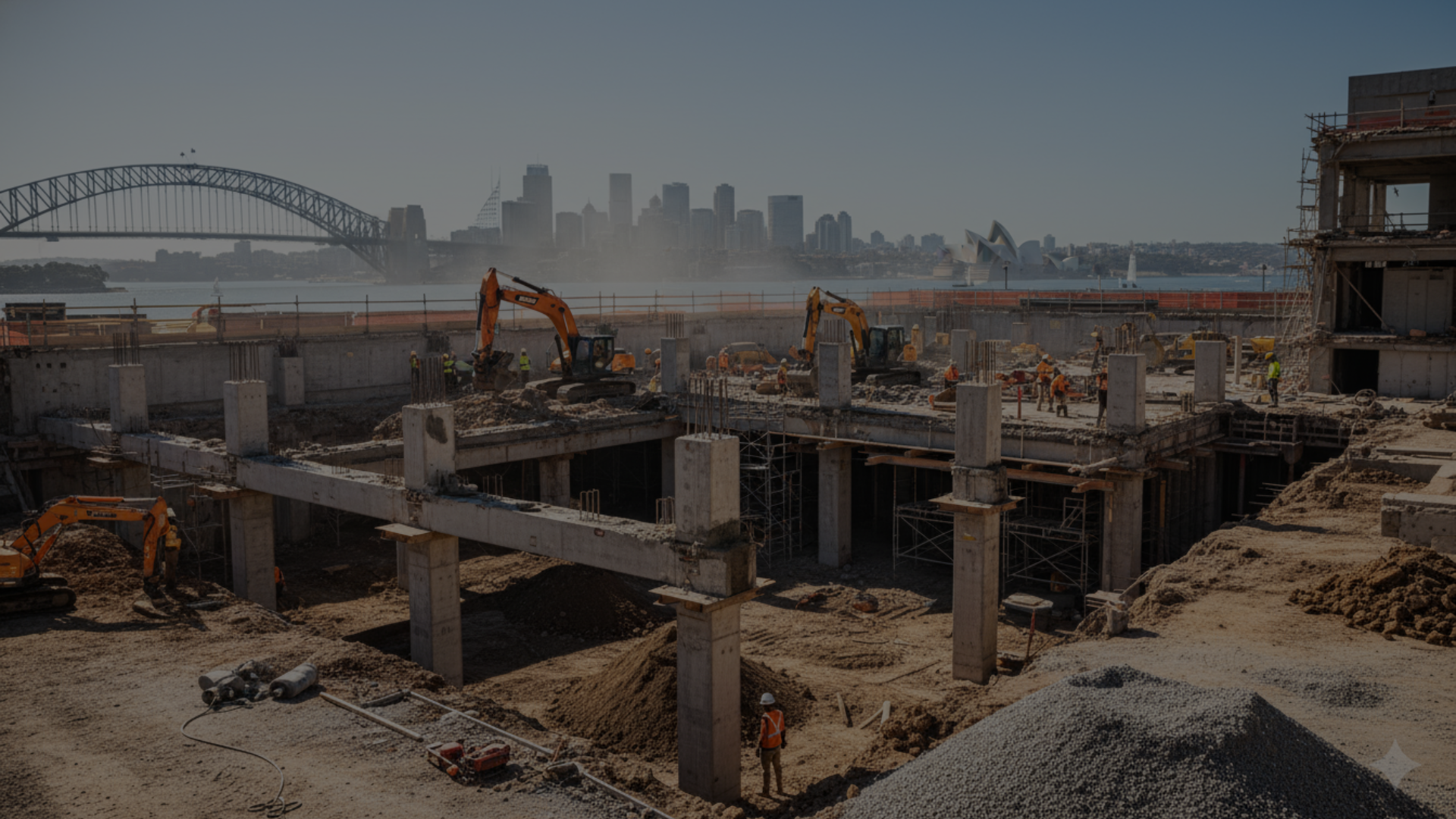
The footings are where a building meets the ground, and where a surprising number of structural problems begin. When footings crack, corrode, or settle — or when the ground beneath them shrinks and swells with the seasons — the movement travels up through the building as cracking, sticking doors, and uneven floors. Foundation and footing repair stabilises the base so the building above stops moving.
Our service restores compromised foundations and footings: repairing and reconstructing failed footing elements, tying in new support where footings are inadequate, and managing the subsurface moisture and drainage that drive reactive-clay movement in Sydney's soils. The right combination depends on why the footing failed, which is why we diagnose before we repair.
Footing repair and underpinning often work together — footing repair restores the footing element itself, while underpinning extends support to deeper, stable ground — and we specify whichever the ground and the loads actually require.
How We Repair Foundations & Footings
- Diagnose the cause. We establish why the footing has failed — inadequate size, deterioration, reactive-clay movement, drainage, or nearby trees — with structural and, where needed, geotechnical assessment.
- Design the repair. A structural engineer specifies the repair: footing reconstruction or widening, crack repair, tie-in to new support, and any underpinning required.
- Repair or reconstruct the footing. Failed footing concrete is repaired or reconstructed, reinforcement is treated and reinstated, and new footing capacity is provided where the original was inadequate.
- Manage moisture and drainage. Where reactive clay is the driver, subsurface drainage and moisture control are addressed so the ground movement that caused the problem is reduced.
- Monitor to confirm. Levels are monitored to verify the movement has stopped and the base is stable.
What Drives Footing Failure
- Inadequate or deteriorated footings — undersized or degraded over time.
- Reactive-clay movement — seasonal shrink-swell under the footing.
- Drainage and moisture — leaking services and poor site drainage.
- Tree roots — drying and disturbing the founding soil.
Frequently Asked Questions
What is the difference between footing repair and underpinning?
Footing repair restores the footing element itself — repairing or reconstructing failed concrete, reinstating reinforcement, or widening an inadequate footing. Underpinning extends support beneath the footing to reach deeper, competent ground. They are often used together, and which you need depends on whether the footing has failed, the ground has failed, or both. Our assessment makes that call.
Will fixing drainage really stop the cracking?
Where the movement is driven by reactive clay drying and swelling, managing subsurface moisture and drainage can be a decisive part of the fix — because it reduces the ground movement that is loading the footing. It is rarely the whole answer on its own, but ignoring it is a common reason footing repairs don't last. We address the moisture driver alongside the structural repair.
Can footing repairs be done without major disruption?
In most cases, yes. Footing works are carried out from outside or within basements and sequenced in controlled sections, so the building stays occupied. The extent of disruption depends on access and the scale of the repair, which we set out clearly before works begin.
Is footing repair a strata common-property responsibility?
Yes — foundations and footings are common property, so their repair is an owners corporation responsibility under the NSW Strata Schemes Management Act 2015, typically funded as capital works. We provide the engineered scope and costings the committee needs to authorise and plan the works.
Related Services
Foundation and footing repair stabilises the base so the building above stops moving — diagnosed properly and engineered to the ground. As a Class 2 Registered Builder with over 10 years of remedial experience across Sydney, Atomic Projects delivers footing repairs designed with structural and geotechnical input. Call us on 0410 515 509 or email hello@atomicprojects.com.au to arrange an assessment.