Atomic Projects white logo

Get Your Free E Book

23 Pages of Exclusive Trade Secrets
Thank you! Your submission has been received!
Oops! Something went wrong while submitting the form.
Limited Time Only

Building Condition Assessments: What They Cover and Why Your Building Needs One

Every building ages. Concrete cracks, membranes fail, steel corrodes, and joints deteriorate — often in places nobody looks until something goes wrong. A building condition assessment is the most effective way to understand what's actually happening inside your building's structure before minor defects become major liabilities.

Yet many building owners, strata committees, and facilities managers only commission an assessment after water starts coming through ceilings or a façade panel comes loose. By that point, the scope of remedial work — and the cost — has typically multiplied. This guide explains what a building condition assessment actually covers, when you need one, and how it feeds into a practical remedial plan.

What Is a Building Condition Assessment?

A building condition assessment is a systematic, visual and technical inspection of a building's key structural and non-structural elements. It produces a clear picture of the building's current state, identifies defects, and prioritises repairs based on urgency and risk.

Unlike a basic maintenance inspection, a condition assessment goes deeper. It evaluates the structural integrity of concrete, steel, and masonry elements. It checks waterproofing systems on roofs, balconies, podiums, and basements. It examines façade conditions, expansion joints, sealants, and drainage. And it flags compliance issues — fire safety systems, accessibility, and building code requirements that may have changed since construction.

The output is typically a detailed report with photographic evidence, defect severity ratings, and a recommended scope of remedial works. For strata buildings, this report becomes the foundation of a capital works plan — a requirement under NSW strata legislation that many schemes still don't have in place.

According to the 2023 NSW Strata Defects Survey, 53% of strata buildings have serious defects in common property, up from 39% in 2021. Waterproofing failures account for 42% of these serious defects. A condition assessment is how you find out whether your building is part of that statistic — or whether you're ahead of the curve.

What Does the Assessment Actually Cover?

A thorough building condition assessment examines five core areas. Each one tells you something different about the building's health and what needs attention.

Structural Elements

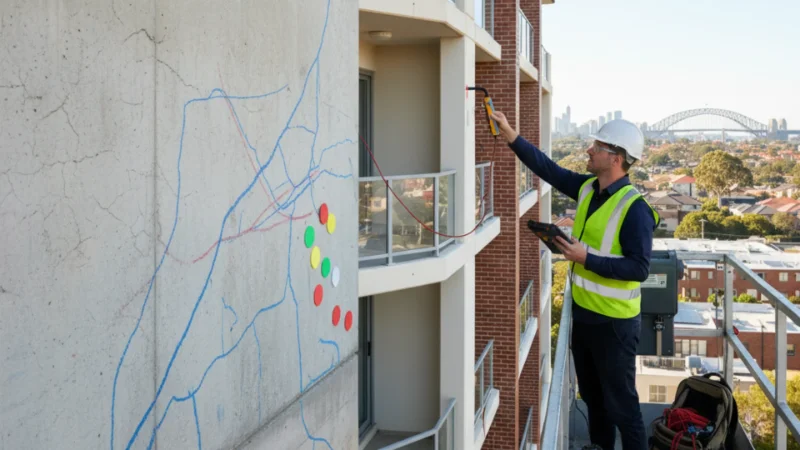
This is the foundation of any assessment — literally. Inspectors examine concrete slabs, beams, columns, load-bearing walls, and foundations for signs of structural damage. They look for cracking patterns (and whether cracks are active or dormant), spalling concrete, exposed reinforcement, and signs of carbonation or chloride attack.

Structural defects are rarely cosmetic. A crack that looks superficial on the surface can indicate reinforcement corrosion underneath, which compromises the load-carrying capacity of the element. Early detection through a condition assessment is the difference between a targeted concrete repair and a full structural remediation program. If you're unsure what to look for, our guide to warning signs of structural damage covers the most common indicators.

Waterproofing and Moisture Ingress

Water is the single biggest threat to building longevity. The assessment checks all waterproofing membranes — on roofs, balconies, planter boxes, wet areas, and below-ground structures — for failure, deterioration, or incorrect installation.

Inspectors look for early signs of moisture damage: efflorescence (white salt deposits on concrete), staining, mould growth, bubbling paint, and damp patches. They also assess drainage systems and falls to identify areas where water is ponding rather than draining — a common precursor to membrane failure.

The numbers tell the story: 85–97% of insurance claims on multi-residential buildings involve water-related defects, with balconies being the most common source of failure. A condition assessment identifies these issues before they trigger insurance claims, tenant complaints, or internal damage to apartments. When membranes have failed, waterproofing repairs need to be scoped and prioritised before water causes secondary structural damage.

Building Envelope and Façade

The building envelope — external walls, cladding, windows, sealants, and expansion joints — is your building's first line of defence against weather. The assessment examines the condition of façade materials, checks for cracking or delamination, and evaluates whether sealants and joints are still performing.

For buildings over 10–15 years old, sealant failure is almost guaranteed. Original silicone and polyurethane sealants have a finite lifespan, and once they fail, water finds its way into the building structure. This is one of the most commonly overlooked defects — and one of the easiest to address when caught early.

Services and Safety Systems

While the primary focus is building fabric, a good condition assessment also reviews mechanical and electrical services that affect building safety. Fire systems, emergency lighting, smoke detection, and essential services compliance are checked against current Australian Standards.

Fire safety defects appeared in 24% of buildings surveyed in the 2023 NSW Strata Defects Survey — the second most common category after waterproofing. Non-compliance with fire safety requirements isn't just a building defect; it's a legal liability for the owners corporation and committee members.

Common Areas and External Works

Finally, the assessment covers common property areas — car parks, driveways, pathways, retaining walls, landscaping infrastructure, and stormwater systems. These areas often deteriorate quietly because they're not part of anyone's daily routine. Carpark waterproofing failures alone can cost upwards of $1.5 million to remediate when left unaddressed.

When Should You Commission an Assessment?

There's no single trigger, but several situations make a building condition assessment essential rather than optional.

Age-based timing is the most straightforward. Buildings approaching 10 years should have their first comprehensive assessment. After that, assessments every 5–7 years keep the capital works plan current and prevent deferred maintenance from compounding.

Before major expenditure decisions is another critical trigger. If your strata committee is considering a special levy for repairs, a condition assessment ensures the money goes to the right places — and that nothing critical is missed.

After weather events or visible defects should prompt an immediate assessment. If you're noticing new cracks, water stains, or movement in the building, don't wait for the scheduled review. Early investigation almost always reduces the final repair cost.

When purchasing or selling a building, a condition assessment protects both parties. Buyers understand what they're taking on. Sellers can demonstrate the building's condition transparently.

How an Assessment Feeds Into Remedial Works

A building condition assessment isn't an end in itself — it's the starting point for action. The assessment report prioritises defects into categories: urgent (safety risk or active deterioration), short-term (address within 12 months), medium-term (1–3 years), and long-term (3–10 years).

This prioritisation allows building managers and strata committees to plan remedial works strategically, spread costs across financial years, and avoid the reactive cycle of emergency repairs that always costs more than planned maintenance.

For strata buildings, the assessment report directly informs the 10-year capital works fund plan — helping committees set levy contributions at the right level and avoid special levies that catch owners off guard.

The Cost of Waiting

The pattern we see most often is buildings where minor defects were noticed years ago but deferred because they didn't seem urgent. By the time the building gets a proper condition assessment, the scope has expanded significantly.

A waterproofing membrane that could have been patched for $15,000 has now caused corrosion to the slab reinforcement, requiring $200,000 in structural repairs. A cracked sealant joint that would have cost $5,000 to replace has allowed water into the façade cavity, requiring a full façade remediation. We see this pattern repeatedly — the dangers of delaying structural repairs compound faster than most building owners expect.

The average cost of remedial defect rectification per NSW apartment building is approximately $1.7 million. Much of that cost accumulates because defects weren't identified and addressed early enough.

A building condition assessment is the most cost-effective investment a building owner can make. It replaces guesswork with data, turns reactive maintenance into planned remediation, and protects both the building's structural integrity and its long-term value.

If your building hasn't had a condition assessment — or if the last one was more than five years ago — now is the time to get one done before autumn and winter weather tests every weakness in the building envelope.

Need a building condition assessment for your Sydney property? Get in touch with the Atomic Projects team for a no-obligation discussion about your building's needs.

Building Condition Assessments: What They Cover and Why Your Building Needs One

Every building ages. Concrete cracks, membranes fail, steel corrodes, and joints deteriorate — often in places nobody looks until something goes wrong. A building condition assessment is the most effective way to understand what's actually happening inside your building's structure before minor defects become major liabilities.

Yet many building owners, strata committees, and facilities managers only commission an assessment after water starts coming through ceilings or a façade panel comes loose. By that point, the scope of remedial work — and the cost — has typically multiplied. This guide explains what a building condition assessment actually covers, when you need one, and how it feeds into a practical remedial plan.

What Is a Building Condition Assessment?

A building condition assessment is a systematic, visual and technical inspection of a building's key structural and non-structural elements. It produces a clear picture of the building's current state, identifies defects, and prioritises repairs based on urgency and risk.

Unlike a basic maintenance inspection, a condition assessment goes deeper. It evaluates the structural integrity of concrete, steel, and masonry elements. It checks waterproofing systems on roofs, balconies, podiums, and basements. It examines façade conditions, expansion joints, sealants, and drainage. And it flags compliance issues — fire safety systems, accessibility, and building code requirements that may have changed since construction.

The output is typically a detailed report with photographic evidence, defect severity ratings, and a recommended scope of remedial works. For strata buildings, this report becomes the foundation of a capital works plan — a requirement under NSW strata legislation that many schemes still don't have in place.

According to the 2023 NSW Strata Defects Survey, 53% of strata buildings have serious defects in common property, up from 39% in 2021. Waterproofing failures account for 42% of these serious defects. A condition assessment is how you find out whether your building is part of that statistic — or whether you're ahead of the curve.

What Does the Assessment Actually Cover?

A thorough building condition assessment examines five core areas. Each one tells you something different about the building's health and what needs attention.

Structural Elements

This is the foundation of any assessment — literally. Inspectors examine concrete slabs, beams, columns, load-bearing walls, and foundations for signs of structural damage. They look for cracking patterns (and whether cracks are active or dormant), spalling concrete, exposed reinforcement, and signs of carbonation or chloride attack.

Structural defects are rarely cosmetic. A crack that looks superficial on the surface can indicate reinforcement corrosion underneath, which compromises the load-carrying capacity of the element. Early detection through a condition assessment is the difference between a targeted concrete repair and a full structural remediation program. If you're unsure what to look for, our guide to warning signs of structural damage covers the most common indicators.

Waterproofing and Moisture Ingress

Water is the single biggest threat to building longevity. The assessment checks all waterproofing membranes — on roofs, balconies, planter boxes, wet areas, and below-ground structures — for failure, deterioration, or incorrect installation.

Inspectors look for early signs of moisture damage: efflorescence (white salt deposits on concrete), staining, mould growth, bubbling paint, and damp patches. They also assess drainage systems and falls to identify areas where water is ponding rather than draining — a common precursor to membrane failure.

The numbers tell the story: 85–97% of insurance claims on multi-residential buildings involve water-related defects, with balconies being the most common source of failure. A condition assessment identifies these issues before they trigger insurance claims, tenant complaints, or internal damage to apartments. When membranes have failed, waterproofing repairs need to be scoped and prioritised before water causes secondary structural damage.

Building Envelope and Façade

The building envelope — external walls, cladding, windows, sealants, and expansion joints — is your building's first line of defence against weather. The assessment examines the condition of façade materials, checks for cracking or delamination, and evaluates whether sealants and joints are still performing.

For buildings over 10–15 years old, sealant failure is almost guaranteed. Original silicone and polyurethane sealants have a finite lifespan, and once they fail, water finds its way into the building structure. This is one of the most commonly overlooked defects — and one of the easiest to address when caught early.

Services and Safety Systems

While the primary focus is building fabric, a good condition assessment also reviews mechanical and electrical services that affect building safety. Fire systems, emergency lighting, smoke detection, and essential services compliance are checked against current Australian Standards.

Fire safety defects appeared in 24% of buildings surveyed in the 2023 NSW Strata Defects Survey — the second most common category after waterproofing. Non-compliance with fire safety requirements isn't just a building defect; it's a legal liability for the owners corporation and committee members.

Common Areas and External Works

Finally, the assessment covers common property areas — car parks, driveways, pathways, retaining walls, landscaping infrastructure, and stormwater systems. These areas often deteriorate quietly because they're not part of anyone's daily routine. Carpark waterproofing failures alone can cost upwards of $1.5 million to remediate when left unaddressed.

When Should You Commission an Assessment?

There's no single trigger, but several situations make a building condition assessment essential rather than optional.

Age-based timing is the most straightforward. Buildings approaching 10 years should have their first comprehensive assessment. After that, assessments every 5–7 years keep the capital works plan current and prevent deferred maintenance from compounding.

Before major expenditure decisions is another critical trigger. If your strata committee is considering a special levy for repairs, a condition assessment ensures the money goes to the right places — and that nothing critical is missed.

After weather events or visible defects should prompt an immediate assessment. If you're noticing new cracks, water stains, or movement in the building, don't wait for the scheduled review. Early investigation almost always reduces the final repair cost.

When purchasing or selling a building, a condition assessment protects both parties. Buyers understand what they're taking on. Sellers can demonstrate the building's condition transparently.

How an Assessment Feeds Into Remedial Works

A building condition assessment isn't an end in itself — it's the starting point for action. The assessment report prioritises defects into categories: urgent (safety risk or active deterioration), short-term (address within 12 months), medium-term (1–3 years), and long-term (3–10 years).

This prioritisation allows building managers and strata committees to plan remedial works strategically, spread costs across financial years, and avoid the reactive cycle of emergency repairs that always costs more than planned maintenance.

For strata buildings, the assessment report directly informs the 10-year capital works fund plan — helping committees set levy contributions at the right level and avoid special levies that catch owners off guard.

The Cost of Waiting

The pattern we see most often is buildings where minor defects were noticed years ago but deferred because they didn't seem urgent. By the time the building gets a proper condition assessment, the scope has expanded significantly.

A waterproofing membrane that could have been patched for $15,000 has now caused corrosion to the slab reinforcement, requiring $200,000 in structural repairs. A cracked sealant joint that would have cost $5,000 to replace has allowed water into the façade cavity, requiring a full façade remediation. We see this pattern repeatedly — the dangers of delaying structural repairs compound faster than most building owners expect.

The average cost of remedial defect rectification per NSW apartment building is approximately $1.7 million. Much of that cost accumulates because defects weren't identified and addressed early enough.

A building condition assessment is the most cost-effective investment a building owner can make. It replaces guesswork with data, turns reactive maintenance into planned remediation, and protects both the building's structural integrity and its long-term value.

If your building hasn't had a condition assessment — or if the last one was more than five years ago — now is the time to get one done before autumn and winter weather tests every weakness in the building envelope.

Need a building condition assessment for your Sydney property? Get in touch with the Atomic Projects team for a no-obligation discussion about your building's needs.

Take the next step.

Fill out the form below and let's build something that lasts.

Phone: Call us at 0410 515 509

Email: Send us a message at hello@atomicprojects.com.au

Form: Fill out the form — we usually respond within 1 business day.

Max file size 10MB.
Uploading...
fileuploaded.jpg
Upload failed. Max size for files is 10 MB.
Thank you! Your submission has been received!
Oops! Something went wrong while submitting the form.