


The DBP Act expands to Class 3 and 9c buildings from 1 July 2026. Here's what strata managers need to know about remedial works compliance — from the perspective of a registered remedial building contractor.
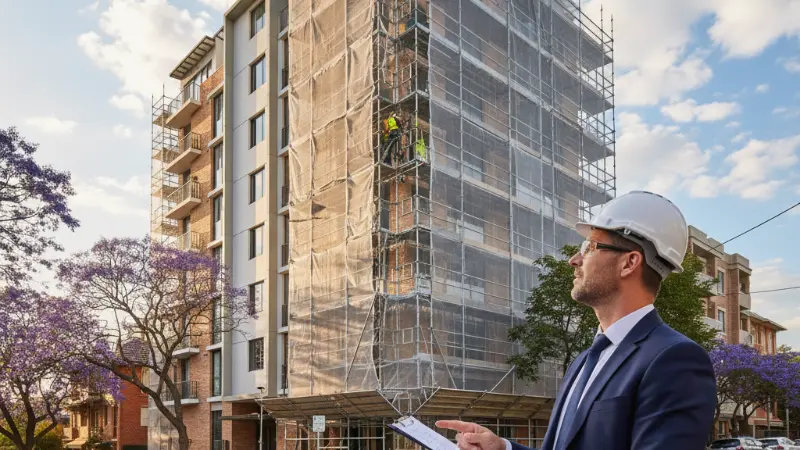
From 1 July 2026, the NSW Design and Building Practitioners (DBP) Act 2020 extends beyond residential apartment buildings to cover Class 3 and Class 9c buildings. That includes boarding houses, student accommodation, hotels, and aged care facilities.
If you manage or sit on the committee of one of these buildings, this changes how you procure remedial work. If you’re already managing a Class 2 apartment building, the expansion doesn’t change your obligations — but it does change the competitive landscape for qualified contractors.
Here’s what the expansion means in practice, written by a team that actually performs remedial building work under the DBP Act every day.
The Design and Building Practitioners Act 2020 was introduced after the Opal Tower and Mascot Towers incidents exposed systemic failures in how residential buildings were designed and constructed in NSW. The legislation requires that practitioners involved in designing and building regulated work are registered, insured, and accountable.
Since its phased rollout beginning in 2021, the Act has applied to Class 2 residential apartment buildings — the building class where defect complaints were most concentrated. It introduced two key requirements that changed how remedial work is procured:
For strata managers and owners corporations, this meant a fundamental shift: you could no longer simply pick the cheapest quote. The builder had to be registered, and the work had to be documented through the Planning Portal.
The DBP Act currently applies to Class 2 buildings (residential apartment blocks of three or more storeys). From 1 July 2026, it expands to include:
Class 3 buildings — residential buildings that aren’t apartments. This includes boarding houses, guest houses, hostels, and the residential parts of hotels and motels. It also covers student accommodation where multiple unrelated residents share facilities.
Class 9c buildings — aged care facilities, including residential care homes and nursing homes regulated under Commonwealth aged care legislation.
This means any remedial building work on these building types — concrete repairs, waterproofing, facade remediation, structural strengthening, fire safety upgrades — will need to be carried out by a registered building practitioner, with designs lodged on the NSW Planning Portal.
The DBP Act defines building work broadly. For remedial contractors, the regulated work includes:
Minor maintenance — painting, cosmetic rendering, fixture replacement — generally falls outside the regulated scope. But the line between “maintenance” and “remedial work” is where most strata committees get caught. If the work involves anything structural, anything waterproofing, or anything fire-related, assume it’s regulated.
Alongside the building class expansion, 1 July 2026 also introduces mandatory Professional Indemnity (PI) insurance for every registered building practitioner in NSW.
This is significant. Previously, PI insurance was recommended but not compulsory under the DBP Act. From July, if your remedial contractor is registered but doesn’t carry current PI insurance, they’re non-compliant. And if the work goes wrong, the owners corporation has weaker recourse.
When evaluating remedial building contractors after July 2026, ask for:
If you manage Class 3 or 9c buildings, here’s what changes practically:
Not every builder who quotes on remedial work will be registered. The DBP registration process requires demonstrated competency, qualifications, and (from July) PI insurance. Smaller operators who previously quoted on boarding house or aged care remedial work may not meet the threshold.
This isn’t a bad thing. The registration requirement exists because unqualified remedial work on multi-occupancy buildings creates safety risks that aren’t visible until failure. But it does mean your procurement process needs to start earlier — fewer qualified contractors means longer lead times.
Every regulated design must be lodged on the NSW Planning Portal before work starts. That means the scope of works, engineering drawings, and waterproofing specifications need to go through the Portal — not just be emailed between the engineer and the builder.
For strata managers, this creates a new administrative layer. But it also creates a permanent, auditable record of what was designed and what was built. If a defect emerges in five years, the documentation trail is clear.
Before the expansion, procuring remedial work on a boarding house or aged care facility was simpler from a compliance standpoint. After July, the due diligence checklist for these buildings matches what’s already required for Class 2 apartments:
If any answer is “no,” the work shouldn’t proceed.
If you have remedial work already scoped or contracted for a Class 3 or 9c building with a start date after 1 July 2026, check whether the contractor meets the new requirements. A contract signed in April doesn’t exempt the builder from registration obligations that commence in July.
This is especially relevant for phased projects — if Phase 1 starts in June and Phase 2 starts in August, Phase 2 falls under the expanded regime. For a wider view of how this overlaps with other strata reforms, see our overview of NSW strata law changes in 2026.
The expansion doesn’t change your existing obligations. Class 2 buildings remain fully regulated under the DBP Act. But the expansion does have two indirect effects worth noting:
Contractor availability may tighten. Registered practitioners who previously focused on Class 2 apartment work will now also be in demand for Class 3 and 9c projects. If your building has remedial work planned for late 2026 or 2027, lock in your contractor early.
Quality benchmarks rise across the industry. More buildings under the DBP regime means more practitioners going through registration, more designs lodged on the Portal, and more compliance declarations on record. The overall quality floor of remedial work in NSW rises — and buildings with poorly documented remedial work become more conspicuous.
Whether you manage Class 2, Class 3, or Class 9c buildings, here’s a practical preparation checklist:
Audit your current remedial work pipeline. If you have any remedial projects scoped but not yet started, confirm your contractor’s registration status and PI insurance. If they’re not registered, you need an alternative before July.
Update your procurement templates. Add DBP registration verification, PI insurance verification, and Planning Portal lodgement requirements to your tender documents and contract templates.
Brief your committee. Owners corporation committees on Class 3 and 9c buildings may not be aware the DBP Act now applies to them. A short briefing — ideally before the next AGM — prevents surprises when remedial work quotes come back higher than expected (because the contractor pool is now smaller and compliance costs are higher).
Review your capital works fund. If your 10-year capital works plan includes remedial work on a now-regulated building class, the cost estimates may need revision. Registered practitioners with PI insurance cost more than unregistered operators. Budget accordingly.
Get your building assessed. If your Class 3 or 9c building hasn’t had an independent building investigation in the last three years, now is the time. Understanding your building’s condition before the regulatory change means you can plan remedial work on your terms — not under emergency pressure after a compliance audit.
At Atomic Projects, we’ve been operating under the DBP Act since its Class 2 rollout. We’re a registered remedial building contractor with PI insurance, and we lodge every regulated design and compliance declaration through the NSW Planning Portal.
The expansion to Class 3 and 9c buildings is, in our view, overdue. We’ve seen remedial work on boarding houses and aged care facilities carried out without registered practitioners, without lodged designs, and without any compliance documentation. The residents of these buildings deserve the same protections that apartment owners have had since 2021.
For strata managers, the expansion is an opportunity to lift the standard of remedial work across your portfolio. The DBP Act doesn’t just add paperwork — it creates accountability. When something goes wrong, there’s a registered practitioner on record, a design on the Portal, and an insurance policy backing the work.
If you’re unsure whether your building’s upcoming remedial work falls under the expanded DBP Act, or if you need to verify your current contractor’s registration status, contact our team for a compliance check.
Does the DBP Act apply to all remedial work on Class 3 and 9c buildings?
It applies to building work that is regulated under the Act — structural, waterproofing, fire safety, and envelope work. Minor cosmetic maintenance (painting, fixture replacement) is generally exempt, but the boundary is narrow. If in doubt, treat the work as regulated.
What happens if we use an unregistered contractor after July 2026?
The owners corporation bears the risk. Unregistered work cannot be lodged on the Planning Portal, which means no compliance declaration, no design record, and weaker legal recourse if defects emerge. The contractor may also face enforcement action from NSW Fair Trading.
Do existing contracts need to be renegotiated?
If the contract was signed before July 2026 but the work starts after, the contractor must meet DBP requirements from the commencement date. Review any pending contracts with your strata lawyer.
Is the expansion delayed again?
The July 2026 date follows a previous deferral from the original timeline. As of May 2026, NSW Fair Trading has confirmed the 1 July 2026 commencement.
Does this affect defect rectification under the DBP Act?
Yes. Defect rectification under the DBP Act on Class 3 and 9c buildings will be subject to the same registration and compliance requirements as new construction and renovation work.
Where can I check if a builder is registered?
The NSW Fair Trading register of practitioners is available online. Ask any quoting contractor for their registration number and verify it directly.

Send photos, the engineer's report, or just the symptoms — whatever you've got. A registered builder reads it and calls you back. No call centre, no obligation.