Atomic Projects white logo

Get Your Free E Book

23 Pages of Exclusive Trade Secrets
Thank you! Your submission has been received!
Oops! Something went wrong while submitting the form.
Limited Time Only
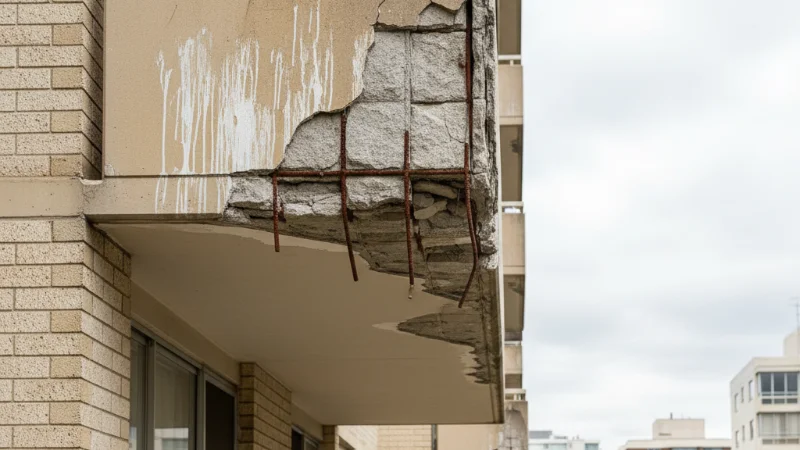
Signs building needs remedial work Sydney — concrete spalling with exposed reinforcement and water staining on strata apartment building balcony

8 Signs Your Building Needs Remedial Work (Sydney Strata Guide)

Every strata building in Sydney ages. Concrete carbonates. Membranes degrade. Render cracks. The question isn't whether your building will develop defects — it's whether you'll catch them early enough to fix them affordably, or late enough that they become a six-figure emergency.

The difference between routine maintenance and remedial work is severity. Maintenance keeps things running. Remedial work fixes structural or waterproofing failures that maintenance can't address — and the longer you wait, the more expensive the fix becomes.

This guide is written from the perspective of a remedial building contractor — the people who open up buildings and see what's actually happening inside the concrete, behind the render, and under the membranes. These are the eight signs we see most often in Sydney strata buildings, and what each one means for your committee's next steps.

1. Concrete Spalling on Balconies, Soffits, or Carpark Ceilings

Spalling is when chunks of concrete break away from the surface, usually exposing rusted steel reinforcement underneath. You'll see it on balcony undersides, carpark ceilings, stairwell soffits, and podium edges — anywhere concrete is exposed to moisture.

This is not cosmetic. Spalling means the steel reinforcement inside the concrete is corroding. As steel rusts, it expands to several times its original volume, cracking the concrete from the inside out. This process — often called concrete cancer — is progressive. It doesn't stop on its own, and it accelerates over time as more steel is exposed to moisture and air.

What it means for your building: If you can see exposed, rusted reinforcement, the damage has been developing for years. Surface patching may be appropriate for isolated areas, but widespread spalling usually indicates systemic carbonation or chloride contamination that requires professional structural repair — not just cosmetic patching.

When to act: Immediately if reinforcement is exposed. Within 3–6 months for surface-level spalling without visible steel. Get a structural engineer to assess the extent before scoping repairs.

2. Water Staining, Drips, or Damp Patches on Internal Ceilings and Walls

Water appearing inside the building — on apartment ceilings below balconies, in carpark areas, around window frames, or on common area walls — is the single most common trigger for remedial work in Sydney strata buildings.

Water stains might look minor, but they indicate a breach in the building envelope. The water you can see is always less than the water you can't see. Behind that ceiling stain, moisture may be tracking through the concrete slab, corroding reinforcement, degrading waterproofing membranes, and promoting mould growth in concealed cavities.

What it means for your building: Persistent leaks almost always point to a waterproofing failure — a degraded balcony membrane, failed shower waterproofing in the unit above, or a breach in the roof membrane. Painting over stains or installing drip trays doesn't fix the source. Waterproofing remediation addresses the root cause by stripping the failed membrane and replacing it with a system designed to last.

When to act: Within 1–3 months of first appearance. Water damage compounds — every month of delay adds cost to the eventual repair because moisture is actively degrading the concrete and steel it contacts.

3. Cracks in External Walls, Render, or Brickwork

Not all cracks are structural. Hairline cracks in render can result from normal thermal movement and are often cosmetic. But certain crack patterns signal deeper problems that need investigation.

Watch for: cracks wider than 2mm, cracks that follow a stair-step pattern through brick mortar joints, horizontal cracks along floor lines (indicating slab deflection), cracks that are growing over time (mark them and check again in 3 months), and cracks accompanied by water ingress or efflorescence (white salt deposits).

What it means for your building: Stair-step cracking in brickwork often indicates differential settlement or movement in the building structure. Horizontal cracks along floor lines can signal slab-edge corrosion or bearing failure. Cracks with efflorescence confirm that water is moving through the building fabric and dissolving salts as it goes — a sign that both the structural element and the waterproofing are compromised.

When to act: Get any crack wider than 2mm assessed by a structural engineer. Cracks showing active growth (widening over months) or accompanied by water staining need investigation within 1–3 months. Don't fill structural cracks with sealant and assume the problem is solved — the crack is a symptom, not the cause.

4. Bubbling, Peeling, or Delaminating Paint on External Surfaces

Paint failure on external walls is rarely about the paint. In most Sydney strata buildings, bubbling or peeling paint on facades, columns, or balcony walls indicates moisture trapped behind the surface coating.

The paint is doing its job — it's acting as a barrier. But when moisture enters from behind (through cracked render, failed flashings, or rising damp), it pushes the paint off the substrate as it tries to escape. Repainting over this without addressing the moisture source will produce the same result within 12–24 months.

What it means for your building: External paint failure is often the earliest visible sign of a facade remediation issue. The moisture driving the paint failure is also degrading whatever is behind it — render, concrete, or brickwork. Addressing the source (failed flashings, cracked render joints, inadequate drainage) before repainting saves the cost of doing the paint job twice.

When to act: Within 3–6 months. Paint failure itself isn't urgent, but the moisture causing it is actively damaging the substrate. The longer you wait, the more render or concrete will need replacement before you can repaint.

5. Efflorescence — White Crystalline Deposits on Concrete or Brickwork

Efflorescence is the white, chalky residue that appears on concrete, brickwork, or rendered surfaces. It forms when water moves through masonry or concrete, dissolves soluble salts, and deposits them on the surface as it evaporates.

By itself, efflorescence is cosmetic. But its presence confirms that water is migrating through your building fabric — and that's the problem worth paying attention to. Efflorescence on a carpark ceiling means water is coming through the slab above. Efflorescence on a basement wall means water is penetrating from the surrounding soil. Efflorescence on a balcony soffit means the waterproofing membrane above has failed.

What it means for your building: Efflorescence is a diagnostic indicator, not the defect itself. It tells you where water is travelling through your building. Follow the efflorescence to find the waterproofing failure, then scope the remedial work to address the source.

When to act: Within 3–6 months. Efflorescence won't damage the building on its own, but the water movement causing it will — particularly if it's in contact with steel reinforcement.

6. Movement or Deflection in Balcony Slabs

If you can feel a balcony slab bouncing underfoot, see a visible sag in the slab edge, or notice that balcony drainage has reversed direction (water pooling against the building instead of flowing to the drip edge), the slab may be experiencing structural deflection.

This is more common in buildings from the 1960s–1980s where balcony slabs were often thinner than current standards require. Over decades, corrosion of the top reinforcement combined with sustained loading causes the slab to deflect — sag — changing the drainage falls and often cracking the waterproofing membrane in the process.

What it means for your building: Slab deflection is a structural issue that needs engineering assessment. It may require carbon fibre strengthening, steel plating, or in severe cases, partial slab reconstruction. The deflection also breaks the waterproofing, so a combined structural-and-waterproofing scope is usually needed.

When to act: Immediately if deflection is noticeable underfoot or visible from below. This is a safety concern, not just a maintenance item. Engage a structural engineer before scoping any works.

7. Failed or Missing Expansion Joints

Expansion joints are the flexible gaps between building elements that allow for thermal movement. In Sydney's climate — where surface temperatures can swing 40°C between a winter morning and a summer afternoon — buildings move. Expansion joints accommodate that movement.

When expansion joint sealant hardens, cracks, or falls out, the gap is no longer sealed against water. Water enters the joint and tracks into the building structure. In carparks and podiums, failed expansion joints are one of the most common sources of leaks — and one of the most overlooked during routine maintenance inspections.

What it means for your building: Failed expansion joints typically need to be raked out, re-backed, and resealed with the correct sealant grade for the joint type and exposure. In podium decks, expansion joint failure often coincides with broader waterproofing failure and may require membrane replacement as part of a larger remedial scope.

When to act: Within 1–3 months if water is entering through the joint. Within 6–12 months if the sealant has cracked but the joint is still partially functional. Expansion joint maintenance is one of the cheapest remedial interventions — and one of the most cost-effective when done before water damage accumulates.

8. Recurring Defects After Previous Repairs

This is the sign that strata managers find most frustrating — and it's the clearest indicator that a building needs proper remedial work, not more maintenance repairs.

If the same balcony keeps leaking after being "waterproofed," if the same concrete patch keeps spalling within 2–3 years, if the same facade crack reopens after being filled — the previous repair addressed the symptom, not the cause. This is the difference between maintenance and remedial work.

Maintenance fixes what you can see. Remedial work investigates why the defect occurred, addresses the root cause, and repairs the affected area using a methodology designed to prevent recurrence.

What it means for your building: Recurring defects usually mean one of two things — the original diagnosis was wrong (the repair targeted the wrong failure mechanism), or the repair methodology was inadequate (the right problem was identified but the fix wasn't durable). Either way, the building needs a proper building investigation to establish what's actually failing before any more money is spent on repairs.

When to act: Before authorising another round of the same repair. If a defect has been repaired and recurred twice, stop and invest in a proper investigation. The investigation fee will be a fraction of the cost of a third failed repair — plus the damage that occurs between failures.

The Line Between Maintenance and Remedial Work

Strata managers deal with maintenance every week — painting, plumbing, cleaning, minor patching. The shift to remedial work happens when:

The defect is structural or affects the building envelope (waterproofing, facade integrity, fire compartmentation). Maintenance trades aren't qualified to assess or repair these elements. Under the NSW Design and Building Practitioners Act, regulated building work on Class 2 buildings must be carried out by a registered practitioner — and from July 2026, this extends to Class 3 and 9c buildings. Understanding DBP Act compliance is now part of every strata manager's role.

The defect is progressive — getting worse over time. Concrete cancer doesn't plateau. Water ingress compounds. Facade deterioration accelerates once the protective coating is breached. If the problem is getting worse, it's remedial, not maintenance.

The defect recurs after repair. As covered in sign #8, recurring failures mean the root cause hasn't been addressed. This requires investigation and remedial methodology, not another maintenance patch. Defect rectification done properly starts with diagnosis, not with the trowel.

What to Do If You've Spotted These Signs

If your building is showing two or more of these signs, the recommended path forward is straightforward:

Commission a building investigation from an independent structural engineer or building consultant. This gives your committee a clear, prioritised defect inventory with indicative cost ranges — the foundation for informed decision-making.

Don't scope remedial work without a proper investigation. Skipping the investigation to save money is the most expensive mistake strata committees make. You end up scoping against assumptions, receiving incomparable quotes, and discovering scope changes mid-project.

Budget through your capital works plan. If your building is approaching 15–20 years of age and hasn't had a comprehensive condition assessment, include one in your next capital works plan cycle. The cost of investigation is typically $5,000–$25,000 depending on building size — a fraction of the remedial work it will define. For guidance on what remedial projects cost, see our guide to how much remedial work costs in Sydney.

If you'd like to understand your building's condition and whether remedial work is needed, book a building assessment with our team or call to discuss what you're seeing.

Frequently Asked Questions

How do I know if my building needs remedial work or just maintenance?

If the defect is structural (concrete damage, steel corrosion), affects the building envelope (waterproofing, facade), is getting worse over time, or has recurred after previous repairs, it's remedial. Maintenance addresses surface-level issues that don't affect structural integrity or weatherproofing.

What age do Sydney apartment buildings typically need remedial work?

Most Sydney strata buildings begin showing signs of remedial need between 15 and 25 years of age, depending on construction quality, exposure (coastal buildings deteriorate faster), and maintenance history. Buildings from the 1960s–1980s construction boom are now in the peak remedial window.

Who should inspect my building for potential remedial issues?

A structural engineer or specialist building consultant — not the contractor who will do the repairs. Independent investigation ensures the scope is based on the building's actual condition, not the contractor's preferred scope of work. The engineer's report is the document contractors quote against.

Is a strata committee legally required to address building defects?

Yes. Under the NSW Strata Schemes Management Act 2015, owners corporations have a duty to maintain and repair common property. Failure to address known defects can expose the OC to liability — particularly if the defect causes injury or damage to lot property. The Act requires a 10-year capital works plan that should account for foreseeable remedial needs.

How much does a building investigation cost?

Typically $5,000–$25,000 depending on building size and complexity. For a 30–60 unit building, expect $8,000–$15,000 for a comprehensive investigation with a detailed report. This is the single best investment a strata committee can make before committing to any remedial program.

8 Signs Your Building Needs Remedial Work (Sydney Strata Guide)

Signs building needs remedial work Sydney — concrete spalling with exposed reinforcement and water staining on strata apartment building balcony

Every strata building in Sydney ages. Concrete carbonates. Membranes degrade. Render cracks. The question isn't whether your building will develop defects — it's whether you'll catch them early enough to fix them affordably, or late enough that they become a six-figure emergency.

The difference between routine maintenance and remedial work is severity. Maintenance keeps things running. Remedial work fixes structural or waterproofing failures that maintenance can't address — and the longer you wait, the more expensive the fix becomes.

This guide is written from the perspective of a remedial building contractor — the people who open up buildings and see what's actually happening inside the concrete, behind the render, and under the membranes. These are the eight signs we see most often in Sydney strata buildings, and what each one means for your committee's next steps.

1. Concrete Spalling on Balconies, Soffits, or Carpark Ceilings

Spalling is when chunks of concrete break away from the surface, usually exposing rusted steel reinforcement underneath. You'll see it on balcony undersides, carpark ceilings, stairwell soffits, and podium edges — anywhere concrete is exposed to moisture.

This is not cosmetic. Spalling means the steel reinforcement inside the concrete is corroding. As steel rusts, it expands to several times its original volume, cracking the concrete from the inside out. This process — often called concrete cancer — is progressive. It doesn't stop on its own, and it accelerates over time as more steel is exposed to moisture and air.

What it means for your building: If you can see exposed, rusted reinforcement, the damage has been developing for years. Surface patching may be appropriate for isolated areas, but widespread spalling usually indicates systemic carbonation or chloride contamination that requires professional structural repair — not just cosmetic patching.

When to act: Immediately if reinforcement is exposed. Within 3–6 months for surface-level spalling without visible steel. Get a structural engineer to assess the extent before scoping repairs.

2. Water Staining, Drips, or Damp Patches on Internal Ceilings and Walls

Water appearing inside the building — on apartment ceilings below balconies, in carpark areas, around window frames, or on common area walls — is the single most common trigger for remedial work in Sydney strata buildings.

Water stains might look minor, but they indicate a breach in the building envelope. The water you can see is always less than the water you can't see. Behind that ceiling stain, moisture may be tracking through the concrete slab, corroding reinforcement, degrading waterproofing membranes, and promoting mould growth in concealed cavities.

What it means for your building: Persistent leaks almost always point to a waterproofing failure — a degraded balcony membrane, failed shower waterproofing in the unit above, or a breach in the roof membrane. Painting over stains or installing drip trays doesn't fix the source. Waterproofing remediation addresses the root cause by stripping the failed membrane and replacing it with a system designed to last.

When to act: Within 1–3 months of first appearance. Water damage compounds — every month of delay adds cost to the eventual repair because moisture is actively degrading the concrete and steel it contacts.

3. Cracks in External Walls, Render, or Brickwork

Not all cracks are structural. Hairline cracks in render can result from normal thermal movement and are often cosmetic. But certain crack patterns signal deeper problems that need investigation.

Watch for: cracks wider than 2mm, cracks that follow a stair-step pattern through brick mortar joints, horizontal cracks along floor lines (indicating slab deflection), cracks that are growing over time (mark them and check again in 3 months), and cracks accompanied by water ingress or efflorescence (white salt deposits).

What it means for your building: Stair-step cracking in brickwork often indicates differential settlement or movement in the building structure. Horizontal cracks along floor lines can signal slab-edge corrosion or bearing failure. Cracks with efflorescence confirm that water is moving through the building fabric and dissolving salts as it goes — a sign that both the structural element and the waterproofing are compromised.

When to act: Get any crack wider than 2mm assessed by a structural engineer. Cracks showing active growth (widening over months) or accompanied by water staining need investigation within 1–3 months. Don't fill structural cracks with sealant and assume the problem is solved — the crack is a symptom, not the cause.

4. Bubbling, Peeling, or Delaminating Paint on External Surfaces

Paint failure on external walls is rarely about the paint. In most Sydney strata buildings, bubbling or peeling paint on facades, columns, or balcony walls indicates moisture trapped behind the surface coating.

The paint is doing its job — it's acting as a barrier. But when moisture enters from behind (through cracked render, failed flashings, or rising damp), it pushes the paint off the substrate as it tries to escape. Repainting over this without addressing the moisture source will produce the same result within 12–24 months.

What it means for your building: External paint failure is often the earliest visible sign of a facade remediation issue. The moisture driving the paint failure is also degrading whatever is behind it — render, concrete, or brickwork. Addressing the source (failed flashings, cracked render joints, inadequate drainage) before repainting saves the cost of doing the paint job twice.

When to act: Within 3–6 months. Paint failure itself isn't urgent, but the moisture causing it is actively damaging the substrate. The longer you wait, the more render or concrete will need replacement before you can repaint.

5. Efflorescence — White Crystalline Deposits on Concrete or Brickwork

Efflorescence is the white, chalky residue that appears on concrete, brickwork, or rendered surfaces. It forms when water moves through masonry or concrete, dissolves soluble salts, and deposits them on the surface as it evaporates.

By itself, efflorescence is cosmetic. But its presence confirms that water is migrating through your building fabric — and that's the problem worth paying attention to. Efflorescence on a carpark ceiling means water is coming through the slab above. Efflorescence on a basement wall means water is penetrating from the surrounding soil. Efflorescence on a balcony soffit means the waterproofing membrane above has failed.

What it means for your building: Efflorescence is a diagnostic indicator, not the defect itself. It tells you where water is travelling through your building. Follow the efflorescence to find the waterproofing failure, then scope the remedial work to address the source.

When to act: Within 3–6 months. Efflorescence won't damage the building on its own, but the water movement causing it will — particularly if it's in contact with steel reinforcement.

6. Movement or Deflection in Balcony Slabs

If you can feel a balcony slab bouncing underfoot, see a visible sag in the slab edge, or notice that balcony drainage has reversed direction (water pooling against the building instead of flowing to the drip edge), the slab may be experiencing structural deflection.

This is more common in buildings from the 1960s–1980s where balcony slabs were often thinner than current standards require. Over decades, corrosion of the top reinforcement combined with sustained loading causes the slab to deflect — sag — changing the drainage falls and often cracking the waterproofing membrane in the process.

What it means for your building: Slab deflection is a structural issue that needs engineering assessment. It may require carbon fibre strengthening, steel plating, or in severe cases, partial slab reconstruction. The deflection also breaks the waterproofing, so a combined structural-and-waterproofing scope is usually needed.

When to act: Immediately if deflection is noticeable underfoot or visible from below. This is a safety concern, not just a maintenance item. Engage a structural engineer before scoping any works.

7. Failed or Missing Expansion Joints

Expansion joints are the flexible gaps between building elements that allow for thermal movement. In Sydney's climate — where surface temperatures can swing 40°C between a winter morning and a summer afternoon — buildings move. Expansion joints accommodate that movement.

When expansion joint sealant hardens, cracks, or falls out, the gap is no longer sealed against water. Water enters the joint and tracks into the building structure. In carparks and podiums, failed expansion joints are one of the most common sources of leaks — and one of the most overlooked during routine maintenance inspections.

What it means for your building: Failed expansion joints typically need to be raked out, re-backed, and resealed with the correct sealant grade for the joint type and exposure. In podium decks, expansion joint failure often coincides with broader waterproofing failure and may require membrane replacement as part of a larger remedial scope.

When to act: Within 1–3 months if water is entering through the joint. Within 6–12 months if the sealant has cracked but the joint is still partially functional. Expansion joint maintenance is one of the cheapest remedial interventions — and one of the most cost-effective when done before water damage accumulates.

8. Recurring Defects After Previous Repairs

This is the sign that strata managers find most frustrating — and it's the clearest indicator that a building needs proper remedial work, not more maintenance repairs.

If the same balcony keeps leaking after being "waterproofed," if the same concrete patch keeps spalling within 2–3 years, if the same facade crack reopens after being filled — the previous repair addressed the symptom, not the cause. This is the difference between maintenance and remedial work.

Maintenance fixes what you can see. Remedial work investigates why the defect occurred, addresses the root cause, and repairs the affected area using a methodology designed to prevent recurrence.

What it means for your building: Recurring defects usually mean one of two things — the original diagnosis was wrong (the repair targeted the wrong failure mechanism), or the repair methodology was inadequate (the right problem was identified but the fix wasn't durable). Either way, the building needs a proper building investigation to establish what's actually failing before any more money is spent on repairs.

When to act: Before authorising another round of the same repair. If a defect has been repaired and recurred twice, stop and invest in a proper investigation. The investigation fee will be a fraction of the cost of a third failed repair — plus the damage that occurs between failures.

The Line Between Maintenance and Remedial Work

Strata managers deal with maintenance every week — painting, plumbing, cleaning, minor patching. The shift to remedial work happens when:

The defect is structural or affects the building envelope (waterproofing, facade integrity, fire compartmentation). Maintenance trades aren't qualified to assess or repair these elements. Under the NSW Design and Building Practitioners Act, regulated building work on Class 2 buildings must be carried out by a registered practitioner — and from July 2026, this extends to Class 3 and 9c buildings. Understanding DBP Act compliance is now part of every strata manager's role.

The defect is progressive — getting worse over time. Concrete cancer doesn't plateau. Water ingress compounds. Facade deterioration accelerates once the protective coating is breached. If the problem is getting worse, it's remedial, not maintenance.

The defect recurs after repair. As covered in sign #8, recurring failures mean the root cause hasn't been addressed. This requires investigation and remedial methodology, not another maintenance patch. Defect rectification done properly starts with diagnosis, not with the trowel.

What to Do If You've Spotted These Signs

If your building is showing two or more of these signs, the recommended path forward is straightforward:

Commission a building investigation from an independent structural engineer or building consultant. This gives your committee a clear, prioritised defect inventory with indicative cost ranges — the foundation for informed decision-making.

Don't scope remedial work without a proper investigation. Skipping the investigation to save money is the most expensive mistake strata committees make. You end up scoping against assumptions, receiving incomparable quotes, and discovering scope changes mid-project.

Budget through your capital works plan. If your building is approaching 15–20 years of age and hasn't had a comprehensive condition assessment, include one in your next capital works plan cycle. The cost of investigation is typically $5,000–$25,000 depending on building size — a fraction of the remedial work it will define. For guidance on what remedial projects cost, see our guide to how much remedial work costs in Sydney.

If you'd like to understand your building's condition and whether remedial work is needed, book a building assessment with our team or call to discuss what you're seeing.

Frequently Asked Questions

How do I know if my building needs remedial work or just maintenance?

If the defect is structural (concrete damage, steel corrosion), affects the building envelope (waterproofing, facade), is getting worse over time, or has recurred after previous repairs, it's remedial. Maintenance addresses surface-level issues that don't affect structural integrity or weatherproofing.

What age do Sydney apartment buildings typically need remedial work?

Most Sydney strata buildings begin showing signs of remedial need between 15 and 25 years of age, depending on construction quality, exposure (coastal buildings deteriorate faster), and maintenance history. Buildings from the 1960s–1980s construction boom are now in the peak remedial window.

Who should inspect my building for potential remedial issues?

A structural engineer or specialist building consultant — not the contractor who will do the repairs. Independent investigation ensures the scope is based on the building's actual condition, not the contractor's preferred scope of work. The engineer's report is the document contractors quote against.

Is a strata committee legally required to address building defects?

Yes. Under the NSW Strata Schemes Management Act 2015, owners corporations have a duty to maintain and repair common property. Failure to address known defects can expose the OC to liability — particularly if the defect causes injury or damage to lot property. The Act requires a 10-year capital works plan that should account for foreseeable remedial needs.

How much does a building investigation cost?

Typically $5,000–$25,000 depending on building size and complexity. For a 30–60 unit building, expect $8,000–$15,000 for a comprehensive investigation with a detailed report. This is the single best investment a strata committee can make before committing to any remedial program.

Take the next step.

Fill out the form below and let's build something that lasts.

Phone: Call us at 0410 515 509

Email: Send us a message at hello@atomicprojects.com.au

Form: Fill out the form — we usually respond within 1 business day.

Max file size 10MB.
Uploading...
fileuploaded.jpg
Upload failed. Max size for files is 10 MB.
Thank you! Your submission has been received!
Oops! Something went wrong while submitting the form.