
Built for the PM whose name is on the program.
A remedial builder that runs itself — clean contract administration, a programme that holds, and client-ready reporting at every claim. So the project reflects well on you, not just on us.
No obligation. We respond within 24 hours.
Brief us on the project




A builder that runs itself — so you can manage the project, not the contractor.
The remedial jobs that go sideways on a PM aren't usually the technical ones. They're the ones where the builder has to be chased for an RFI response, where the programme slips quietly, and where the reporting isn't fit to forward to the client.
So we set up to take that load off you: we self-manage the trades, administer the contract cleanly, hit the hold points, and report in a format you can pass straight up the line. The project reflects well on you because it ran well — not because you spent the month managing us.
Brief us on the project →We work to your contract & superintendent
Lump-sum or schedule-of-rates, AS 4000-style administration, your superintendent's directions — we operate inside the framework you've set, not around it.
We self-manage the trades
One point of accountability for the whole defect list — we coordinate the sub-trades, the access and the sequencing, so you're not the one chasing a waterproofer and a concreter to the same hold point.
We protect the programme
A baseline programme, hold points booked ahead, and early flags when something genuinely threatens a date — so slip is surfaced and managed, not discovered at the next site meeting.
We report so you can forward it
Progress, photos, QA records, variations and claims in a clean pack you can pass straight to your client — and a documented handover that survives the defects-liability period.
Where a remedial project goes wrong on a PM — and where we take the load.
It's rarely the trades. A project lands back on the PM at four points — tender, contract administration, delivery and handover. Here's the trap at each stage, and how we're set up so it doesn't become your problem.
Pricing a real scope.
A vague scope gets a low number that's really an opening offer — then the variations start once the wall's open, and your cost report to the client moves.
We price off a confirmed cause, line-by-line — a tender you can compare and defend.
RFIs, variations, claims.
A builder you have to chase for RFI responses, variation substantiation and a tidy progress claim — every gap becomes your admin and your delay.
Prompt, substantiated responses and claims that reconcile — administration that runs itself.
Holding the programme.
Quiet slip — a sub-trade no-show, a missed hold point — that you only find at the site meeting, when it's already a problem to explain upward.
Baseline programme, hold points booked ahead, early flags when a date's genuinely at risk.
Closing it cleanly.
A thin handover and defects that reopen in the defects-liability period — landing back on you long after the job was “finished.”
A complete handover pack and defects closed with documentation — built to survive the DLP.
The builder who needs managing costs you, not just the client.
On a remedial job the contractor's habits become the PM's workload. The wrong pick doesn't just risk the build — it risks your time, your programme and your standing with the client.
Their admin becomes your admin
Every RFI you have to chase, every variation that arrives unsubstantiated, every progress claim that won't reconcile — that's hours that come out of your week, on top of running the project.
Their slip becomes your explanation
When the programme moves, you're the one explaining it to the client. A builder that surfaces risk early gives you something to manage; one that hides it gives you something to apologise for.
Their close-out becomes your DLP
A thin handover and defects that reopen in the defects-liability period land back on your desk months later — long after everyone else has moved on to the next job.
What a self-managing builder is actually worth to you.
Two builders can quote the same number and cost a PM completely different amounts of time and risk over the job. This is an illustrative model of a ~$400K occupied remedial project, not a quote — but the shape holds.
Figures are an illustrative model of management load on a typical occupied remedial project, not a quote or a guarantee. The point isn't the exact hours — it's that two identical tender prices can carry very different amounts of your time and reputational risk. What we quote on is the scope; what we're really offering is the project running without you in it.
Delivered. Documented. Held the programme.
Three occupied projects chosen for what matters to a PM: multiple scopes run under one programme, hold points engineer-verified, and works delivered over live space without the dates slipping.
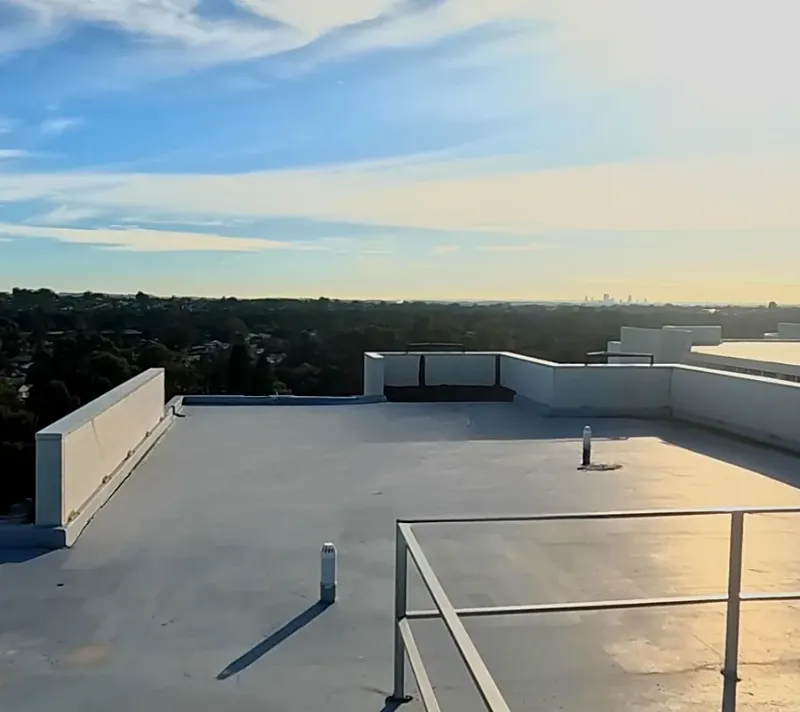
Mid-Rise Strata — Warwick Farm
One residential tower with active roof leaks. Rooftop waterproofing had failed and water was getting into the units below every time it rained. We stripped the roof back to substrate, found the root-cause of failure at service penetrations and installed a new sheet membrane system with proper falls and drainage.
"They set up their team and completed the works all at once, not a single day of lost time was caused."
— STRATA MANAGER, WARWICK FARM

Mid-rise strata — Killara
A root-cause investigation traced concrete cancer and cracking through the internal slabs to magnesite topping — so a full slab remediation was needed to restore the structure. We removed the drummy concrete, treated and replaced corroded steel, and reinstated with Sika repair mortar under the direction of a Class 2 Design Practitioner. Residents stayed in place the whole time.
"Residents stayed in place the entire time — the staged works kept the building safe and the disruption minimal."
— COMMITTEE MEMBER, KILLARA
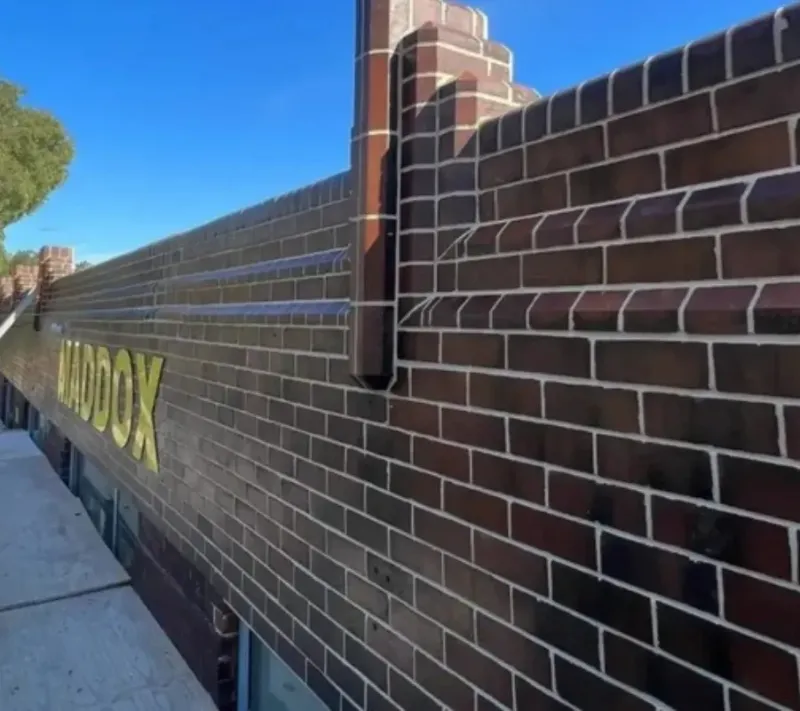
Low-rise strata — Alexandria
Bricks detaching from a heritage facade directly above the footpath — a falling-debris risk to pedestrians. Run under a Class 2 registered practitioner: a full restoration program of repointing, brick replacement, crack stitching with stainless steel helicals and corbel rebuilds, with the compliance trail documented throughout. Facade stabilised in two months with zero compromise to the building's original character.
"Bricks were literally falling onto the footpath. They made it safe within days and then restored the whole facade."
— STRATA MANAGER, ALEXANDRIA
Atomic vs the builder you have to manage.
Two builders can win the same tender and run completely differently once they're on site. Here's the gap that actually shows up in your week — and in your report to the client.
The reporting pack you don't have to rebuild — and what to send us.
Half a PM's admin on a remedial job is turning a builder's output into something fit for the client. We hand it over already in that shape. Here's what's in the pack, and what we need from you to scope or tender the work.
What's in the client-ready pack
Issued at every progress claim, in a format you can forward without re-formatting — so your reporting up the line is done before you open your laptop.
Progress vs baseline programme — where we are against the dates, with any risk flagged.
Dated site photos — by area and work type, ready to drop into your report.
QA & hold-point records — ITPs signed off, third-party verifications attached.
Variation register — each one priced, substantiated and reconciled to the contract sum.
Progress claim — that ties to the schedule and certifies cleanly.
Handover & warranties — a complete close-out pack at PC, built to survive the DLP.
What to send us
The more of this you have, the faster we can scope or price the work. Don't have it all? The defect and the building are enough to start.
The engineer's report or scope of works — if one's been issued.
The contract type — lump sum or schedule of rates, and the superintendent.
The programme constraint — any fixed dates, access windows or trading hours.
Site access & occupancy — what's occupied, what's available, when.
Tender or comparison set — if we're quoting against others, so we price like-for-like.
What remedial works cost — for your cost plan.
Costs depend on severity, access and how many scopes you package. These are realistic ranges for an early cost plan to take to your client — your fixed tender price is confirmed after we scope the cause, before any work starts.
A single defect or wet area — membrane, concrete repair, balustrade or drainage.
Several scopes packaged under one contract across the building.
Full façade, cladding, structural and waterproofing programmes.
Every scope is transparent and fixed off a confirmed cause — no mystery line items, no “we'll see when we open it up” that turns into a variation you have to defend to the client.
The work is warrantied in writing. Verify everything.
Most balcony repairs fail because the last contractor patched instead of fixed — and walked away with no warranty. We don't.
We'd rather you check than take our word for it.
From brief to mobilised — no mystery.
We're a fit for some projects, not all.
This is for you if…
- ✓You're a client-side PM or superintendent running remedial works on a strata or commercial building.
- ✓You want a builder who self-manages and administers the contract cleanly — not one you have to chase.
- ✓The building is occupied and works need staging around tenants, residents or trading hours.
- ✓You need client-ready reporting and DBP-compliant documentation through to handover and the DLP.
- ✓The project is from around $100K and up.
Probably not us if…
- —It's a single-dwelling house, not a strata or commercial building.
- —You want the cheapest number on the day and will manage the variations yourself — that's not how we price.
- —It's a sub-$100K one-off touch-up — a local trade is a better fit than a remedial builder.
- —You need boots on site this week with no scoping — we confirm the cause before we tender.

You'll deal with the builder, not a call centre.
I started Atomic Projects because I was tired of seeing good PMs spend their week chasing a builder for RFI responses and tidy claims. Every project we take, I'm accountable for — one point of contact who actually runs the job. Send me the scope and I'll tell you straight what it'll take to deliver it without you living on site.
What a PM will want to know.
Do you work under a superintendent and a head contract?+
How do you handle variations and progress claims?+
What's your reporting cadence — and is it client-ready?+
Who carries the programme risk?+
What happens with defects in the DLP?+
Are you registered for regulated work?+
What does pre-construction involve on a remedial package?+
How is resident communication managed on occupied sites?+
How is quality verified before work gets covered up?+
What size remedial packages do you deliver?+
How are extension of time claims handled?+
Put a builder on the list who runs the job.
Send the scope, the engineer's report, or the constraints. A registered builder calls back within 5 minutes, 7am–5pm weekdays.