
A remedial builder that makes you look good to the committee.
AGM-ready scopes your owners can actually vote on, works staged so residents stay in place, and every defect closed out with the paper trail your records need. So the building gets fixed — and you're not the one wearing the fallout.
No obligation. We respond within 24 hours.
Get an AGM ready quote.



A remedial builder that works the way a committee decides.
Most of the cost, delay and AGM friction on a remedial project doesn't come from the trades — it comes from a scope nobody can read, a price that moves after work starts, and a defect that's never formally closed.
So we build the project around those failure points, in this order: investigation, costed scope, staged delivery, documented close-out. That's the difference between a quote and a scope — and it's usually the difference between a special levy and the number your owners approved.
Get an AGM-ready quote →We confirm the cause first
Before anyone commits a dollar, we diagnose why the defect is happening — so the scope you table is the scope the building needs, not a guess that blows out into variations later.
We write a scope owners can vote on
Line-by-line, engineer-checkable, in plain English — fixed price, fixed timeline. The kind of document that passes at the meeting instead of triggering “let's get another report.”
We stage the works around residents
Sequenced around occupancy — access managed, disruption minimised, the building kept safe and open. No forced relocations: 18 balconies, zero relocations is the standard.
We close every defect out, on record
QA documentation, warranties and DBP-compliant sign-off where the work is regulated — the evidence your records, your insurer and the next committee will need.
Where committees get caught — and where we close the gap.
A remedial project rarely goes wrong on the tools. It goes wrong at four points in the decision — procurement, approval, delivery and close-out. Here's the trap at each stage, and how the work should be set up to avoid it.
Getting comparable quotes.
Spend over $30,000 needs at least two independent quotes — but if they're scoped differently, they can't be compared and the motion stalls.
We quote line-by-line and engineer-checkable, so two builders sit side-by-side.
Getting the vote across.
A scope owners can't read becomes “let's get another report.” Six months pass, the defect worsens, the work costs more next AGM.
A plain-English, costed scope owners vote on without a second report.
Keeping residents on side.
Dust, noise, lost balcony or carpark access — works not staged around occupancy mean every complaint lands on the manager, not the builder. And a price that moves becomes a special levy.
Staged in place, fixed off a confirmed cause — no relocations, no surprise levy.
Proving it was done.
No QA records, warranties or sign-off and the next committee — and your insurer — can't prove the work was ever done to standard. The OC's duty to maintain doesn't pause.
Every defect formally closed with documentation and DBP sign-off on record.
A deferred defect is a bigger levy later — and a liability now.
Remedial defects don't wait for the next AGM. Left unactioned, a maintenance item becomes a structural one — and the owners corporation owns the gap.
The liability sits with the OC
Under the Strata Schemes Management Act, the owners corporation has a non-delegable duty to maintain common property — and it doesn't pause because a motion was deferred. A known, unactioned defect is the committee's exposure: to owners, to the next purchaser's inspection, and to an insurer at renewal.
The number only goes up
Caught early, water past a membrane is a membrane job. Caught a year later it's concrete repair, internal make-good and relocation cost — the difference between a manageable quote and a special levy.
It follows the building
Open defects show up in strata reports and pre-purchase inspections, and they drag on every sale in the block until they're fixed properly — and documented as fixed.
Why “we'll deal with it next year” is the expensive option.
The same defect costs the owners corporation two very different numbers depending on when it's approved. This is illustrative — your real figure is fixed after an investigation — but the shape is always the same.
Figures are an illustrative model of a typical balcony/membrane defect, not a quote. The point isn't the exact number — it's that water past a failed layer doesn't wait for the next meeting, and the cost curve is steep. The investigation stage is what lets us give your committee the real, fixed figure to approve.
One registered builder for the whole defect list.
Most buildings don't have one defect — they have a list. One builder, one contract, one set of warranties at handover, instead of coordinating three subbies and three close-outs. Each scope links to how we do that work.
Atomic vs the cheapest quote.
Two numbers on a page rarely tell a committee the same story. Here's what the gap between them actually means once the work starts — and at the next AGM.
How to compare two quotes — and what to send us.
The $30K two-quote rule only protects the OC if the quotes are actually comparable. Here's what a votable scope contains, and exactly what we need from you to write one.
What a votable scope should contain
Read both quotes against this. If the cheaper one is missing half of it, you're not comparing like with like — you're comparing a fixed price to an opening offer.
A confirmed cause — the defect is diagnosed, not assumed, so the price is fixed before work starts.
Line-by-line pricing — each item costed separately, not a single lump sum you can't interrogate.
A fixed timeline — start, stages and completion, so residents and owners know what to expect.
A staging/access plan — how the building stays occupied and what access is affected, when.
Defined warranties — a written term, not “warranty provided.”
Close-out documentation — QA records and DBP sign-off where the work is regulated.
What to send us
The more of this you have, the faster we can turn around a scope your owners can vote on. Don't have it all? The symptoms are enough to start.
The engineer's or defect report — if one's been done.
Any prior quotes or scopes — so we quote to be compared against them.
Any prior quotes or scopes — so we quote to be compared against them.
Photos of the defect — even phone shots from the affected lots help.
Your AGM / committee date — so the scope lands before the meeting.
The building's by-laws — where common-property lines might be in question.
Approved. Delivered. Documented.
Real owners-corporation programmes — approved at the meeting, delivered with residents in place, and closed out with the paper trail. Verify any of them.
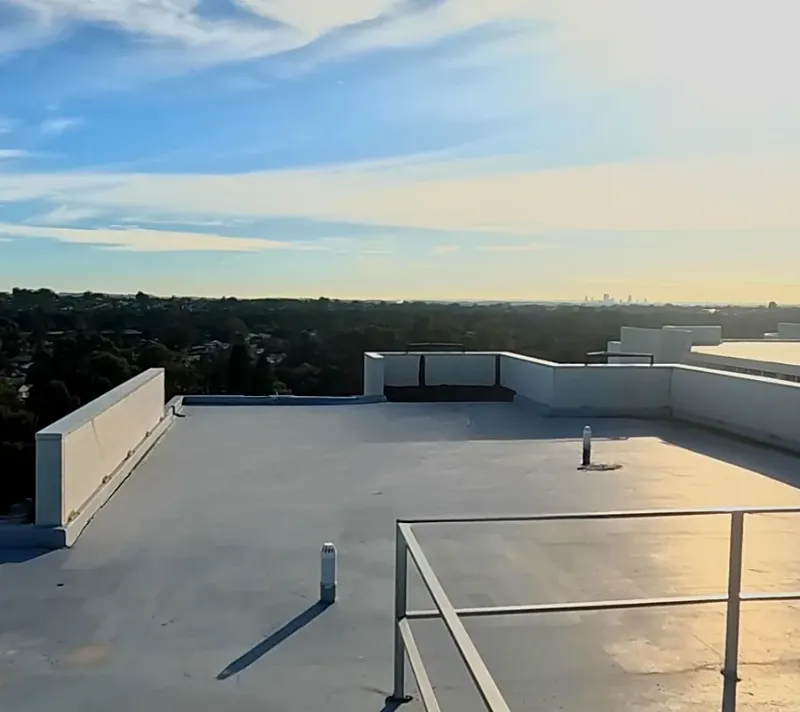
Mid-Rise Strata — Warwick Farm
One residential tower with active roof leaks. Rooftop waterproofing had failed and water was getting into the units below every time it rained. We stripped the roof back to substrate, found the root-cause of failure at service penetrations and installed a new sheet membrane system with proper falls and drainage.
"They set up their team and completed the works all at once, not a single day of lost time was caused."
— STRATA MANAGER, WARWICK FARM

Mid-rise strata — Randwick
Concrete slabs with severe steel corrosion and spalling. Steel corrosion and spalling had compromised the balcony slab — water was leaking through the voids with rebar corroding behind the surface. All drummy concrete was removed to sound substrate, reinforcement was treated with zinc, high-strength mortar re-applied and the slab was restored for the long term.
"They worked level by level so nobody had to move out. Spalling across three floors fixed in five months, with no complaints."
— STRATA Manager, RANDWICK
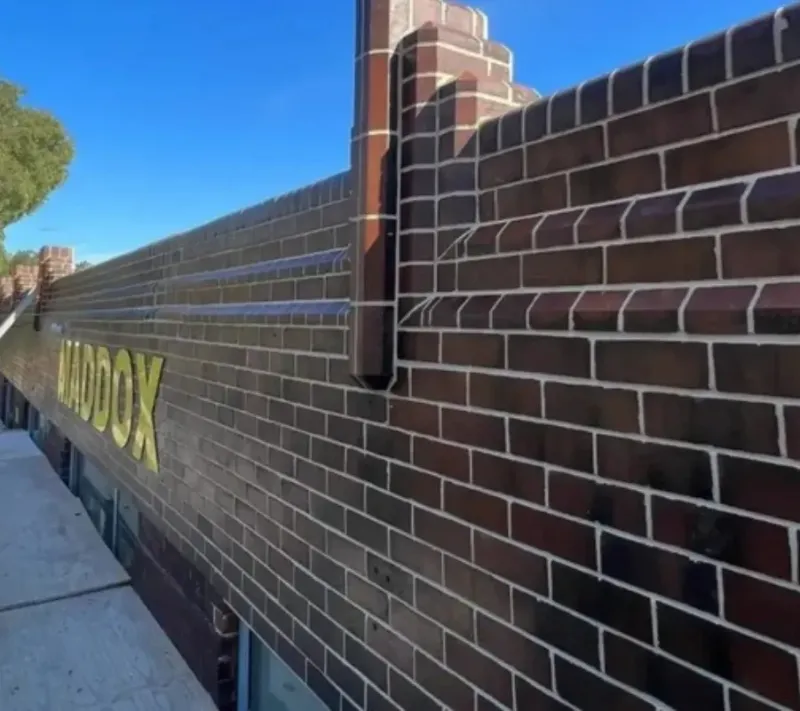
Heritage Warehouse — Alexandria
Bricks were detaching from a heritage facade directly above the street. Full restoration program — repointing, brick replacement, crack stitching with stainless steel helicals, and corbel rebuilds. Facade stabilised in two months with zero compromise to the building's original character.
"Bricks were literally falling onto the footpath. They made it safe within days and then restored the whole facade."
— BUILDING MANAGER, ALEXANDRIA
What remedial works cost for a strata building.
Costs depend on severity, access and how many scopes you bundle. These are realistic ranges for budgeting and the capital works plan — your fixed price is confirmed after an investigation, before any work starts.
A single defect or wet area — membrane, concrete repair, balustrade or drainage.
Several scopes bundled into one mobilisation across the building.
Full façade, cladding, structural and waterproofing programmes.
Every scope is transparent and fixed off a confirmed cause — no mystery line items, no “we'll see when we open it up” that lands as a special levy.
Verify us before you put it to the owners.
A committee recommending a builder is putting its own credibility to the floor. So we make the checks easy — and we'd rather you do them.
We'd rather you check than take our word for it.
From first call to a scope you can table — no mystery.
We're a fit for some buildings, not all.
This is for you if…
- ✓You manage or own a strata or commercial building with remedial works to approve.
- ✓You have an engineer's or defect report — or an AGM coming up — and need a scope owners can vote on.
- ✓The building is occupied and works need to be staged around residents.
- ✓You need DBP-compliant documentation your committee, insurer and the next purchaser can rely on.
- ✓The project is from around $100K and up.
Probably not us if…
- —It's a single-dwelling house, not a strata or commercial building.
- —You're after the cheapest patch to get through the next inspection, not a lasting, documented fix.
- —It's a sub-$100K one-off touch-up — a local trade is a better fit than a remedial builder.
- —You need it started this week with no investigation — we confirm the cause before we price.
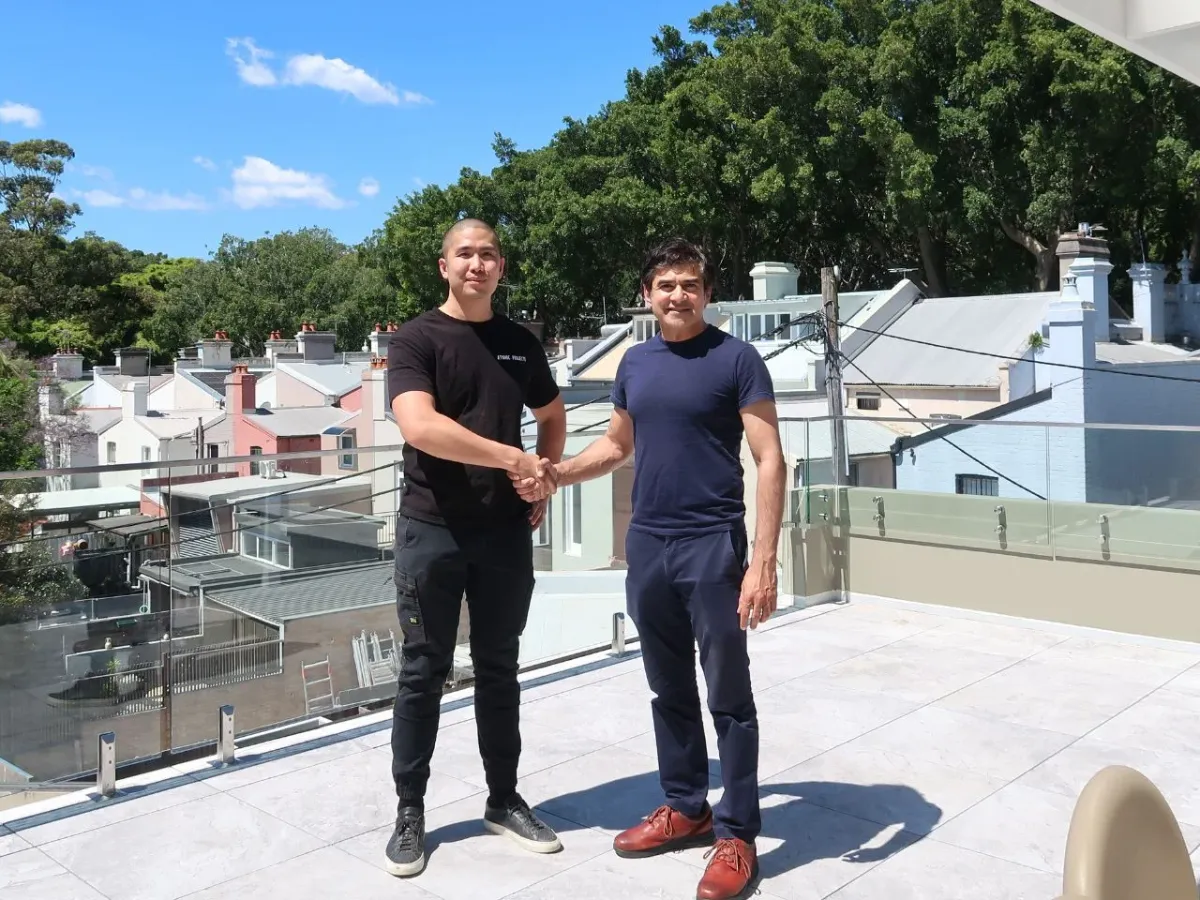
You'll deal with the builder, not a call centre.
I started Atomic Projects because I was tired of watching committees pay twice — once for the patch, then again for the real repair, often as a special levy nobody saw coming. Every project we take, I'm accountable for. Send me the engineer's defect report and I'll tell you straight what the cheapest quote will miss.
What your committee will want to know.
How do we get this approved at the AGM?+
Do we need two quotes? What about the $30K rule?+
Will residents have to move out?+
What if the scope turns out bigger than quoted?+
Who pays — the owners corporation or the lot owner?+
Are you registered for regulated work on our building?+
What should a strata manager send a remedial builder to get a quote moving?+
How long before an AGM should remedial quotes be organised?+
How are owners and residents kept informed during works?+
What compliance documentation does the owners corporation receive?+
Can remedial works be staged across financial years?+
Tell us what the building's doing.
Send the strata report, the engineer's defect list, or just the symptoms. A registered builder calls back within 5 minutes, 7am–5pm weekdays.