
Spalling concrete? Fix the steel, not the surface.
Concrete cancer, spalling and carbonation on strata and commercial buildings — diagnosed to the cause, repaired to AS 3600, and closed out with the test data to prove it's done.
Get a quote



What is concrete cancer?
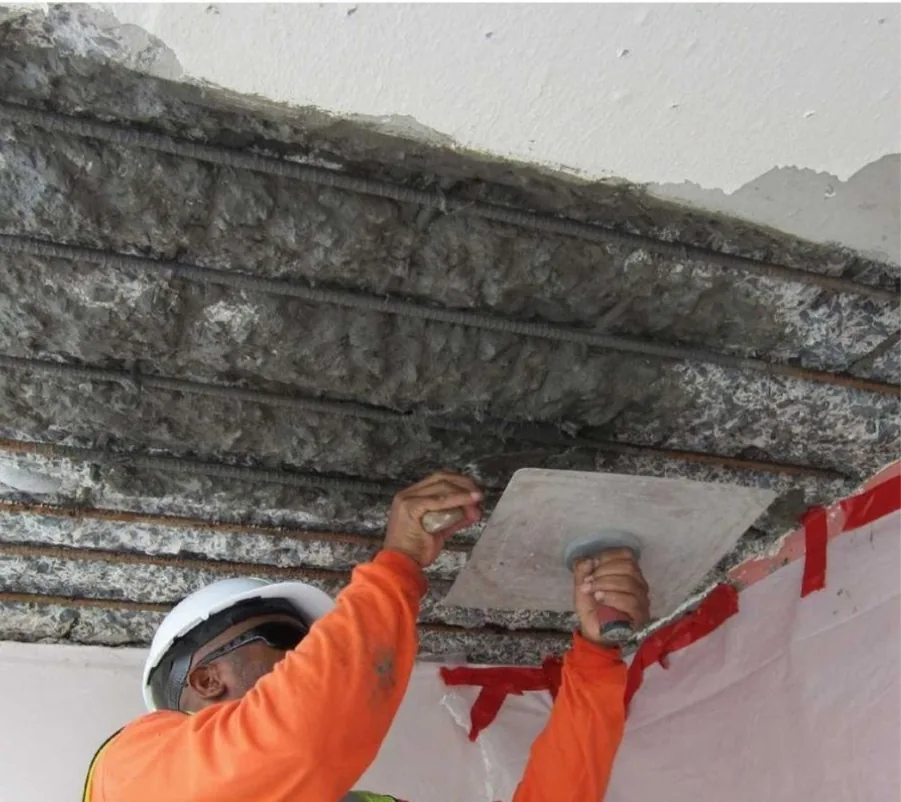
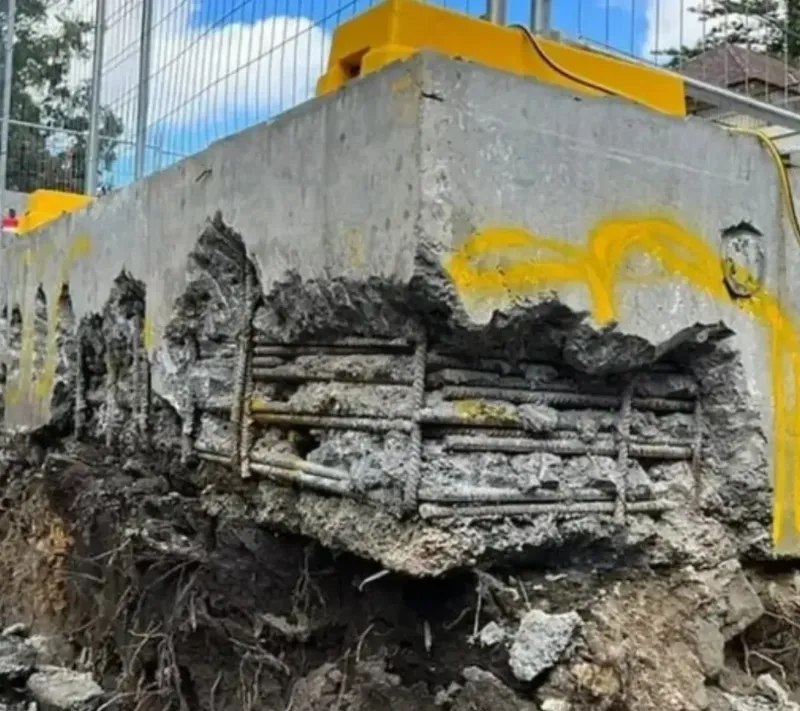
Concrete cancer is what happens when the steel reinforcement inside concrete starts to rust. The rusting steel expands, cracks the concrete from the inside, and pushes the surface off in flakes — what builders call spalling. Patching the surface does nothing, because the corrosion underneath keeps going.
A lasting repair has to reach the steel: break out the affected concrete, treat or replace the reinforcement, and rebuild with a repair mortar matched to the original concrete. The two causes are carbonation (the concrete loses its alkalinity over decades and stops protecting the steel) and chloride attack (salt from a marine environment or the original mix reaches the steel). Which one you have changes the repair — which is why diagnosis comes before a price.
6 signs you have concrete cancer.
Spalling is the visible end of a process that's been running inside the concrete for years. These are the signs it's already advanced.
Spalling never stops at the surface.
Concrete cancer is a process, not an event. Left alone, the corrosion keeps spreading through the steel — and the repair only gets bigger and more expensive.
Public-safety risk
Spalling on a soffit, balcony edge or facade above a walkway is a public-safety risk the owners corporation owns. A council order or an injury claim costs far more than the repair.
It spreads through the steel
Corrosion doesn't stay put. The longer the reinforcement keeps rusting, the more concrete has to come out — and a localised repair becomes a structural one.
Asset value & compliance
Concrete defects appear in strata reports and pre-purchase inspections — and stay on the building's record until they're properly repaired and documented.
Repair concrete the way it lasts.
We don't trowel over spalling. We diagnose the cause, reach the steel, and reinstate to standard — with the test data to prove it.
Diagnose the cause, not just the damage
A concrete investigation — half-cell potential testing, carbonation depth, chloride profiling — confirms whether it's carbonation or chloride attack before a price is quoted. The cause changes the repair.
Break out to sound concrete and treat the steel
We remove all affected and contaminated concrete back to clean substrate, then treat or replace the reinforcement so the corrosion actually stops — not just gets covered.
Reinstate with matched repair systems
Repair mortars to AS 3600 using EN 1504 repair systems, matched to the original concrete. Where cracks are structural we inject them; where they're a water path we seal them.
Protect against the next failure
Anti-carbonation coatings and protective systems extend the life of the repair — so the next failure is decades away, not seasons. Documented and closed out like defect rectification should be.
The types of concrete repair we do.
Material pathology — diagnosed to the cause and repaired to AS 3600, each scoped on its own or as part of a building-wide concrete programme.
Why our concrete repairs don't come back.
The cheap quote renders over the spalling and leaves the rust. Here's what reaching the steel actually means for your building.
The proof is in the projects.
Strata balconies — Randwick
Steel corrosion and spalling had compromised the balcony slabs — water tracking through voids and the rebar rusting behind the concrete. They'd been patched twice and kept failing. We broke out to sound substrate, treated the reinforcement, rebuilt with high-strength repair mortar, and sealed it with a protective coating system built for coastal salt air. Six weeks.
"The balconies had been patched twice and kept failing. They stripped them back, cleaned the steel, and rebuilt them properly."
— STRATA MANAGER, RANDWICK

Mid-rise strata — Killara
A root-cause investigation traced concrete cancer and cracking through the internal slabs to magnesite topping — so a full slab remediation was needed to restore the structure. We removed the drummy concrete, treated and replaced corroded steel, and reinstated with Sika repair mortar under the direction of a Class 2 Design Practitioner. Residents stayed in place the whole time.
"Residents stayed in place the entire time — the staged works kept the building safe and the disruption minimal."
— COMMITTEE MEMBER, KILLARA
Residential pool — Vaucluse
During a renovation, a structural engineer found active concrete spalling at four locations in the pool structure. We removed the drummy concrete, applied anti-corrosion treatment to the reinforcement, and reinstated every patch with structural repair mortar. Once cured we rendered the surface flat, ready for the owner's waterproofing and tiling — three weeks, residents kept informed throughout.
"Spalling fixed across four pool locations and the render left ready for our tiler. Professional, tidy, and they kept the other residents informed the whole way through."
— OWNER, VAUCLUSE
Repaired to standard. Proven with data.
Most concrete repairs come back because the last contractor covered the rust instead of treating it. We prove ours with the test results.
From first call to fixed quote — diagnosed first.
Send any engineer's report, or just describe the spalling and staining.
Within 24 hrsWe test to confirm the cause — carbonation or chloride — not just where it shows.
Days, not weeksA documented scope matched to the actual cause, ready for your committee.
Ready for AGMBroken out, steel treated, reinstated and protected — residents in place.
On your scheduleWe're a fit for some buildings, not all.
We'd rather tell you upfront than waste your committee's time.
This is for you if…
- You have spalling, concrete cancer or carbonation across a strata or commercial building.
- You want the cause diagnosed and the steel treated — not the surface patched.
- The building is occupied and works need to be staged around residents.
- You need DBP-compliant documentation and test data your committee and insurer can rely on.
- Your project is from around $20K and up.
Probably not us if…
- You want a single small patch troweled over with no diagnosis.
- You're after the cheapest cosmetic cover-up to get through the next inspection.
- It's a structural slab moving under load — that's our structural repairs page.
- You need it done this week without testing — we diagnose the cause before we price.
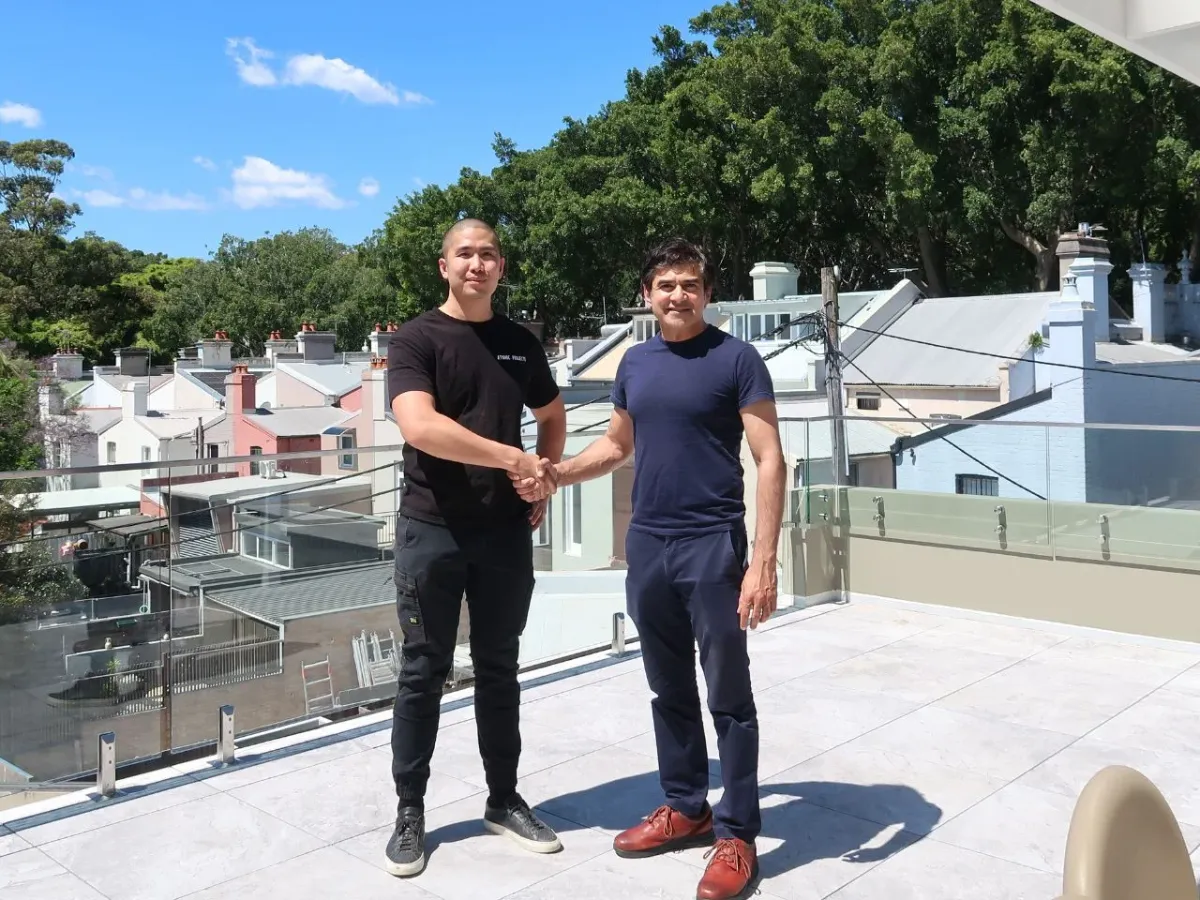
You'll deal with the builder, not a call centre.
Concrete cancer is the defect contractors love to paint over, because the rust is hidden and the cover-up sells cheap. I won't do it. We test for the cause, break out to the steel and prove the repair with data. Send me what you've got and I'll tell you straight whether it's carbonation or chloride — because that changes everything.
What concrete repair costs in Sydney.
These are realistic ranges — your fixed price is confirmed after a building investigation, before any work starts.
Targeted spalling and concrete cancer repair to defined areas.
Concrete repair across multiple elements or a building facade.
Building-wide concrete remediation and protective coating programmes.
Cost depends on extent, access, and whether the cause is carbonation or chloride — which is exactly why we diagnose before we price.
Start with a conversation.
We'll visit your building, confirm the source of the leak, and give you a clear, fixed-price path forward — free, no obligation. We respond within 24 hours.
Get a quote
What your committee will want to know.
What is concrete cancer?+
How is spalling concrete repaired?+
What's the difference between this and structural repairs?+
Why do you test before quoting?+
How long does concrete repair take?+
Is spalling concrete dangerous?+
What standards do you repair to?+
Are you registered for regulated concrete work?+
How much does concrete cancer repair cost in Sydney?+
Can concrete cancer be fixed permanently?+
Will residents need to move out during concrete repairs?+
What happens if concrete cancer is left untreated?+
What warranty applies to concrete repairs?+
Fix the steel, not the surface.
Diagnosed to the cause, broken out to the reinforcement, reinstated to AS 3600 and proven with test data. Book a free assessment or a 15-min call.