
Remediation that keeps the building trading.
Remedial works on operating commercial buildings — staged around your tenants and trading hours, self-managed so it's not your problem to run, and documented for your asset file and insurer.
No obligation. We respond within 24 hours.
Book a site assessment



A builder that works around your building, not the other way round.
The remedial jobs that hurt a facilities manager are the ones that interrupt trading, generate tenant complaints, and leave a thin asset record behind. That's where the real cost lands — in abatement, churn and an audit you can't satisfy.
So we set up to avoid all of that: staged or out-of-hours works, self-managed trades, business continuity protected, and clean documentation for the asset file and your insurer. The building keeps running, the tenants keep trading, and you get a record that holds up.
Book a site assessment →We work around your operation
Staged, out-of-hours or zoned so tenants keep trading — works planned around your hours and access, not dropped on top of them.
We self-manage the trades
One point of accountability for the whole defect list — not three subbies to coordinate. We run the access, the sequencing and the sub-trades so you don't have to.
We protect business continuity
Access, noise, dust and safety managed around your tenants — so there's no rent abatement, no complaint storm and no WHS incident to write up.
We document for your asset file
QA records, warranties and compliance certificates your insurer and your next condition report will want — handed over as a complete pack.
Where remedial works catch a facilities manager — and where we take the load.
A remedial job lands back on the FM at four points — scoping the budget, disrupting tenants, delivering around an operating building, and the record afterwards. Here's the trap at each stage, and how we're set up so it doesn't become your problem.
Planning the spend.
Reactive emergency works blow the maintenance budget, and there's no scope to plan the spend around — the number arrives after the problem.
We scope the cause so it's a planned line item, not a surprise.
Keeping tenants trading.
Works that shut access or trading trigger tenant complaints and rent abatement — the cost lands in the lease, not just the contract.
Staged, zoned or out-of-hours so trading continues.
Working around the operation.
A contractor who needs the building empty can't deliver in a live asset — so the works stall, or the building has to stop.
We deliver in occupied, operating buildings — that's our normal.
Documenting for the file & insurer.
Thin records mean the next condition report, audit or insurer can't see the work was done — and the exposure sits with the building.
Full QA and compliance pack for the asset file.
The wrong builder doesn't just risk the works — it risks your tenancies.
On an operating building the contractor's habits land on the tenants, the budget and the asset record. The wrong pick doesn't just risk the build — it risks the rent roll, the maintenance plan and your standing with the owner.
Disruption becomes lost rent
Works that stop tenants trading can trigger rent abatement and tenant churn. The cheap builder who needs the building empty turns out to be the expensive one once the lease consequences land.
Reactive costs more than planned
A defect left until it becomes an emergency blows the budget and the timeline — emergency premiums, rushed access, disruption — versus a planned, scoped fix you could have programmed in.
Thin records become your problem
With no QA or compliance trail, the next audit, insurer or condition report can't verify the work was done — and the WHS and duty-of-care exposure sits with the building, which means with you.
Planned works vs the emergency you didn't plan for.
The same defect can be a budgeted line item or an emergency that disrupts trading — it depends on whether it's caught early. This is an illustrative model of a typical commercial defect, not a quote — but the shape holds.
Figures are an illustrative model of the continuity cost of a typical commercial defect, not a quote or a guarantee. The point isn't the exact number — it's the curve: a defect caught and planned costs a fraction of the same defect left to become an emergency that interrupts trading. The real figure depends on the asset and the confirmed scope; this is illustrative only.
Delivered. Documented. Building kept running.
Three projects chosen for what matters to a facilities manager: works delivered over occupied, operating space — residents in place, a carpark trading throughout — without the building having to stop.
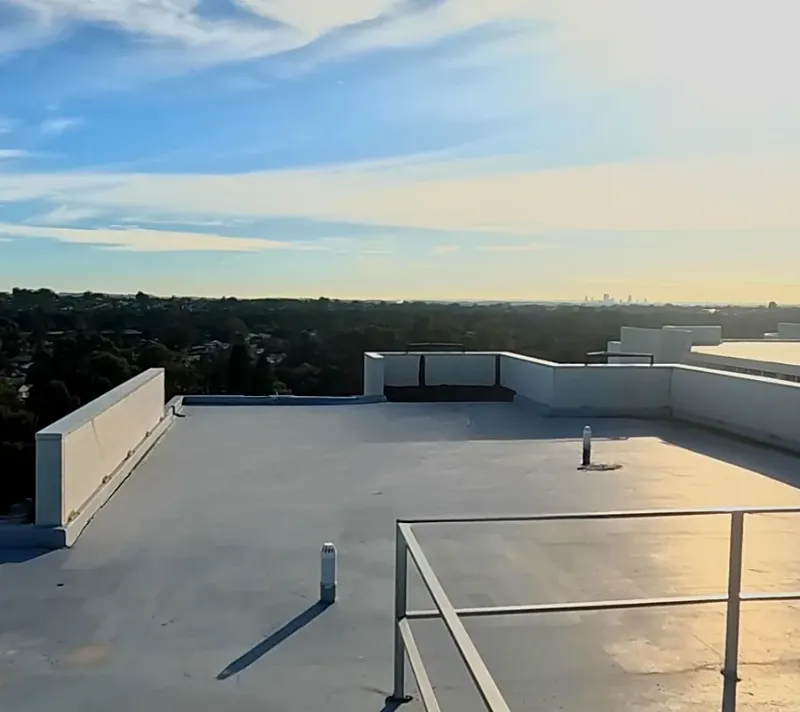
Mid-Rise Strata — Warwick Farm
One residential tower with active roof leaks. Rooftop waterproofing had failed and water was getting into the units below every time it rained. We stripped the roof back to substrate, found the root-cause of failure at service penetrations and installed a new sheet membrane system with proper falls and drainage.
"They set up their team and completed the works all at once, not a single day of lost time was caused."
— STRATA MANAGER, WARWICK FARM

Mid-rise strata — Killara
A root-cause investigation traced concrete cancer and cracking through the internal slabs to magnesite topping — so a full slab remediation was needed to restore the structure. We removed the drummy concrete, treated and replaced corroded steel, and reinstated with Sika repair mortar under the direction of a Class 2 Design Practitioner. Residents stayed in place the whole time.
"Residents stayed in place the entire time — the staged works kept the building safe and the disruption minimal."
— COMMITTEE MEMBER, KILLARA
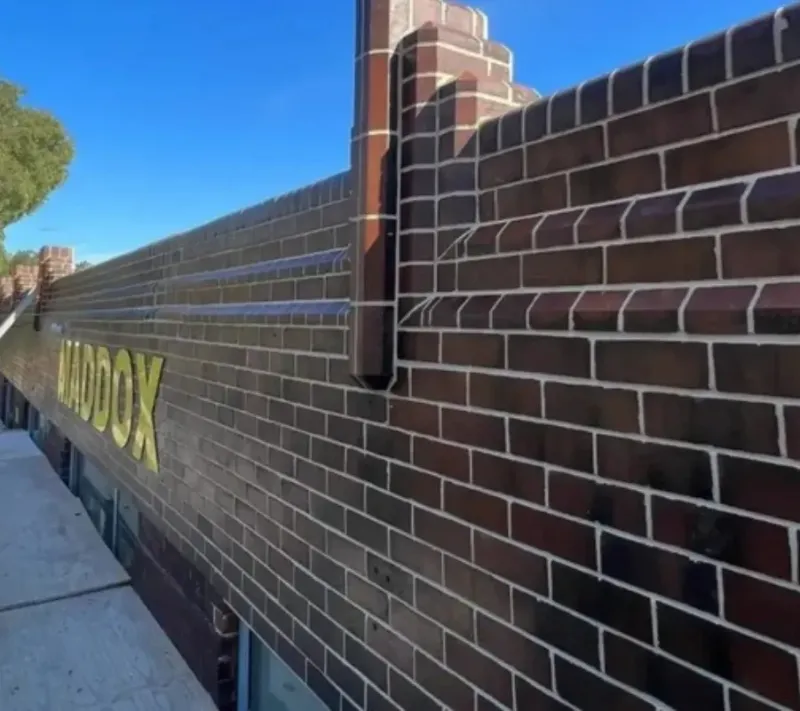
Low-rise strata — Alexandria
Bricks detaching from a heritage facade directly above the footpath — a falling-debris risk to pedestrians. Run under a Class 2 registered practitioner: a full restoration program of repointing, brick replacement, crack stitching with stainless steel helicals and corbel rebuilds, with the compliance trail documented throughout. Facade stabilised in two months with zero compromise to the building's original character.
"Bricks were literally falling onto the footpath. They made it safe within days and then restored the whole facade."
— STRATA MANAGER, ALEXANDRIA
Atomic vs a builder who needs the building empty.
Two builders can win the same job and run completely differently in an operating building. Here's the gap that actually shows up for your tenants — and in what you have to report to the owner.
The documentation pack your insurer and audit will want — and what to send us.
When the next condition report, audit or insurer asks what was done to the building, you need a record that answers it. We hand the work over already in that shape. Here's what's in the pack, and what we need from you to scope the work.
What's in the asset pack
Compiled as the works run and handed over complete — so your asset file is updated by us, not rebuilt by you after the fact.
Progress vs programme — where we are against the dates, with any risk flagged.
Dated photos by area — before, during and after, by area and work type.
QA & hold-point records — ITPs signed off, third-party verifications attached.
Compliance certificates — for regulated and certifiable works.
Warranties — manufacturer and workmanship, collated for the file.
An as-built / close-out record — a complete record for the asset file.
What to send us
The more of this you have, the faster we can scope or price the work. Don't have it all? The defect and the building are enough to start.
Any condition report or defect list — if one's been issued.
The asset address & tenancy layout — what's where, and who's trading.
Trading hours / access constraints — when works can and can't happen.
Your insurer or compliance requirements — anything the documentation has to satisfy.
Budget cycle / planned-maintenance timing — so we can fit the spend to your plan.
What remedial works cost — for your maintenance budget.
Costs depend on severity, access and how many scopes you package. These are realistic ranges to plan a maintenance budget around — your fixed price is confirmed after we scope the cause, before any work starts, so it's a planned line item rather than a reactive surprise.
A single defect or wet area — membrane, concrete repair, balustrade or drainage.
Several scopes packaged under one contract across the building.
Full façade, cladding, structural and waterproofing programmes.
Every scope is transparent and fixed off a confirmed cause — no mystery line items, no “we'll see when we open it up” that turns into an emergency variation you have to explain to ownership.
The work is warrantied in writing. Verify everything.
Most balcony repairs fail because the last contractor patched instead of fixed — and walked away with no warranty. We don't.
We'd rather you check than take our word for it.
From first call to documented handover — no mystery.
We're a fit for some buildings, not all.
This is for you if…
- ✓You manage an operating commercial or mixed-use building with remedial works to do.
- ✓You need works staged around tenants and trading hours — not a building that has to close.
- ✓The building is occupied and operating while the works happen.
- ✓You need documentation for the asset file and your insurer through to completion.
- ✓The works are from around $100K and up.
Probably not us if…
- —It's a single-dwelling house, not a commercial or mixed-use building.
- —You want the cheapest patch on the day and will wear the consequences yourself — that's not how we price.
- —It's a sub-$100K cosmetic touch-up — a local trade is a better fit than a remedial builder.
- —You need it done this week with no scoping — we confirm the cause before we quote.
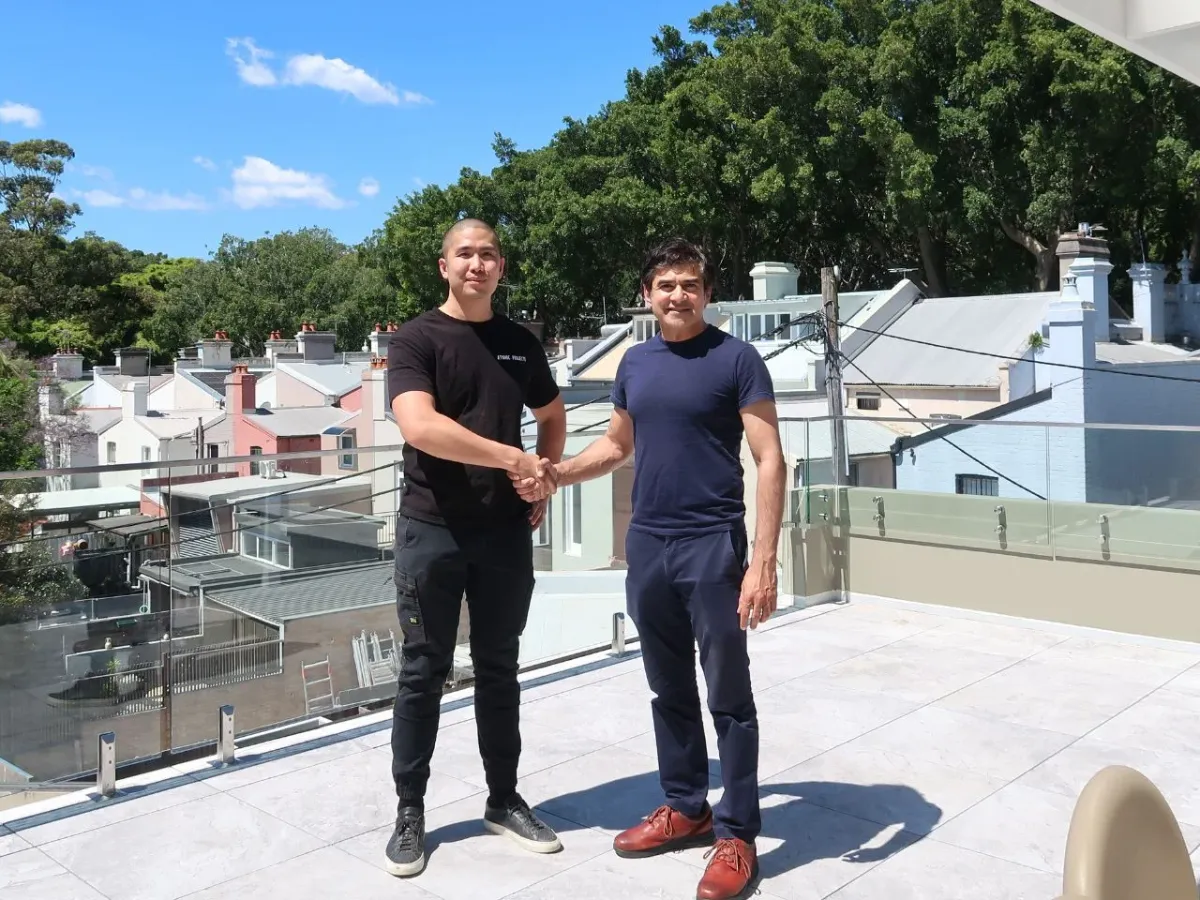
You'll deal with the builder, not a call centre.
I started Atomic Projects because too many remedial builders treat an operating building like an empty site — and the facilities manager wears the tenant complaints. Every project we take, I'm accountable for, and we deliver around your operation. Send me the condition report and I'll tell you straight what it takes to fix without shutting you down.
What a facilities manager will want to know.
Can you work without shutting the building or tenants down?+
How do you handle out-of-hours or staged works?+
What documentation do I get for the asset file and insurer?+
How do you keep a defect from becoming a WHS or compliance problem?+
Planned vs reactive — can you help me budget?+
Are you registered for regulated work?+
How do remedial works fit into an asset maintenance plan?+
How much notice do tenants get before remedial works start?+
How much do commercial remedial works cost?+
Who manages site safety and inductions during the works?+
What happens if extra defects are found once works open up?+
Keep the building trading.
Send the condition report, the defect, or your constraints. A registered builder calls back within 5 minutes, 7am–5pm weekdays.