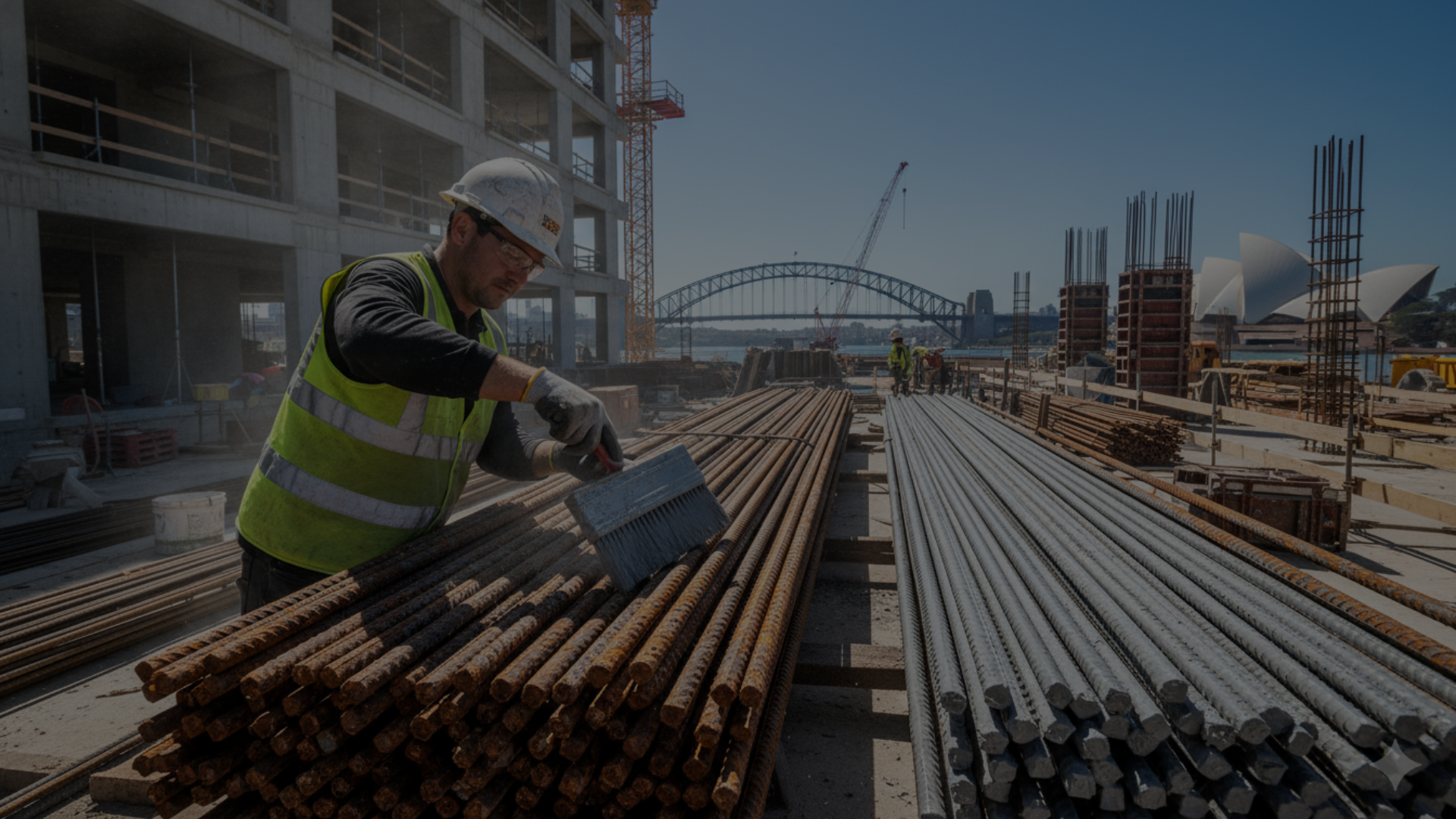
Corroding steel is the hidden engine behind a large share of structural deterioration in Sydney buildings. Whether it is reinforcement inside concrete or exposed structural steel, once corrosion starts it expands, cracks the surrounding material, and progressively eats away the section the structure relies on. Steel corrosion treatment arrests that process and restores the capacity that has been lost.
Our service treats and protects corroded structural steel and reinforcement: cleaning steel back to a sound, bright surface, applying anti-corrosion and zinc-rich protective systems, restoring lost section where needed, and coating the repair to keep the corrosion drivers out. The aim is not to hide the rust but to stop the mechanism and protect against its return.
Because corrosion is usually a symptom of chloride or carbonation attack and moisture ingress, we treat the steel as part of addressing those drivers — so the repair lasts rather than re-rusting behind a fresh coat.
How We Treat Steel Corrosion
- Assess extent and section loss. We establish how far the corrosion has progressed and how much section has been lost, so the treatment matches the actual condition.
- Expose and clean the steel. Corroded steel is exposed and cleaned back to a bright, sound surface — to Sa 2½ where blast-cleaned — removing all rust and contamination.
- Treat and prime. Anti-corrosion primers or zinc-rich protective coatings are applied to inhibit further corrosion and re-passivate the steel.
- Restore lost section. Where section has been lost, reinforcement is supplemented and reinstated with structural repair mortar, or structural steel is plated and welded to the engineer's design.
- Protect the repair. Anti-carbonation coatings or protective systems are applied to keep moisture, chlorides and CO2 out and stop the corrosion returning.
Where Steel Corrosion Shows Up
- Reinforcement in concrete — driving spalling in balconies, soffits and facades.
- Exposed structural steel — beams, columns, and connections in carparks and plant areas.
- Coastal and wet environments — chloride-driven attack near the water.
- Embedded fixings and lintels — corroding steel splitting masonry.
Frequently Asked Questions
What causes structural steel and reinforcement to corrode?
The two big drivers are chloride attack — salt reaching the steel, common in Sydney's coastal buildings — and carbonation, where CO2 lowers the concrete's alkalinity and removes the protection that keeps reinforcement passive. Moisture is the enabler for both. Effective treatment addresses the driver, not just the visible rust, which is why diagnosis matters.
Can corrosion actually be stopped, or does it always come back?
It can be stopped and kept stopped — but only if the steel is cleaned properly, treated correctly, and then protected against the driver that caused it. Treatments that skip the surface preparation or the protective system fail within a couple of seasons. Our process is built around doing all three, which is what makes the repair durable.
Is corroding steel a structural risk?
It can be. As steel loses section it loses capacity, and the expansion of the corrosion products cracks and spalls the surrounding concrete or masonry, which can create falling-debris hazards as well as reducing strength. The risk depends on the element and the extent, which is exactly what our assessment establishes.
What standard is the steel cleaned to?
Where blast-cleaning is specified, structural steel is prepared to Sa 2½ — a near-white, sound surface with all rust and contamination removed — because protective coatings only perform on a properly prepared surface. Reinforcement is mechanically cleaned to bright steel before treatment. This preparation discipline is what the durability of the whole repair rests on.
Related Services
Steel corrosion treatment stops the mechanism and restores the section — clean, treat, reinstate, protect. As a Class 2 Registered Builder with over 10 years of remedial experience across Sydney, Atomic Projects delivers corrosion treatment specified to arrest the cause, not just cover the rust. Call us on 0410 515 509 or email hello@atomicprojects.com.au to arrange an assessment.