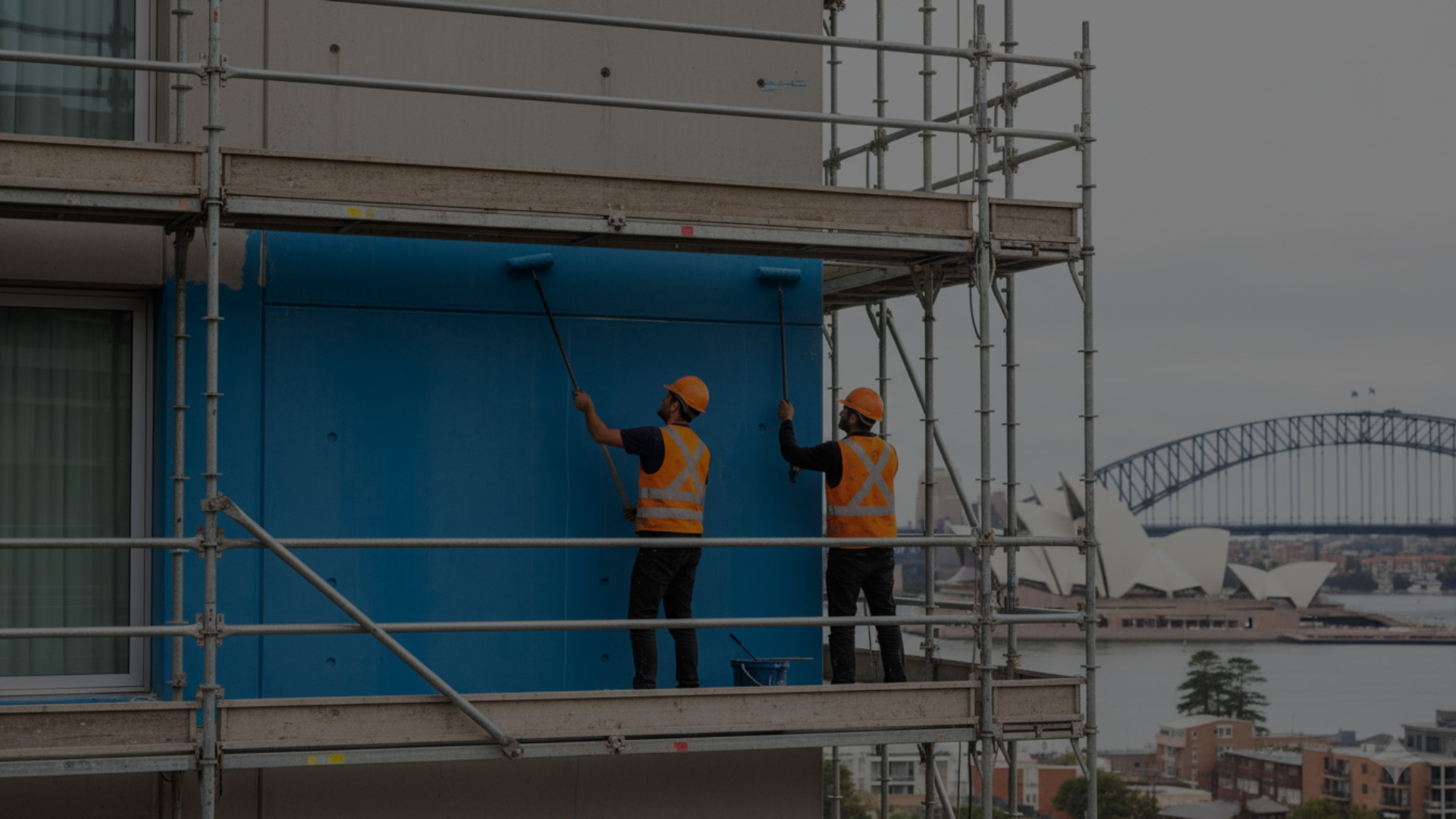
Cracks in a building’s façade are more than cosmetic — they’re an open invitation for water ingress, corrosion, and accelerated structural decay. Left untreated, they can compromise the safety, performance, and value of the property. In Sydney’s mixed climate, where thermal expansion, settlement, and moisture cycles are constant, façade cracks are a leading cause of defect escalation.
At Atomic Projects, we treat façade crack repairs as both a structural and aesthetic challenge. Our process ensures every crack is correctly classified, the root cause is identified, and the repair method matches the crack’s behaviour — not just its appearance.
1. Crack Classification & Assessment
Not all cracks are equal. We classify each crack as:
- Dormant: Stable and no longer moving. Can be filled with rigid repair mortars.
- Active: Still moving due to settlement, thermal expansion, or structural loading. Requires flexible sealants, crack monitors, or structural stitching.
- Structural: Through-cracks that compromise the load path and require engineer-certified repair.
2. Root Cause Investigation
Before any repair, we investigate the origin of cracking, which may include:
- Differential settlement or heave.
- Inadequate expansion joint provision.
- Corrosion of embedded steel reinforcement (reinforcement spalling).
- Thermal movement not accommodated in the original design.
- Overloading or structural modification.
3. Targeted Repair Execution
Our repair methodology is matched to the crack classification:
- Dormant hairline cracks: Routed, cleaned, and filled with polymer-modified mortar or flexible sealant.
- Active movement cracks: Formed into proper expansion joints with bond-breaker and polyurethane or silicone sealant.
- Structural cracks: Epoxy injection, carbon-fibre crack-stitching, or helical bar reinforcement depending on substrate and load requirements.
- Corrosion-induced cracks: Concrete break-out, rust treatment, cathodic protection where needed, and structural mortar reinstatement.
4. Finishes & Coatings
After structural repair, we apply compatible surface coatings — render, paint, or protective coating systems — to match the surrounding facade and provide ongoing moisture protection.
Atomic Projects’ facade crack repair methodology is referenced to AS 3600, AS 3700, and relevant product standards — ensuring every repair is not only visually complete but structurally sound.
Frequently Asked Questions
Are all facade cracks structural?
No — cracks range from hairline shrinkage cracks (cosmetic) to active structural cracks that reflect movement in the building’s frame or substrate. The distinction matters: cosmetic cracks are filled and sealed; active cracks require investigation to establish the cause (settlement, overloading, reinforcement corrosion, thermal movement) before an appropriate repair strategy can be designed.
How do you determine whether a crack is active or dormant?
We use Demec gauge measurements, crack monitors, and timed photographic surveys to establish whether a crack is still moving. Active cracks require a different repair methodology — typically flexible sealants, crack-stitching, or surface-applied reinforcement systems — compared to dormant cracks, which can be filled with rigid repair mortars.
What products are used for facade crack repairs?
We use polymer-modified repair mortars, epoxy injection resins, flexible polyurethane or silicone sealants, and crack-stitching stainless steel bars depending on the crack type and substrate. All products are selected to be compatible with the existing building fabric and to meet relevant Australian Standards (AS 3600, AS 3700) and the NCC.
Can facade cracks cause water ingress?
Yes — even fine cracks can admit water under wind-driven rain conditions, leading to corrosion of reinforcement, render delamination, and internal dampness. Sealing facade cracks is often the first line of defence in a broader water ingress rectification programme. We assess the crack’s contribution to any broader water ingress pattern.
How long does facade crack repair work take?
The repair itself can often be completed in 1–3 days for localised cracking. Larger programmes involving multiple elevations or scaffold access typically run 1–4 weeks. Curing times for repair mortars and sealants also affect the programme — cold or wet weather can extend these. We factor product cure times into all programmes.
Related Services
Ready to address defects in your building? Atomic Projects is a Class 2 Registered Builder with over 10 years of specialist experience in remedial and defect rectification works across Sydney. Contact our team to discuss your project and arrange a site inspection.