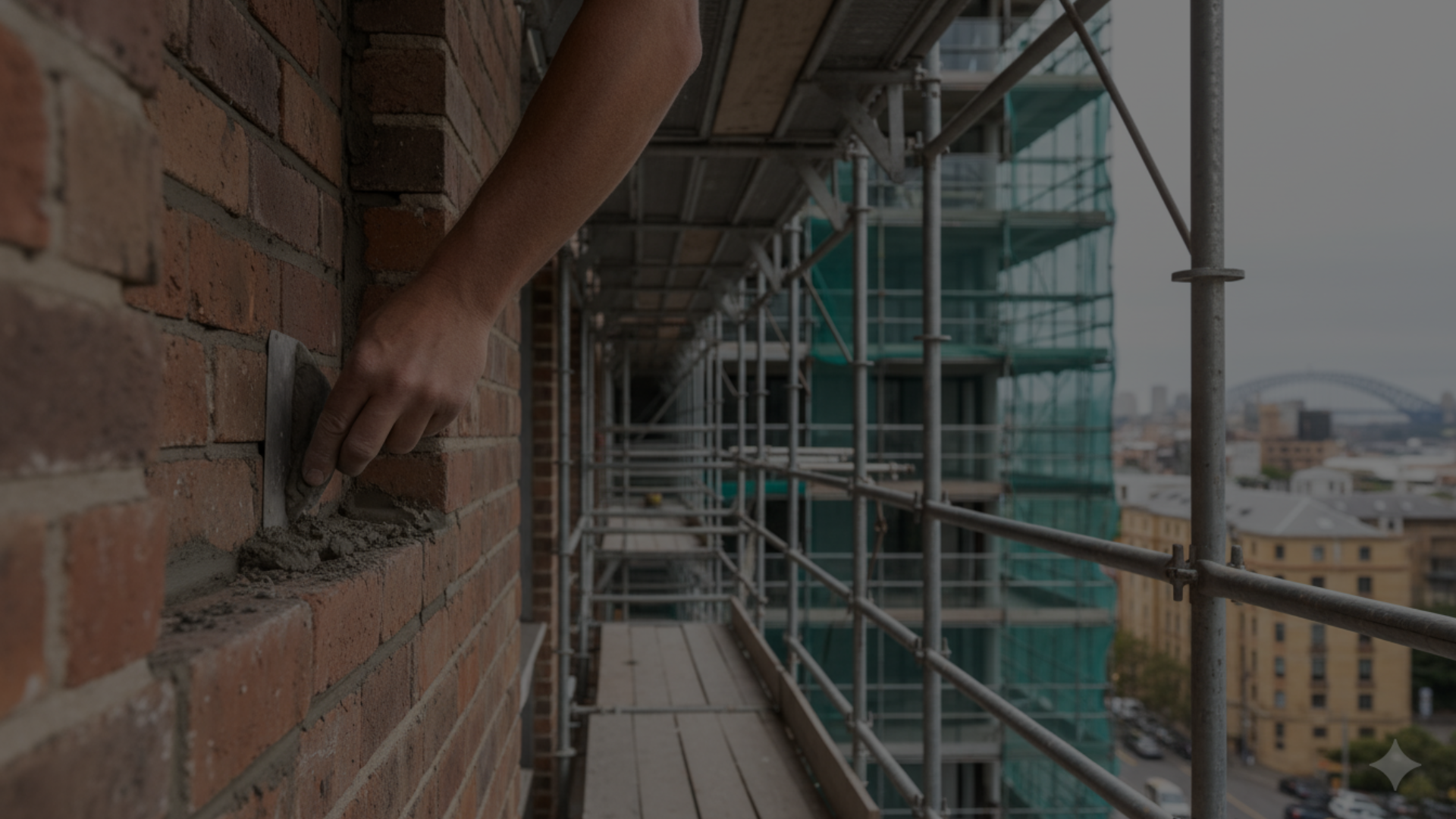
Brick façades are designed to last for decades, but constant exposure to rain, heat, and movement gradually breaks them down. Mortar, the "glue" that holds the wall together, is particularly vulnerable — it weathers faster than the brick itself, leading to gaps that allow water penetration, structural weakness, and eventually loose or unstable masonry. Left untreated, these small failures escalate into widespread cracking, efflorescence, spalling, and costly rebuilds.
Our brickwork restoration and repointing service is not simply cosmetic — it's about restoring both the structural integrity and visual continuity of the façade. We treat brick façades as load-bearing protective systems, not decorative skins, and that philosophy guides every step of our process.
Our Process
- Detailed Inspection & Mapping
- We start by inspecting every elevation, identifying cracked bricks, eroded joints, bulging areas, and evidence of water ingress. Each defect is mapped and categorised so repairs are systematic, not patchwork.
- Mortar Composition & Colour Matching
- Mortar must be replaced with material compatible in strength, porosity, and appearance. We test existing mortar for composition (lime, cement, sand type) and replicate it. A mismatch can cause accelerated cracking or staining, so this step is critical.
- Brick Replacement & Repair
- Damaged bricks are carefully removed without disturbing surrounding masonry. Where possible, we source salvaged or new bricks that match in size, colour, and texture. For heritage façades, hand-made or specialty units may be required to preserve architectural value.
- Joint Raking & Cleaning
- Old mortar is raked out to the correct depth, then joints are cleaned of dust and contaminants. This ensures the new mortar bonds properly and achieves full performance.
- Repointing
- Fresh mortar is inserted and tooled to the required profile (e.g. flush, weather-struck, or recessed). Tooling not only affects appearance but also directs water away from the façade.
- Crack Stitching & Reinforcement
- Where cracks threaten structural continuity, stainless-steel helical reinforcement bars are embedded across joints to discreetly stabilise the wall. This prevents further spreading without changing the façade's look.
- Final Cleaning & Protective Treatments
- Once repairs are complete, the façade is gently cleaned and, where appropriate, a breathable water-repellent coating is applied. This protects against moisture without trapping vapour.
Key Considerations
- Compatibility Matters – Using the wrong mortar (too hard or too impermeable) can destroy bricks rather than preserve them.
- Heritage Guidelines – For heritage or character façades, approvals may be required. All works must respect council requirements and historical fabric.
- Safety & Access – Masonry works require controlled dust management and safe façade access (scaffolding, swing stages, or rope access depending on height).
Value to the Client
- Stops Water Ingress – Reduces risk of leaks into apartments, internal finishes, and structural elements.
- Extends Façade Lifespan – Properly repointed brickwork can add decades of service life to the building.
- Protects Structural Stability – Prevents bricks loosening, falling hazards, and costly structural remediation.
- Preserves Appearance – Maintains or restores a uniform façade aesthetic, supporting property value.
- Minimises Future Costs – Prevents minor cracks and erosion from becoming major rebuilds.
Frequently Asked Questions
How do I know if my building's brickwork needs repointing?
Common signs include mortar joints that are visibly recessed, crumbling, or missing; staining or damp patches on internal walls near exterior brickwork; efflorescence (white salt deposits) on the façade; and any loose or dislodged bricks. A professional inspection will confirm the extent and urgency of works required.
Will the new mortar match the existing brickwork?
Mortar matching is one of the most important steps in our process. We sample and test existing mortar for composition, strength, and colour before selecting a replacement mix. For heritage facades, we use lime-based mortars that are compatible with older bricks and replicate the original appearance as closely as possible.
How long does brickwork restoration and repointing typically take?
Duration depends on the size of the building and the extent of defects. A typical multi-storey residential building may take two to six weeks including access setup, repairs, and final clean. We provide a detailed programme before works begin so strata managers and residents know what to expect.
Do residents need to vacate during façade works?
In most cases, residents do not need to vacate. Our team works from external access — scaffolding, swing stages, or rope access — with dust and debris management protocols in place. We coordinate with building managers to minimise disruption to daily routines.
What Australian Standards govern brickwork and repointing?
Brickwork and masonry repairs in Australia are guided by AS 3700 (Masonry Structures), which sets requirements for material selection, joint preparation, and structural performance. For heritage buildings, works must also comply with Heritage Council guidelines and, where applicable, the Australia ICOMOS Burra Charter principles.
Related Services