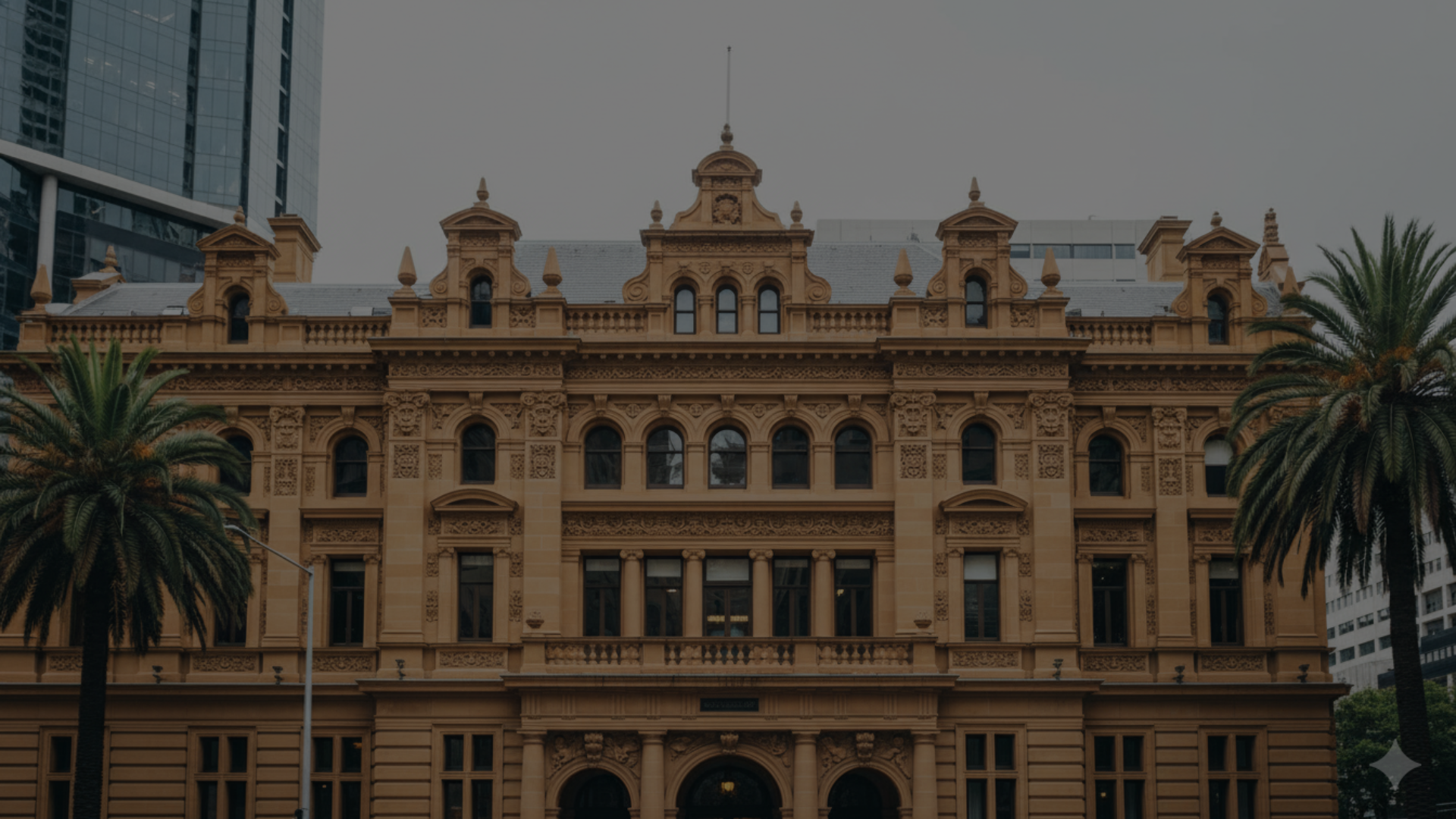
Heritage façades are irreplaceable. They carry architectural, cultural, and community significance — but they also present some of the most complex remediation challenges. Materials are often aged, fragile, and no longer manufactured. Repairs must preserve original appearance while ensuring modern safety and performance.
Our heritage façade repair service is built around respect, precision, and compliance. We balance heritage values with today's performance expectations.
Our Process
- Condition Survey & Heritage Consultation
- We work with heritage architects and engineers to document existing conditions, identify defects, and plan works that respect heritage fabric.
- Specialist Material Sourcing
- Where possible, original materials (stone, brick, terracotta, metalwork) are salvaged or replicated through specialist suppliers.
- Specialised Repair Techniques
- Lime mortars, stone indents, bronze or lead detailing, and traditional craftsmanship are used to preserve authenticity.
- Structural Stabilisation
- Behind decorative elements, we discreetly stabilise substrates with stainless steel anchors or reinforcement to secure safety without altering appearance.
- Protective Treatments
- Breathable, reversible coatings may be applied to shield delicate surfaces from weathering.
- Approvals & Compliance
- All works are carried out under heritage guidelines and relevant council approvals.
Key Considerations
- Authenticity – Repairs must blend seamlessly with original fabric.
- Fragility – Many elements cannot withstand aggressive modern methods.
- Documentation – Heritage compliance requires detailed reporting and approvals.
Value to the Client
- Preserves architectural and cultural value.
- Meets council heritage obligations.
- Secures safety without loss of character.
- Protects long-term value through careful conservation.
- Provides pride of ownership in preserving Sydney's history.
Frequently Asked Questions
Do I need council approval to repair a heritage-listed façade?
It depends on the nature and extent of the works. Minor like-for-like repairs — such as repointing with matching lime mortar or replacing isolated damaged stones — are often exempt from DA requirements under the Local Environmental Plan (LEP) or SEPP (Exempt and Complying Development Codes). However, any works that alter the appearance, materials, or extent of significant heritage fabric typically require a Heritage Impact Statement and council approval. We advise on approvals requirements as part of our pre-works consultation.
What is the Burra Charter and does it apply to my building?
The Australia ICOMOS Burra Charter is the nationally recognised standard for the conservation and management of places with cultural significance — including heritage-listed buildings. Its principles guide what can be altered, what must be preserved, and how works should be documented. While the Burra Charter is not itself legislation, it is widely adopted by heritage councils, the NSW Heritage Office, and local government as the benchmark for best-practice heritage conservation, and it underpins the methodology statements we prepare for all heritage façade projects.
How do you source matching materials for a heritage façade that used materials no longer manufactured?
Sourcing is one of the most challenging aspects of heritage façade work. Our approach includes salvage from original surplus material on-site, sourcing from heritage demolition salvage yards, commissioning specialist manufacturers to replicate hand-made bricks or terracotta, and — for stone — locating the original quarry or identifying a geologically matched substitute. For decorative metalwork, we can cast or fabricate replicas from surviving examples. We document our sourcing decisions for council records.
Can modern waterproofing products be used on heritage façades?
Yes, but product selection must be carefully managed. Heritage façades — particularly those constructed with lime mortar and traditional masonry — must breathe. Products that seal the surface completely (such as modern acrylic paints or film-forming coatings) can trap moisture inside the wall, causing accelerated decay and salt damage. We specify only breathable, reversible, and heritage-compatible systems such as silane/siloxane impregnations or lime-wash finishes.
What records do you provide after completing heritage façade works?
We produce a comprehensive as-built report including pre- and post-works photography, a materials schedule (with product data sheets), method statements, any engineering certificates, and council approval documentation. This record is important for ongoing maintenance, future heritage works, and building sale or transfer. It is submitted to the relevant council or heritage authority where required.
Related Services