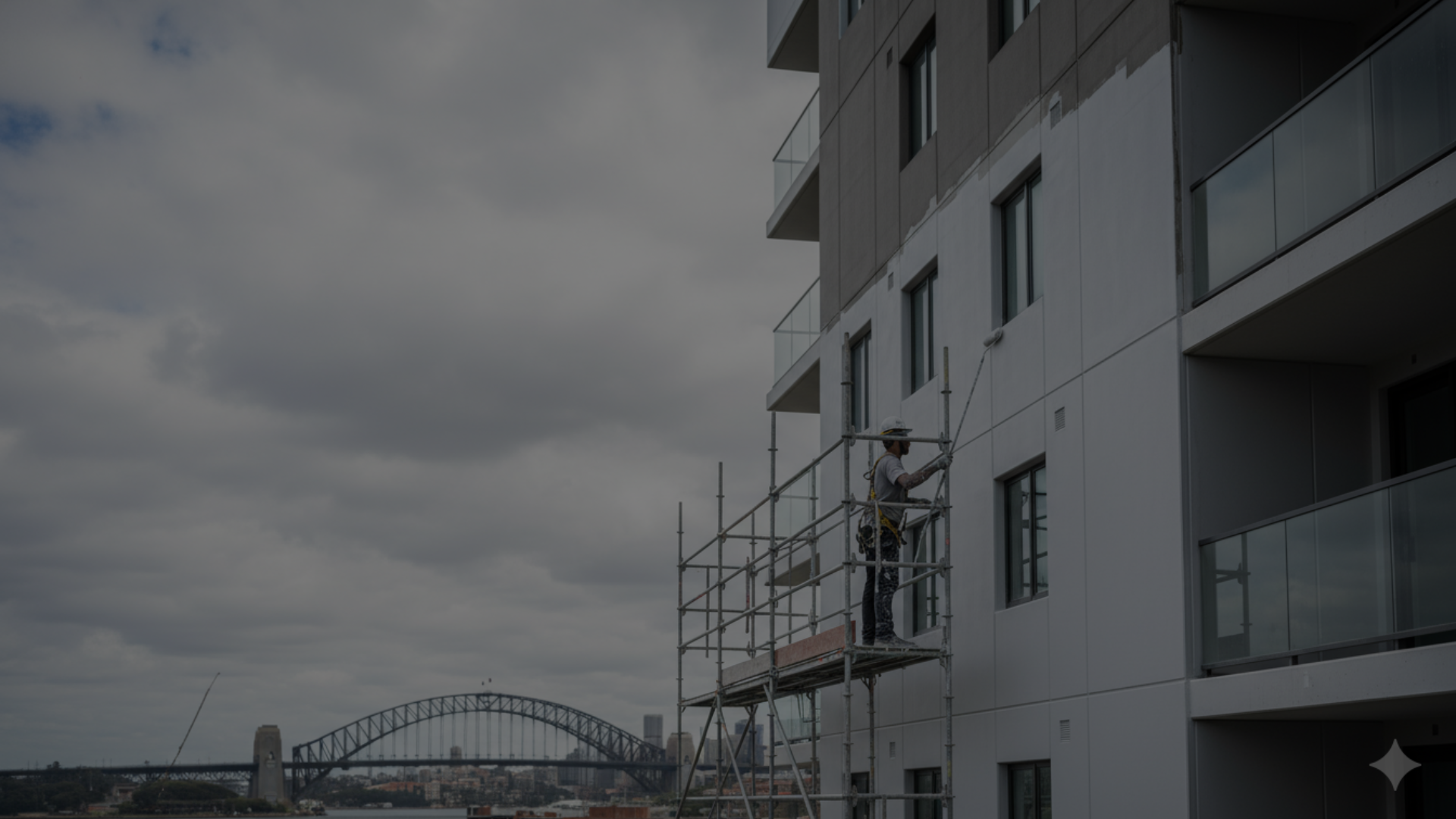
A building's coating and paint system is its protective skin against the elements. Sun, rain, wind, and pollution gradually degrade coatings — leading to fading, chalking, cracking, and reduced weatherproofing. Without protection, the façade substrate (render, concrete, brick) deteriorates faster, driving up long-term maintenance costs.
Our protective coatings and painting service is about more than colour — it's about building performance, durability, and whole-of-life cost savings.
Our Process
- Surface Preparation
- Façades are pressure-washed, contaminants removed, and defective coatings stripped back. Surfaces are profiled to achieve optimal adhesion.
- Crack Repairs & Substrate Protection
- Before painting, cracks and defects are sealed to prevent water ingress.
- Coating System Selection
- Depending on exposure and substrate, we apply anti-carbonation coatings, elastomeric membranes, siloxane water repellents, or traditional paints.
- Application
- Applied via brush, roller, or spray with strict film-thickness control to achieve manufacturer specifications.
- Detailing & Seal Protection
- Joints, windows, and penetrations are carefully detailed to prevent bridging or weak spots.
- Final QA & Warranty
- Coatings are inspected for adhesion, coverage, and finish. Many systems come with manufacturer warranties.
Key Considerations
- Durability – Lifespan depends on UV resistance, breathability, and maintenance.
- Colour Stability – High-value properties often demand fade-resistant pigments.
- Breathability vs Waterproofing – Balance is critical to avoid trapping moisture inside the wall.
Value to the Client
- Extends life of underlying façade materials.
- Reduces maintenance costs through protective systems.
- Improves appearance and property value.
- Provides warranties for long-term peace of mind.
- Shields against Sydney's harsh coastal environment.
Frequently Asked Questions
What is the difference between a standard paint and an anti-carbonation coating?
A standard architectural paint provides colour and basic weatherproofing, but its primary purpose is aesthetic. An anti-carbonation coating is a specialist elastomeric system engineered to block CO₂ and chlorides from penetrating concrete — slowing the process of concrete carbonation that leads to steel reinforcement corrosion and spalling. For exposed concrete façades, anti-carbonation coatings offer significantly better protection and longevity than standard paints.
How often does a commercial building's façade coating need to be renewed?
In Sydney's climate, most quality coating systems last between 10 and 20 years, depending on product quality, application standards, and maintenance. Buildings in coastal or high-UV exposure zones may need attention sooner. A regular maintenance inspection every five years allows minor issues to be addressed before full recoating is required.
Can façade painting be done while residents are in the building?
Yes — in most cases, external façade painting causes minimal disruption to residents. Works are carried out from scaffolding or rope access, and low-odour, water-based coating systems are specified where possible to minimise impact. We communicate access and programme details with building managers ahead of works commencing.
Do I need to repoint or repair the render before painting?
Yes — applying coatings over defective render or open cracks will not fix the underlying problem and may accelerate failure. Our process always starts with substrate assessment and repair before any coating is applied. Attempting to paint over failing render is a false economy that leads to premature peeling, delamination, and repeat costs.
What coating system is best for a strata building with a concrete spandrel panel façade?
For concrete spandrel panels, we typically specify an anti-carbonation elastomeric system — either a two-coat liquid-applied membrane or a high-build elastomeric topcoat over a penetrating primer. This combination bridges micro-cracks, resists carbonation, and provides a clean, uniform finish. The specific system depends on the panel's condition, the level of existing carbonation, and the building's architectural requirements.
Related Services