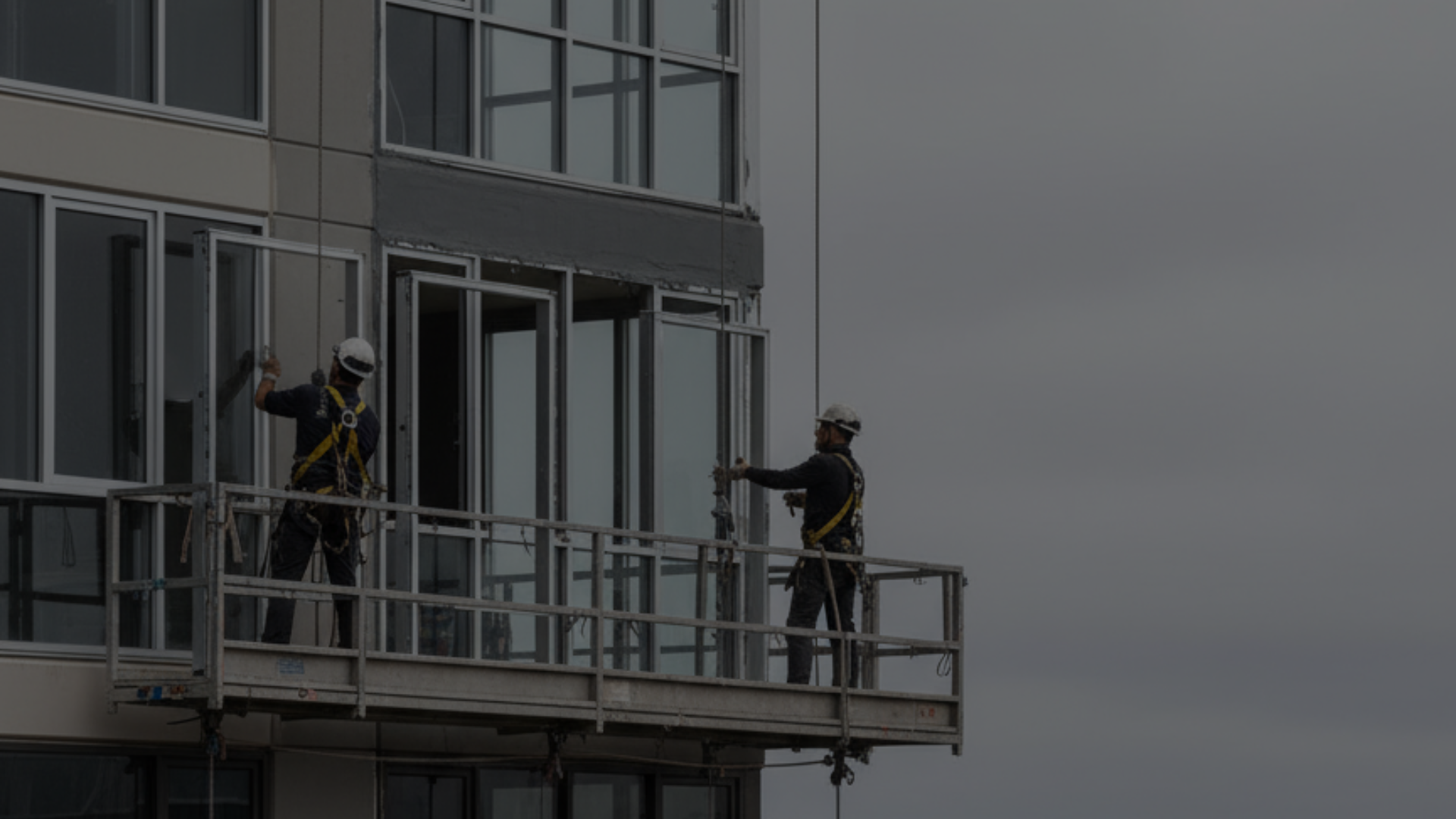
Windows and façade sealants form the first line of defence against water penetration. However, sealants degrade over time — shrinking, cracking, or detaching from substrates. Old or poorly installed window frames may leak, corrode, or fail to meet today's performance standards. Because windows are often tied directly into the façade, failures here can allow water deep into the building envelope, damaging finishes, structure, and even electrical systems.
Our window and sealant replacement service is designed to restore airtightness, watertightness, and thermal performance across the building façade.
Our Process
- Comprehensive Leak Assessment
- Using water testing, dye tests, and visual inspection, we identify failed joints, cracked mastic, and leaking frames.
- Sealant Removal & Joint Preparation
- Old sealant is removed, joints cleaned, and backer rods installed to ensure correct joint geometry for new sealant performance.
- Sealant Application
- High-performance elastomeric sealants (polyurethane, hybrid, or silicone) are applied according to movement and exposure requirements.
- Window Replacement (if required)
- For deteriorated or outdated windows, we replace units with modern aluminium, steel, or thermally broken frames — ensuring compliance with NCC and acoustic/thermal requirements.
- Perimeter Flashing & Water Management
- Where needed, new flashing and water-shedding details are introduced to eliminate leak paths.
- Final QA Testing
- Water testing verifies that seals and windows perform under realistic storm conditions.
Key Considerations
- Movement Capability – Sealants must accommodate thermal and structural movement without tearing.
- Material Compatibility – Some sealants stain stone, leach oils, or fail on plastics/metals if mismatched.
- Safety & Access – Replacement often requires façade access, lift plans, and temporary weatherproofing.
Value to the Client
- Stops leaks and prevents internal water damage.
- Improves occupant comfort with reduced drafts and noise.
- Upgrades building performance (thermal, acoustic, energy).
- Increases property value by restoring façade uniformity.
- Provides compliance with modern standards.
Frequently Asked Questions
How long do façade sealants typically last before they need replacing?
Quality polyurethane or hybrid sealants in a well-detailed joint have a service life of 10 to 20 years, depending on UV exposure, joint movement, and substrate compatibility. Silicone sealants can last longer but are not always appropriate due to compatibility issues. Sealants in high-movement joints or west- and north-facing elevations typically degrade faster and should be inspected as part of a regular building maintenance programme.
My building has recurring leaks around windows. Does the whole sealant need to be replaced?
Not necessarily — recurring leaks often stem from a specific joint or detail failure rather than widespread sealant failure. We conduct a systematic water test to locate the exact source before recommending scope. In older buildings where sealant was applied over 15 years ago, however, wholesale replacement is often more economical than repeated patch repairs, which tend to fail again as the surrounding sealant ages.
Can sealant replacement be done without replacing the windows themselves?
Yes — in many cases the window frame itself is in acceptable condition and only the perimeter sealant and flashings need attention. We assess each window individually. Where the frame is corroded, deformed, or no longer meeting thermal or acoustic standards, replacement is recommended. Where the frame is sound, sealant-only works are a cost-effective solution.
What water testing method is used to confirm repairs are effective?
We use hose water testing in accordance with AS/NZS 4284 (Testing of Building Façades) to simulate rain-equivalent water pressure at repaired joints. For more stringent testing on high-rise or high-specification projects, we can arrange chamber testing or blower door testing. Results are documented with photographic evidence and included in the project completion report.
Are window replacements classified as capital works under the Strata Schemes Management Act?
Yes — window replacement across common property is typically classified as capital works expenditure under the NSW Strata Schemes Management Act 2015. This means costs must be funded through or approved via the capital works fund (sinking fund), and may require a strata committee or general meeting resolution depending on the value of the works. We can assist with cost planning and documentation for committee approval.
Related Services