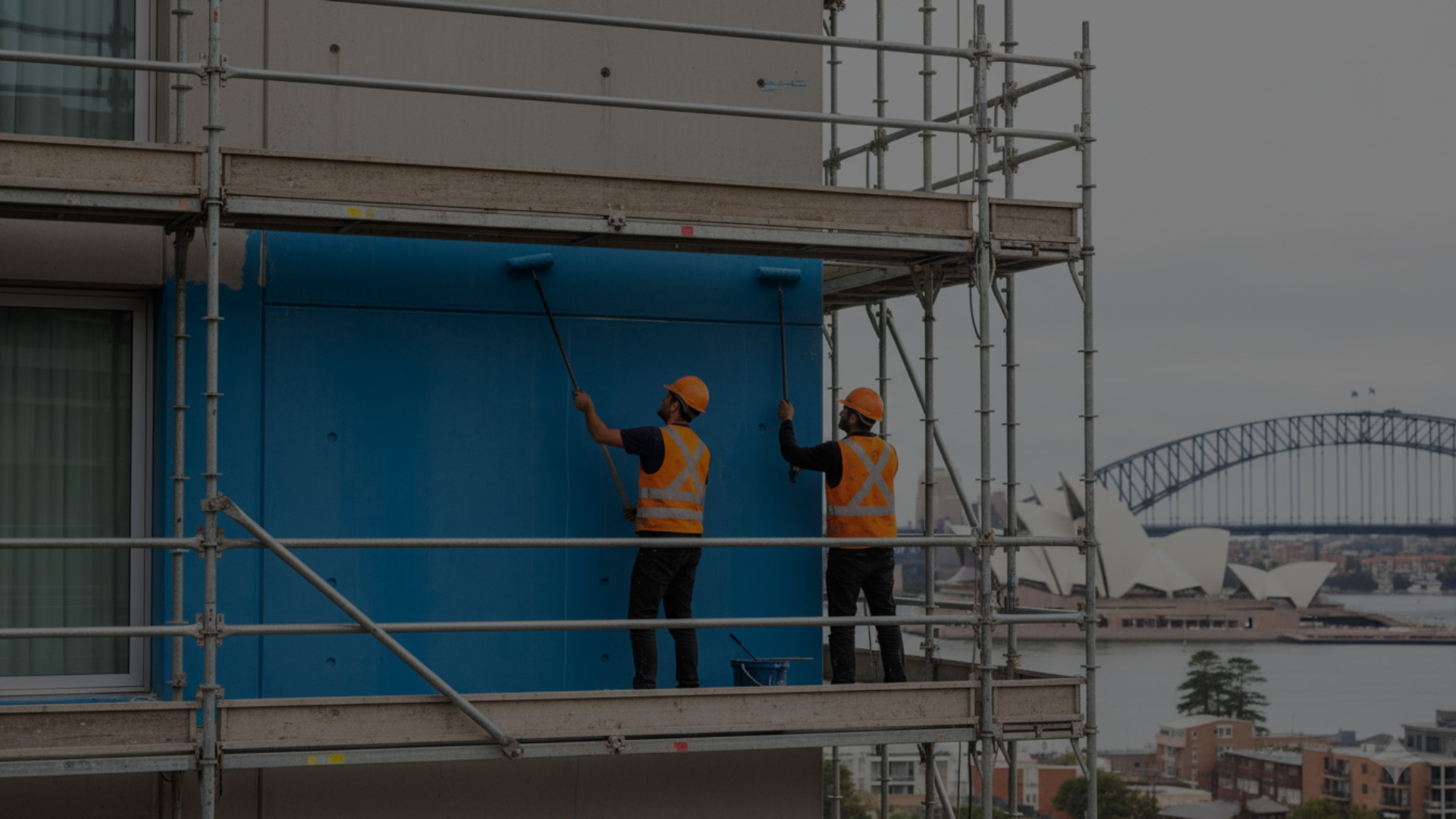
Paint and surface finishes are more than just decoration — in heritage buildings, they are protective barriers against weather and environmental damage, and vital to preserving the building's original character. Over time, coatings degrade due to UV exposure, moisture, pollution, and incompatible repainting systems.
We deliver true heritage restoration, not just a repaint, by respecting the original surface materials, colour schemes, and application techniques, while upgrading durability with modern formulations.
Initial Investigation & Analysis
- Paint Sampling & Layer Analysis – Carefully removing micro-samples to identify original colours, pigments, and binders.
- Substrate Assessment – Determining the base material (stone, brick, render, timber, metal) and its current condition.
- Moisture & Salt Testing – Identifying issues like rising damp or salt efflorescence that may cause coating failure.
Surface Preparation
- Gentle Paint Removal – Using heritage-approved methods such as steam stripping, chemical poultices, or low-pressure micro-abrasion to avoid damaging substrates.
- Repair of Substrate – Filling cracks, repointing joints, and patching render before coating.
- Cleaning – Removing biological growths, soot, or pollution deposits without etching the surface.
Colour & Finish Matching
- Historic Colour Matching – Replicating original hues using heritage colour charts and archival references.
- Finish Recreation – Achieving correct sheen levels — from limewash matte to enamel gloss — to match the original appearance.
- Blending Repairs – Integrating touch-ups seamlessly so new and old surfaces appear unified.
Application Systems
- Breathable Coatings – Using mineral-based paints, limewashes, or silicate paints that allow trapped moisture to escape.
- Protective Undercoats – Primers tailored to each substrate to maximise adhesion and protection.
- Layered Application – Building up coats for depth, richness, and long-term resistance.
- Specialist Metal Coatings – For wrought iron, steel, or bronze features, including rust-inhibiting primers and UV-stable topcoats.
Specialist Restoration Techniques
- Limewash & Casein Paints – For masonry that requires vapour permeability.
- Faux Finishes & Decorative Painting – Restoring marbling, woodgraining, and gilding to original patterns.
- Murals & Signwriting – Conservation or recreation of painted heritage signage.
Protection & Maintenance
- UV & Weather Protection – Modern additives that extend life without altering colour tone.
- Anti-Graffiti Coatings – Clear sacrificial layers that protect heritage surfaces from vandalism.
- Maintenance Plans – Scheduled inspections and touch-ups to avoid full recoating cycles.
Compliance & Documentation
- All works completed in accordance with Heritage Council guidelines and conservation best practice.
- Colour schedules, methodology statements, and photographic before/after documentation provided for council or heritage trust approvals.
Benefits of Heritage Paint & Surface Restoration
- Preserves Historical Authenticity – Colours and finishes remain true to the building's original era.
- Extends Service Life – High-performance coatings prevent water penetration and UV breakdown.
- Protects the Building Fabric – Prevents deterioration of stone, brick, render, timber, and metal elements.
- Improves Visual Impact – Enhances kerb appeal while maintaining authenticity.
Why Choose Atomic Projects
- Material Science Expertise – Knowledge of paint chemistry and substrate interaction.
- Skilled Applicators – Tradespeople trained in heritage-specific techniques.
- Colour History Access – Partnerships with heritage colour libraries and archives.
- Integrated Approach – Coordinating with façade, roofing, and structural restoration for complete outcomes.
Frequently Asked Questions
How do you identify the original paint colours for a heritage building?
We use paint scrape analysis — carefully removing micro-samples in a step-cut pattern down through successive paint layers to reveal original colours. Samples are sent to a specialist laboratory for spectroscopic analysis where colour matching precision is critical. For less precise requirements, we conduct on-site visual assessment and cross-reference with heritage colour archives including the Dulux Heritage and Resene Heritage ranges, Australian Council and heritage trust records, and archival photographs. All colour decisions are documented and submitted for heritage approval where required.
What is limewash paint and when is it appropriate?
Limewash is a traditional coating made from slaked lime and water, sometimes with natural pigments added. It penetrates the masonry substrate rather than forming a surface film, and is highly vapour-permeable — allowing the wall to breathe freely. It is the historically correct coating for lime-rendered or stone masonry surfaces from the pre-20th century era. On a heritage building, using a modern acrylic or vinyl paint over limewashed masonry traps moisture and accelerates substrate decay. We specify limewash or mineral silicate paints for all heritage masonry that was originally treated in this way.
Can lead paint on a heritage façade simply be painted over?
Not in most cases. Lead paint that is in stable, intact condition (not chalking, flaking, or powdering) can sometimes be encapsulated with a compatible overcoat as a short-term measure. However, this is only appropriate where the surface is to remain undisturbed. Any sanding, scraping, or mechanical preparation of lead paint must be conducted under SafeWork NSW lead paint regulations, with containment, appropriate PPE, and licensed waste disposal. We test for lead before commencing any surface preparation and implement a lead management plan where required.
How long does heritage paint and surface restoration last?
Service life depends on the coating system, substrate condition, and environmental exposure. Limewash on sheltered masonry may need refreshing every five to ten years, though this is a relatively minor maintenance task. Mineral silicate paints typically last fifteen to twenty years. Protective topcoats on rendered or concrete surfaces last ten to fifteen years in Sydney's coastal climate. We provide a maintenance schedule with every project, recommending inspection intervals and early intervention points to maximise service life between major recoating cycles.
What anti-graffiti solutions work on heritage surfaces without altering appearance?
We specify sacrificial anti-graffiti coatings — clear, microporous systems that allow the heritage surface to breathe while providing a release layer that graffiti cannot bond to permanently. These coatings are removed along with the graffiti during cleaning, then reapplied. Unlike permanent anti-graffiti coatings, sacrificial systems are reversible and do not alter the colour or texture of the heritage surface. They are particularly suitable for sandstone, brick, and rendered surfaces in publicly accessible locations.
Related Services
With our process, the building doesn't just look freshly painted — it looks exactly as it did in its prime, with every detail preserved and protected for future generations.