


How to choose a remedial builder for your Sydney strata building. DBP registration, strata references, scope transparency — the 7 factors that actually matter.
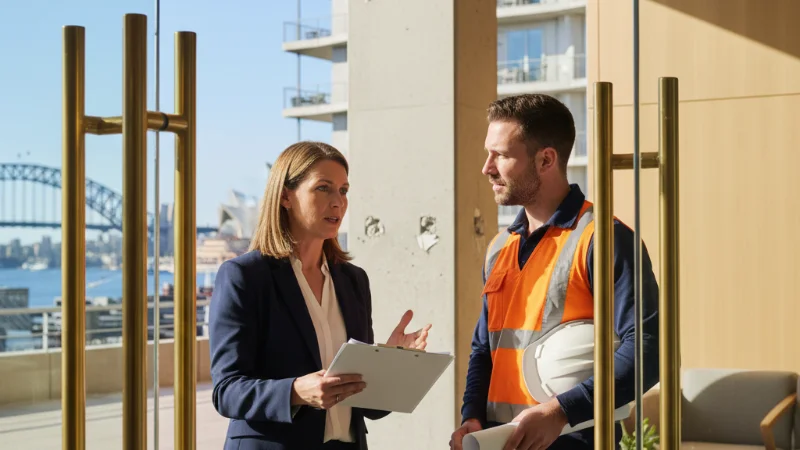
Three quotes land on the strata manager's desk. One is half the price of the other two. The scope descriptions don't match. One contractor mentions DBP registration; the other two don't. The committee wants the cheapest option. The engineer says the scope can't be cut.
This is the moment where remedial building projects either succeed or go sideways — and it happens before a single scaffold clip is bolted.
After delivering $20M+ in remedial building services across Sydney for 100+ strata buildings, we've seen committees make this decision hundreds of times. The ones who get it right evaluate five things. The ones who don't end up re-tendering twelve months later with a bigger problem and a smaller capital works fund.
Here's the framework that separates a good hire from an expensive mistake.
A remedial builder specialises in diagnosing and repairing defects in existing buildings — concrete cancer, waterproofing failures, facade deterioration, structural cracking, and fire safety upgrades. They work from an engineer's specification to restore building integrity, not build from scratch. In strata, they also manage occupied-building logistics: resident access, noise restrictions, scaffold programs, and committee reporting.
Remedial building is not general construction. A builder who constructs new apartment buildings may have no experience repairing a 40-year-old post-tensioned slab with active corrosion. The diagnostic skills, repair methodologies, and material systems are fundamentally different.
In Sydney, the demand for remedial builders has surged since the Design and Building Practitioners Act 2020 expanded to Class 2 buildings. The Act requires registered building practitioners for any work on residential apartments over three storeys — which means the pool of legally qualified contractors is smaller than most committees expect.
In NSW, any contractor working on a Class 2 building must hold current DBP registration as a building practitioner under the Design and Building Practitioners Act 2020. They also need a NSW building licence relevant to the scope, public liability insurance (minimum $20M for most strata contracts), professional indemnity cover, and workers' compensation for all employees and subcontractors on site.
DBP registration is the non-negotiable starting point. Without it, the contractor cannot legally carry out building work on your Class 2 residential building. The registration number is publicly searchable on the NSW Fair Trading website — verify it before shortlisting any contractor.
Beyond the legal minimum, look for:
iCIRT rating. The Independent Construction Industry Rating Tool scores builders on financial stability, insurance, track record, and compliance history. A 3-star or higher rating signals a contractor who's been independently vetted.
SafetyCulture or equivalent QA systems. Contractors using digital inspection platforms can provide real-time photo documentation of every repair stage. This protects the owners corporation if warranty claims arise.
Specific trade qualifications. Waterproofing remediation requires different skills and licences than structural concrete repair. If your scope includes multiple trade disciplines, confirm the contractor holds licences — or has licensed subcontractors — for each one.
Evaluate seven factors. Strata remedial work involves occupied buildings, committee decision-making, and compliance obligations that residential renovation builders rarely encounter. A contractor who's excellent at house renovations may be completely wrong for a 60-unit strata building with balcony waterproofing failures across four levels.
1. DBP registration (non-negotiable for Class 2). Verify the registration number on NSW Fair Trading before the contractor reaches your shortlist. Any contractor who can't provide this immediately isn't qualified.
2. Strata-specific experience. Has the contractor presented scope and methodology to an owners corporation committee? Can they provide references from strata managers (not homeowners)? Do they understand how to sequence works across occupied units with 7-day resident notices, noise curfews, and balcony access coordination? Strata remedial work is a different operating environment than a house renovation.
3. Engineer-directed methodology. The best remedial builders work from the engineer's specification, not their own scope. If a contractor insists on writing their own scope of works rather than pricing the engineer's spec, they're either cutting corners or planning variations. Your engineer specifies what needs to be done; the contractor tells you how much it costs and how long it takes.
4. Scope transparency. Compare quotes line by line. A proper remedial building quote breaks out each element: scaffold and access, concrete breakout and repair per location, waterproofing system by area, protective coatings, make-good and painting, QA documentation, and project management. Lump-sum quotes that don't itemise the scope make it impossible to compare like-for-like and impossible to manage variations.
5. QA documentation. Before, during, and after photos of every repair location. Hold-point inspections signed off by the engineer. Material certificates and batch numbers. A completion certificate and defects liability period. This documentation isn't administrative overhead — it's the owners corporation's evidence that the work was done to specification. It's also the basis for any future warranty claim.
6. Insurance adequacy. $20M public liability is the minimum for most strata contracts. Professional indemnity cover protects against design errors if the contractor has any design responsibility. Workers' compensation must cover every person on site, including subcontractors. Ask for certificates of currency — not just policy numbers — and verify the cover period extends past the expected completion date.
7. References from strata managers. Not project managers. Not architects. Strata managers who have managed the interface between the contractor, the committee, and the residents during a live remedial project. They'll tell you what matters: did the contractor communicate proactively? Were variations documented before the work was done? Did the site stay clean? Were completion timelines met?
Costs vary by scope, building size, and access complexity. These ranges reflect current Sydney strata market pricing for 2026 based on projects Atomic Projects has delivered:
| Scope Type | Typical Range | Example |
|---|---|---|
| Single balcony repair (waterproofing + tiling) | $40,000 – $80,000 | 1-bed unit balcony, full strip and re-waterproof |
| Balcony program (10–20 balconies) | $200,000 – $600,000 | Mid-rise 30-unit building, staged over 4–6 months |
| Concrete cancer remediation | $150,000 – $500,000 | Soffit repairs across carpark + balconies |
| Facade remediation | $500,000 – $3,000,000+ | Full facade program, multi-storey scaffold |
| Full building remedial program | $1,000,000 – $5,000,000+ | Combined scope: concrete repairs, waterproofing, facade |
The biggest cost variable isn't the repair methodology — it's access. Scaffold, swing-stage, or rope access for a 15-storey building can represent 25–40% of the total contract value. A contractor who quotes without doing a site inspection to assess access requirements is guessing, and their price will move.
Get at least three quotes from DBP-registered contractors working to the same engineer's specification. Comparing quotes on different scopes is comparing different projects.
These eight questions separate qualified remedial builders from general contractors who've decided to try strata work. Ask them all before recommending a contractor to the committee.
After reviewing hundreds of remedial building tenders through strata committees, these are the patterns that consistently signal a contractor who'll cost you more in the long run.
A quote that's 30%+ below the engineer's estimate has excluded scope. Remedial building has real material and labour costs that don't compress that far. The "savings" appear as variations once the scaffold is up and the contractor has leverage.
A contractor who can't name a strata manager reference is telling you they haven't done strata work. Managing a $400,000 remedial project in an occupied 50-unit building is nothing like managing a $400,000 house renovation. The logistics, the stakeholder management, and the compliance obligations are completely different.
A lump-sum quote with no line-item breakdown makes it impossible to verify what's included. When a variation arises (and in remedial building, variations are normal because hidden damage is discovered during works), you have no contractual basis to assess whether the additional work was already in the original scope.
A contractor who won't attend the committee meeting to present their methodology is telling you how they'll communicate during the project: they won't.
Atomic Projects is a Class 2 DBP-registered building practitioner (Licence 360636C) specialising in strata remedial building services across Sydney. We work from the engineer's specification, provide SafetyCulture-documented QA on every project, and present methodology to owners corporation committees as standard practice.
Our scope covers the full range of strata remedial work: concrete and structural repairs, waterproofing remediation, facade programs, defect rectification, fire safety upgrades, and heritage restoration. Projects range from $50,000 single balcony repairs to $5M+ multi-stage facade programs.
Need a quote for your building's remedial works?
If your strata building has an engineer's report specifying remedial work, we can provide a detailed, line-item quote against that specification. We attend committee meetings, provide strata manager references, and our DBP registration is verifiable on NSW Fair Trading.

Send photos, the engineer's report, or just the symptoms — whatever you've got. A registered builder reads it and calls you back. No call centre, no obligation.