


What concrete repairs involve for residents: breakout noise, exclusion zones, the seven-step repair sequence, who pays, and what happens after handover.
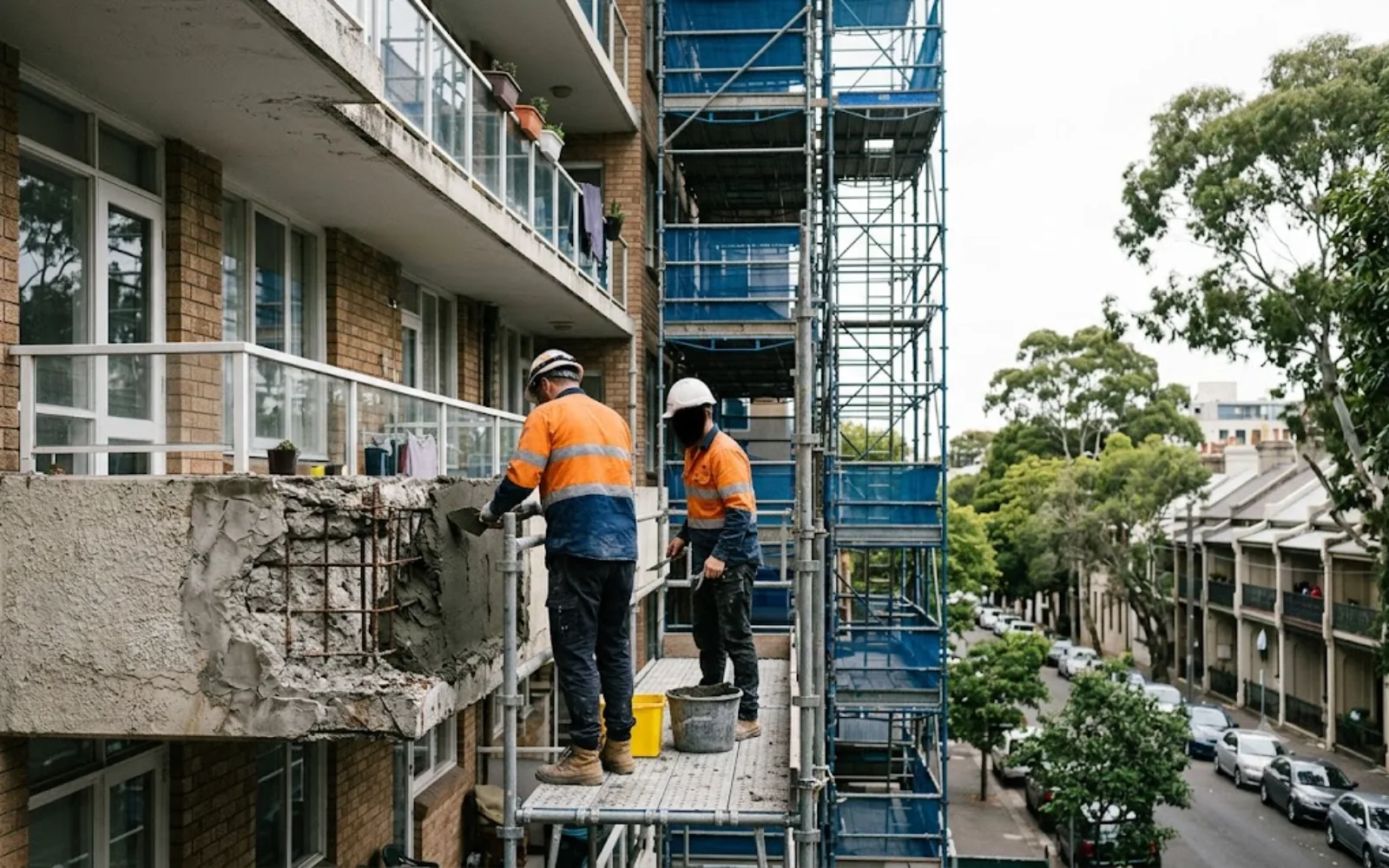
If your building has concrete and structural repairs coming up, this guide covers what actually happens on site, how it affects your daily routine, and what you need to do while the work runs.
Concrete repair is noisy, dusty work for a few weeks — but it's staged, controlled, and you stay in your home the whole time. Here's what to expect.
Most concrete repair programs run 2–6 weeks per area, depending on how far the deterioration has spread and how many repair locations the engineer has identified. Works are staged by zone, so your disruption window is limited to the period when crews are working on your part of the building.
Working hours are 7am to 5pm, Monday to Friday. Saturday work (8am–1pm) only happens if the program needs a catch-up day. There's no work on Sundays or public holidays.
Concrete breakout — removing spalled and damaged concrete to expose the reinforcement underneath — is the noisiest part of the project. Expect heavy jackhammering, grinding and debris removal. Breakout can run one to three weeks depending on the extent of the damage. Once it's done, noise drops significantly for the rest of the job.
One thing worth knowing: breakout continues until sound concrete is reached. The repair boundary is set by the actual condition of the concrete, not by an estimate made from the ground.
Concrete spalling means pieces of concrete can detach without warning. During repairs, damaged material is removed in a controlled way — but the risk of falling debris is real. That's why exclusion zones, overhead protection and catch nets are installed before breakout begins.
Do not enter barricaded areas. Even small pieces of falling concrete can cause serious injury. If you need access to a closed area, speak to the site supervisor — never move the barriers yourself.
The exact scope is set out in your project's engineering specification, but most concrete repair projects follow the same sequence:
No. You stay in your unit. The main impacts are noise during breakout and temporary changes to access routes around exclusion zones.
A dilapidation report is completed before work starts. Heavy jackhammering can cause vibration — if you notice cracking or damage, report it to the site supervisor with a photo.
Typically for the full duration on that elevation — two to six weeks depending on scope. It comes down once repairs and finishes are complete.
As closely as possible. Where old and new surfaces need to look uniform, the specification may call for a full-elevation coating.
Works are funded through the owners corporation — the capital works fund or a special levy. Individual owners aren't separately invoiced unless private lot areas are involved.
A defects liability period applies, plus the statutory warranty under NSW law. If something needs fixing, report it to your strata manager and the contractor comes back at no cost.
Call the site supervisor — the number is in your pre-start letter and posted in the lobby, with a same-day response.
Atomic Projects is a Sydney remedial building contractor and Class 2 registered practitioner under the DBP Act (builder licence 360636C), working on occupied strata and commercial buildings. Questions about upcoming concrete repairs? Call 0410 515 509 or email hello@atomicprojects.com.au.

Send photos, the engineer's report, or just the symptoms — whatever you've got. A registered builder reads it and calls you back. No call centre, no obligation.