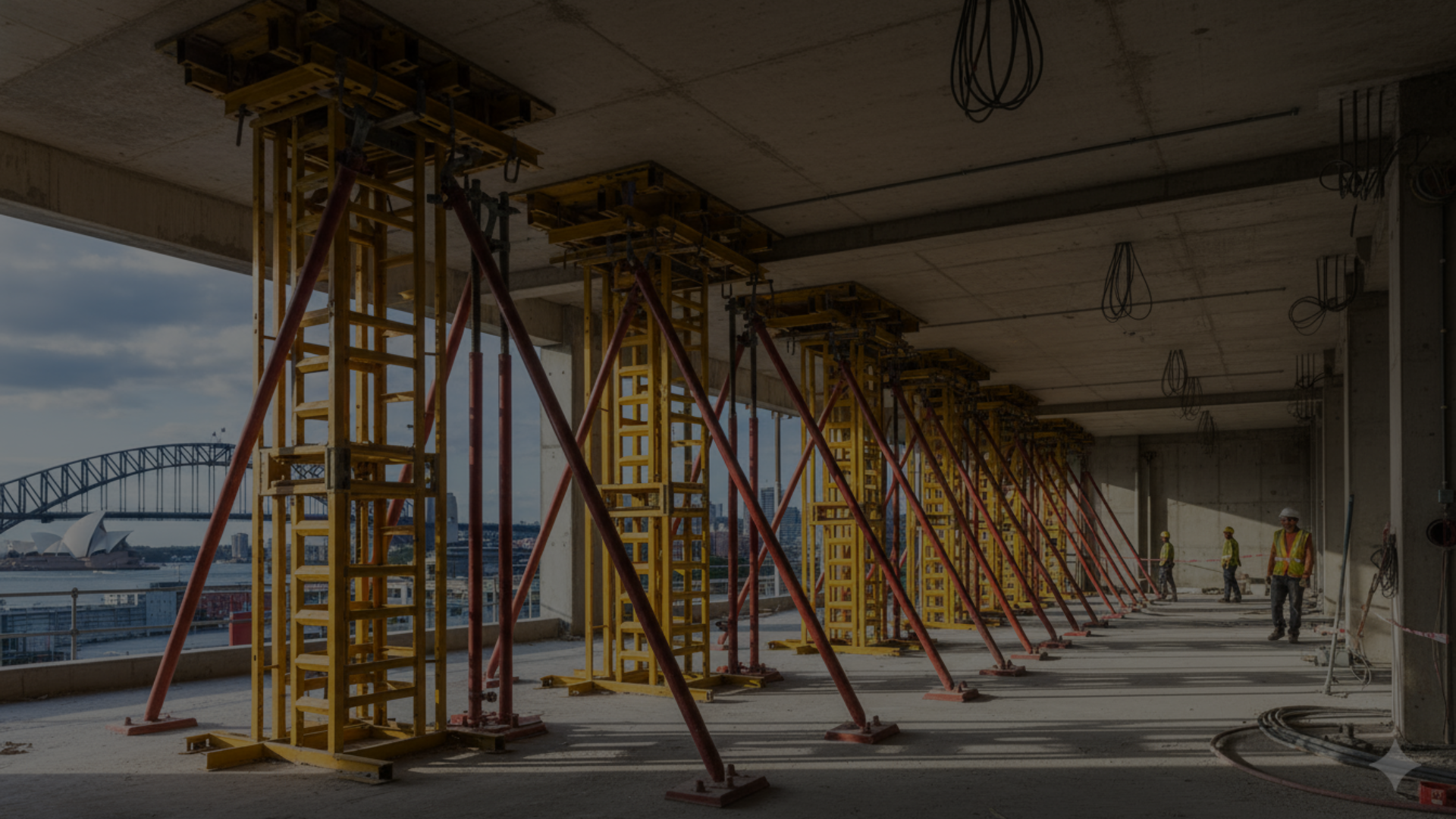
Before a structure can be repaired, altered, or made safe after damage, the load it carries often has to be temporarily taken somewhere else. Engineered propping and shoring is the temporary support that does exactly that — holding the building up while the permanent works are carried out, and preventing collapse where a structure has been compromised.
Our propping and shoring service designs and installs temporary support for remedial works, construction sequencing, and emergency stabilisation: adjustable steel props and strongbacks, heavy-duty shoring towers, needle beams through walls, and facade retention. Each system is engineered for the real loads it has to carry, not assembled by eye.
Temporary works are still structural works. We treat propping with the same engineering discipline as the permanent repair, because that is what keeps the site and its occupants safe.
How We Design & Install Temporary Support
- Establish the loads. A structural engineer determines what has to be supported and what the propping must carry, including any dynamic or construction loads.
- Design the system. The propping or shoring layout is designed for those loads, with adequate bearing top and bottom and a stable, braced arrangement.
- Install to firm bearing. Props and shoring are set to sound bearing surfaces, plumbed, braced, and tightened to take load without over-jacking.
- Monitor and coordinate. The support is checked through the works and coordinated with the repair sequence so load is only released when the permanent works can carry it.
- Dismantle safely. Propping is struck in a controlled sequence once the permanent structure is verified to carry load.
When Temporary Support Is Needed
- During structural repairs — column, beam, slab, and wall works.
- For alterations — supporting load while openings are formed.
- Emergency stabilisation — after impact, fire, or sudden movement.
- Facade retention — holding facades while works proceed behind.
Frequently Asked Questions
When does propping need to be engineered rather than just installed?
Whenever it is carrying real structural load — which, in remedial and alteration work, is almost always. Ad-hoc propping that looks solid can be dangerously under-designed or unstable. We design temporary support for the actual loads and bearing conditions, because a prop failure during works is exactly the outcome the propping exists to prevent.
How long can temporary propping stay in place?
As long as the works require — from days for a quick repair to weeks or months on a larger programme. Engineered propping is designed to remain stable and loaded for that duration, and is inspected through the works rather than installed and forgotten.
Can you install emergency shoring at short notice?
Yes. Where a structure has been damaged or is showing sudden movement, rapid stabilisation is often the priority, and we can design and install emergency propping and shoring to make the structure safe before the permanent remediation is planned.
Is the propping itself safe to have around occupants?
When engineered and installed correctly, yes — that is its whole purpose. The system is designed for the loads, braced for stability, and coordinated so occupied areas stay supported and access is managed around the works.
Related Services
Engineered propping and shoring keeps the building up while the real work gets done — designed for the loads, installed with discipline, struck safely. As a Class 2 Registered Builder with over 10 years of remedial experience across Sydney, Atomic Projects delivers temporary works designed by structural engineers. Call us on 0410 515 509 or email hello@atomicprojects.com.au to arrange an assessment.