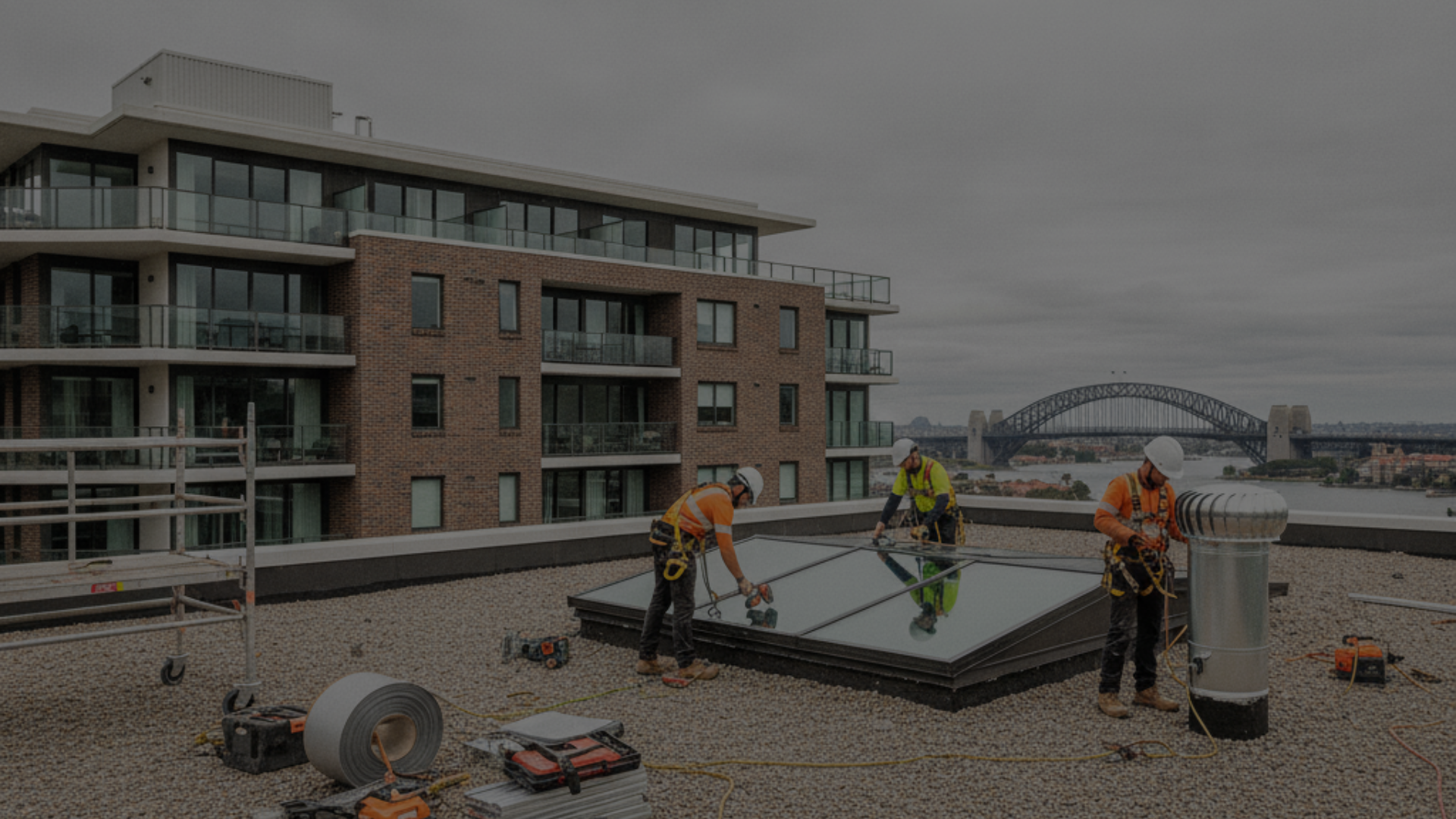
Flat and low-pitch roofs — common in Sydney's older apartment buildings, commercial properties, and podium decks — rely entirely on a waterproofing membrane system to keep the building dry. Unlike pitched roofs that shed water by gravity, flat roofs hold water on their surface for extended periods, placing enormous stress on any waterproofing that is failing, poorly installed, or simply aged beyond its service life.
At Atomic Projects, we assess, specify, and install high-performance roof waterproofing membrane systems for flat, low-pitch, and curved roof surfaces. Our approach is substrate-specific and compliance-driven, ensuring the system performs for decades rather than months.
Our Approach to Roof Membrane Waterproofing
- Condition Assessment & Leak Investigation — We begin by tracing leak sources using thermal imaging, moisture meters, and visual inspection. We map the full roof surface, identify blistering, cracking, lap failures, and penetration defects, and provide a written investigation report before any works commence.
- System Selection — The right membrane depends on substrate type (concrete, steel deck, plywood), exposure conditions, traffic requirements, and budget. Options include torch-on modified bitumen systems, cold-applied liquid membranes (polyurethane, PMMA, acrylic), sheet membranes, and hot-applied rubberised bitumen systems. We specify in line with AS 4654.2 (Waterproofing — above-ground internal wet areas) and AS 3740.
- Surface Preparation — The substrate is cleaned, mechanically or chemically prepared, and all cracks, joints, and penetrations primed. Adequate falls to drainage outlets are verified; if falls are insufficient, a topping screed is applied prior to membrane installation.
- Membrane Installation — Applied by qualified waterproofing tradespeople, each layer and lap is installed to manufacturer specifications. Penetration boots, drainage collar flashings, and upstand details receive extra reinforcement.
- Protection Layer & Finish — Membranes are protected with an appropriate overcoat, aggregate, paving, or screed depending on whether the surface will be trafficable. UV-resistant finishes are applied to exposed membranes.
- Flood Testing & QA — Completed systems are flood-tested (ponded for a minimum of 24 hours) to verify integrity before handover. A waterproofing warranty and compliance certificate are provided.
Frequently Asked Questions
How long do roof waterproofing membranes last?
The lifespan depends on the system type and exposure conditions. Quality torch-on or cold-applied systems typically last 15–25 years when correctly installed and maintained. Liquid-applied PMMA systems can exceed 25 years. We advise on expected service life and maintenance requirements at the time of specification.
Can waterproofing be applied over an existing failed membrane?
In some cases yes — if the existing membrane is sound and well-bonded, a new layer can be applied over it. However, if the existing membrane is blistered, lifting, or trapping water, it must be fully removed first. Applying new over failed membranes is a false economy that leads to premature failure.
Our flat roof has inadequate drainage — can you fix this as part of the waterproofing?
Yes. Ponding water is one of the most common causes of membrane failure. Where falls are inadequate, we can apply a lightweight screed to redirect water to existing outlets, or install additional drainage points. Correct drainage is always addressed before the new membrane goes down.
Do you warranty your waterproofing work?
Yes. All Atomic Projects waterproofing installations are backed by our workmanship warranty, with membrane product warranties provided by the manufacturer. We use products from established Australian and international suppliers with proven track records in Sydney's climate.
Can residents stay in the building during roof membrane replacement?
Yes in most cases. Roof membrane works are generally confined to the roof level and don't affect residents directly. If torch-on membranes are being used, odour management protocols are in place. Works are scheduled to avoid disrupting common area access.
Related Services
Roof membrane waterproofing frequently connects with roof flashing and capping repairs, box gutter and downpipe replacement, and waterproofing remediation services for balconies and podiums.
Atomic Projects is a Class 2 Registered Builder with over 10 years of experience in roof waterproofing across Sydney commercial and strata buildings. Contact us for an obligation-free inspection and written report.