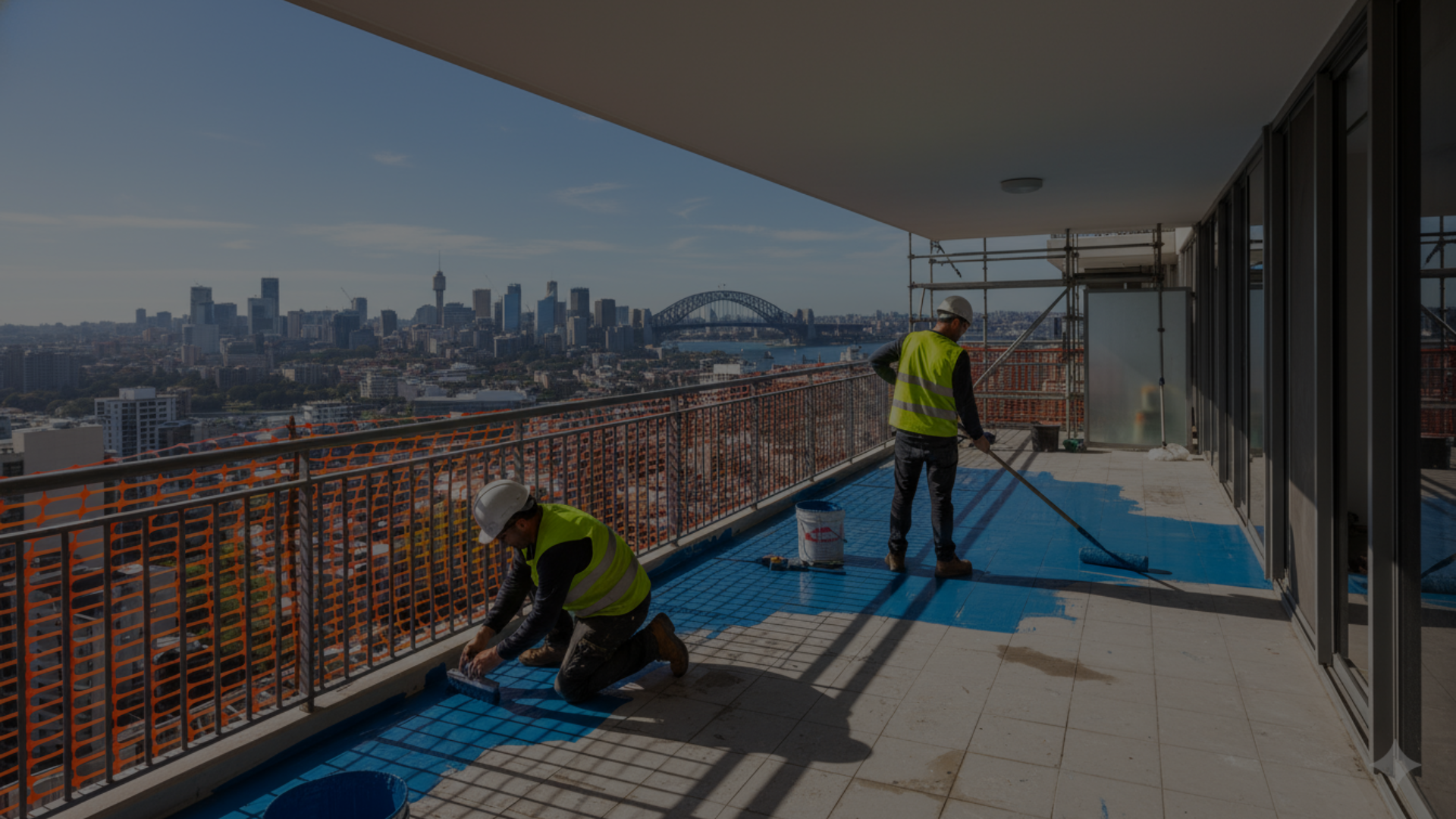
Balconies and terraces are among the most common sources of water ingress in multi-storey residential and commercial buildings. Without robust waterproofing, rainwater and moisture penetrate into the slab, joints, and wall interfaces, causing concrete spalling, rusted reinforcement, tile debonding, mould growth, and internal water damage.
At Atomic Projects, balcony and terrace waterproofing isn't just a surface treatment — it's a full-system solution designed to protect the structure for decades. We use proven products, precise preparation methods, and industry-leading detailing techniques to ensure zero-compromise leak prevention.
Our Balcony & Terrace Waterproofing Process
- Investigation & Assessment
- Moisture mapping, core drilling, and inspection of existing membranes.
- Identify slab cracks, failed sealants, poor drainage points, and weak detailing at junctions.
- Surface Preparation
- Remove all tiles, screed, and defective waterproofing layers.
- Grind back surfaces for optimal adhesion.
- Repair cracks and level uneven areas with polymer-modified repair mortar.
- Drainage Upgrades
- Ensure correct falls (minimum 1:100) for water runoff.
- Replace or upgrade drains, puddle flanges, and overflows.
- Membrane Installation
- Liquid Membranes: Flexible, seamless, and ideal for complex detailing.
- Sheet Membranes: Superior puncture resistance, suited for high-traffic areas.
- Extend membrane vertically up walls and into drainage points for a full tanking effect.
- Critical Junction Detailing
- Reinforce corners, wall-to-floor junctions, balustrade posts, and door thresholds.
- Use compatible sealants for movement joints to avoid premature failure.
- Finishes & Protection
- Protect membrane with screed, tiles, or pavers set on pedestals.
- Use slip-rated finishes suitable for outdoor exposure.
Common Balcony & Terrace Waterproofing Failures We Fix
- Poor falls or ponding water on tiles.
- Membranes not extending behind skirting tiles or wall claddings.
- Incompatible sealants and joint detailing.
- Penetrations (e.g., balustrade posts) without waterproof collars.
- Incorrect or absent drainage flanges.
Why Atomic Projects for Balcony & Terrace Waterproofing
- Proven Leak-Free Track Record: Hundreds of balconies remediated with zero call-backs.
- Product Selection Expertise: Systems matched to UV exposure, traffic loads, and building movement.
- Compliance Guarantee: All works meet or exceed AS 4654.1 & AS 4654.2 for waterproofing membranes.
- Integrated Approach: Often carried out alongside façade, balustrade, and structural repairs for full protection.
Frequently Asked Questions
How do I know if my balcony waterproofing needs replacing?
Key indicators include tiles lifting or cracking, damp patches appearing on the ceiling of the unit below, rust staining on soffits, or water pooling after rain. A professional moisture investigation is recommended before assuming repairs are needed — the ingress point is often not directly below the visible damage.
Do all tiles need to be removed to replace the waterproofing membrane?
In most cases, yes. The membrane sits beneath the screed and tile bed, so a full strip-out is required to access and replace it properly. Attempting to apply a new membrane over existing tiles or finishes rarely provides a lasting fix and typically voids manufacturer warranties.
How long will new balcony waterproofing last?
A properly specified and installed system, compliant with AS 4654.2, should provide 20–25+ years of service life. Product selection, preparation quality, and junction detailing are the key factors — which is why we never shortcut on any of these steps.
Can waterproofing work be done while residents are still in the building?
Yes. We plan balcony works floor by floor or unit by unit to minimise disruption. Balconies are typically out of use for 5–7 working days per unit during active waterproofing, with full access restored once tiling and finishes are complete.
What Australian Standards govern balcony waterproofing?
Balcony and terrace waterproofing must comply with AS 4654.1 (test methods for membranes) and AS 4654.2 (design and installation requirements for membranes in buildings). NCC Section F provisions for moisture management also apply. All our works are designed to meet or exceed these requirements.
Related Services