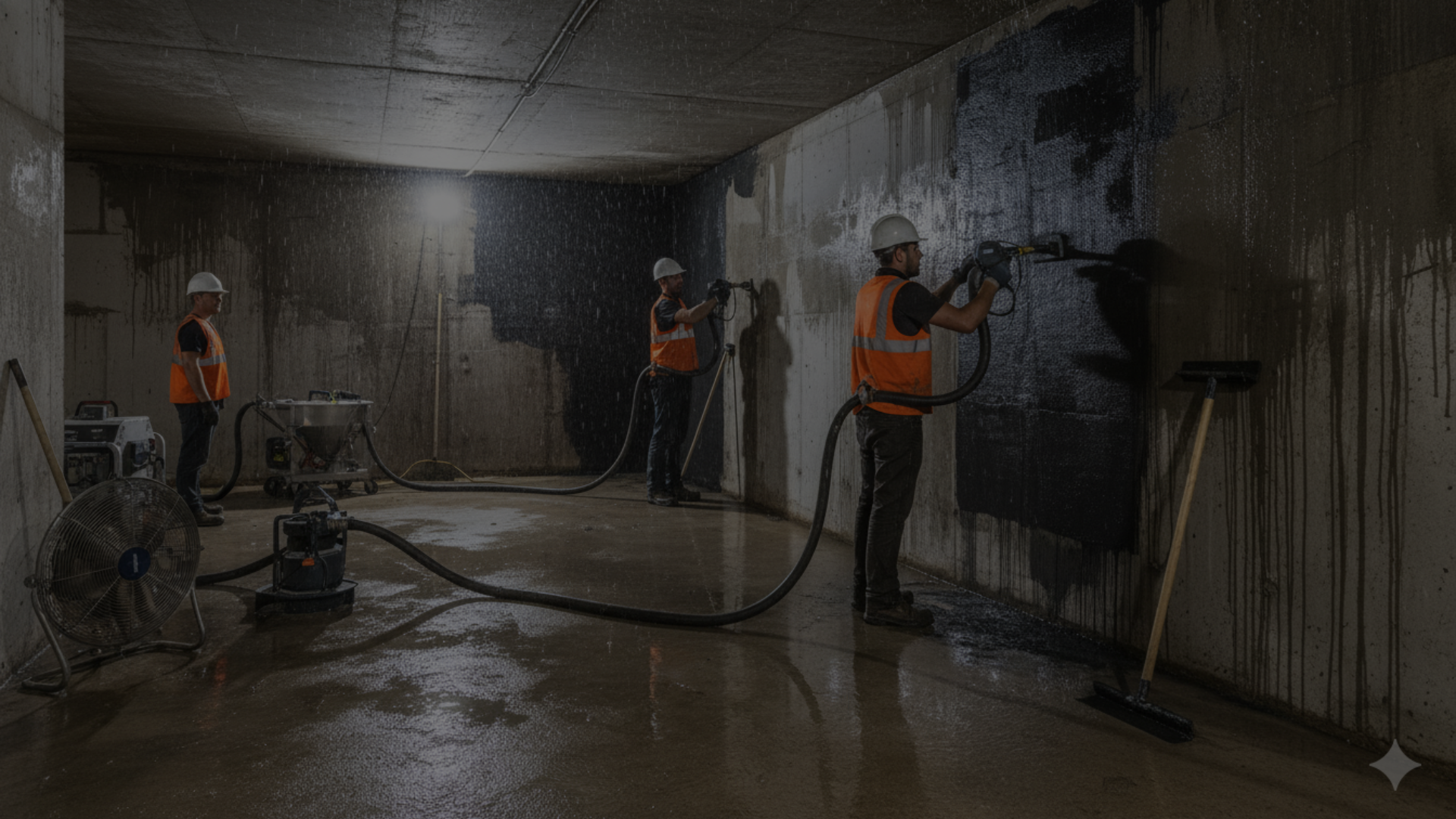
Basements, underground carparks, and lift pits are constantly exposed to hydrostatic pressure from surrounding soil and groundwater. Over time, this pressure forces water through cracks, joints, and even the pores of concrete. When positive-side (external) access is blocked by soil, neighbouring structures, or property boundaries, negative-side waterproofing becomes the only viable solution.
At Atomic Projects, we use advanced negative-side waterproofing systems to stop leaks from inside — penetrating deep into the substrate to block water pathways and resist pressure from the outside. This is a specialist process requiring precise preparation, correct material selection, and flawless application to achieve long-term success.
Our Basement & Negative Waterproofing Process
- Leak Investigation & Assessment
- Identify all points of ingress — cracks, cold joints, tie holes, honeycombing, and construction joints.
- Measure hydrostatic pressure and assess soil/drainage conditions to choose the correct system.
- Surface Preparation
- Remove all coatings, laitance, and loose material to expose clean, sound concrete.
- Open cracks and chase out defective joints to receive repair compounds.
- Crack & Joint Sealing
- Inject epoxy or polyurethane resin for active leaks.
- Fill cold joints and tie holes with high-performance plugging mortars capable of withstanding high water pressure.
- Negative-Side Membrane Application
- Apply crystalline, cementitious, or epoxy-based coatings that penetrate and seal the substrate.
- Multiple coats are installed, with curing times strictly adhered to.
- Final QA & Monitoring
- Inspect adhesion, thickness, and coverage.
- In high-risk areas, install monitoring ports to track moisture levels post-completion.
Common Basement Waterproofing Problems We Solve
- Constant dampness or pooling water in basements.
- Rust staining and concrete spalling from reinforcement corrosion.
- Lift pit flooding.
- Water seepage through retaining walls.
- Failed or deteriorated internal waterproof coatings.
Why Atomic Projects for Negative Waterproofing
- Specialist Capability: Not all waterproofers handle negative-side works — we've completed complex basements in high-water-table areas.
- Material Mastery: We use systems that chemically bond and become integral with the concrete matrix.
- Minimal Downtime: Rapid-setting compounds and staged works minimise disruption to building operations.
- Proven Under Pressure: Solutions designed to withstand extreme hydrostatic loads for decades.
Frequently Asked Questions
Can negative-side waterproofing fully stop an active leak in a basement?
Yes — with the right materials and correct preparation, negative-side systems can stop active leaks and prevent recurrence. We use rapid-setting plugging mortars and crystalline coatings that chemically react with moisture to seal pathways, even under significant hydrostatic pressure.
How long does basement waterproofing take to complete?
Most basement waterproofing projects take between 3–10 working days depending on the area affected and severity of ingress. We stage works to minimise disruption to the building's operations, particularly in occupied residential and commercial buildings.
Will we need to move residents or vacate the building during works?
In most cases, no. Negative-side waterproofing is carried out internally in the basement or sub-structure, well away from occupied areas. Our team works with building managers to schedule noisy or disruptive phases outside peak occupancy hours.
Is negative-side waterproofing a permanent fix or a temporary patch?
When executed correctly using quality crystalline or cementitious systems, negative-side waterproofing provides a durable, long-term solution — not a temporary patch. These materials become part of the concrete matrix and continue to self-seal minor cracks over time as the chemistry activates with moisture.
What Australian Standards apply to basement waterproofing?
Basement and below-ground waterproofing works are governed by AS 4654.2 for waterproofing membranes and relevant NCC (National Construction Code) provisions for moisture management in below-ground structures. Our works are designed and documented in line with these standards for compliance and warranty purposes.
Related Services