Atomic Projects white logo

Get Your Free E Book

23 Pages of Exclusive Trade Secrets
Thank you! Your submission has been received!
Oops! Something went wrong while submitting the form.
Limited Time Only
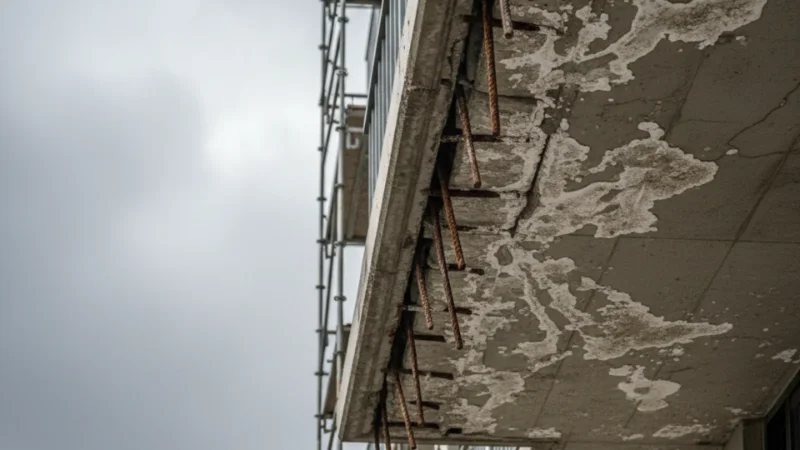
Building envelope repair on a Sydney strata apartment — failed sealant joints and cracked render with water ingress signs

Building Envelope Repair in Sydney: What Your Strata Committee Needs to Know

Your building's envelope is the single system that stands between the inside of your apartment complex and Sydney's weather. When it works, nobody thinks about it. When it fails, water gets in, concrete deteriorates, and repair costs compound fast.

If your strata committee is dealing with persistent leaks, cracked render, or a building condition report that mentions "envelope deficiencies," this guide explains what building envelope repair actually involves, what it costs, and how Sydney strata committees should approach it in 2026.

What Is a Building Envelope (And Why Does It Matter)?

The building envelope is every element that separates the interior from the exterior. For a typical Sydney strata apartment building, that includes: - Facade and cladding — render, brickwork, precast concrete panels, curtain wall glazing, or composite cladding systems - Waterproofing membranes — applied to balconies, roofs, planter boxes, podium slabs, and wet areas where water meets structure - Sealant joints — the flexible seals between panels, around windows, at expansion joints, and at floor-to-wall junctions - Roofing systems — membrane roofing, metal roofing, or concrete roof slabs with applied waterproofing - Windows and doors — the frames, glazing seals, and flashings that tie openings into the surrounding envelope

These elements work as a system. A failed sealant joint around a window doesn't just cause a leak at the window — water can travel through the cavity behind the facade, appear as a ceiling stain two floors below, and corrode structural steel along the way.

This is why building envelope failures are expensive to investigate and why surface-level patch repairs often fail. The water entry point and the visible damage are rarely in the same spot.

Five Signs Your Building Envelope Is Failing

Strata committees don't need engineering degrees to spot the early warnings. Here's what to look for during common property inspections.

1. Recurring Leaks That Keep Coming Back After Repairs

If the same balcony, hallway ceiling, or basement wall keeps leaking despite multiple repairs, the root cause hasn't been found. Water ingress through the building envelope travels through hidden pathways — along structural steel, through concrete pour joints, down cavity walls. A patch at the visible damage doesn't stop water entering two metres above.

2. Cracked, Bubbling, or Delaminating Render

Render cracking is common on Sydney buildings, but not all cracks are cosmetic. Horizontal cracks along floor slab lines often indicate water trapped behind the render, causing substrate deterioration. Bubbling paint or delamination means moisture is already inside the wall system.

3. Rust Staining on Concrete Surfaces

Brown or orange staining on concrete soffits, columns, or balcony edges is a visible indicator of reinforcement corrosion. When steel reinforcement rusts, it expands to several times its original volume, cracking the concrete from the inside out. This is concrete cancer — and it starts with water penetrating the building envelope.

4. Failed or Missing Sealant Joints

Sealant joints have a design life of 10–20 years depending on the product and UV exposure. In Sydney's climate, south- and west-facing joints degrade fastest. Look for sealant that has pulled away from the substrate, cracked through the middle, gone hard and brittle, or is simply missing. Every failed joint is an open door for water.

A $2,000 sealant repair left unaddressed can become a $150,000 remediation when moisture reaches structural framing and insulation behind the facade.

5. Efflorescence (White Salt Deposits) on Brickwork or Concrete

White crystalline deposits on exterior walls mean water is migrating through the masonry or concrete, dissolving salts, and depositing them on the surface as it evaporates. This confirms active water movement through the envelope and usually indicates a waterproofing or joint sealing deficiency.

How Building Envelope Failures Actually Happen

Understanding the failure mechanism helps committees make better decisions about repair scope.

Building envelope failures rarely happen in isolation. Here's a typical progression we see on Sydney strata buildings built in the 1990s–2010s:

  1. Sealant joints age out (10–15 years) — original polyurethane sealant loses flexibility and adhesion

  2. Water enters the cavity — behind the facade, above the waterproofing line, or through expansion joints

  3. Hidden moisture accumulates — insulation gets wet, steel elements begin corroding, concrete carbonation accelerates

  4. Visible symptoms appear — ceiling stains, bubbling render, rust streaks, mould in apartments

  5. Patch repairs fail — because they address the symptom (the stain), not the source (the sealant joint two floors up)

  6. Structural damage compounds — spalling concrete, corroded lintels, delaminated render requiring full facade remediation

The gap between Step 1 and Step 6 can be 5–10 years. The gap between the cost of addressing Step 1 ($20,000–$50,000 for a building-wide sealant replacement programme) and Step 6 ($500,000–$2,000,000+ for full facade remediation) is enormous.

Why Sydney Buildings Are Particularly Vulnerable

Sydney's coastal climate creates specific envelope challenges. Salt-laden air accelerates sealant and coating degradation, particularly on buildings within 5km of the coast. UV intensity breaks down polyurethane sealants faster than in temperate climates. Driving rain from the south-east puts maximum pressure on the most exposed facade elements. And temperature cycling stresses expansion joints beyond their design limits.

What Building Envelope Repair Involves

Envelope repair is not one trade or one fix. It's a coordinated programme that addresses the root causes identified during investigation.

Stage 1: Investigation and Diagnosis

Before any repair work begins, a proper investigation identifies where water is entering (using moisture mapping, infrared thermography, hose testing, or destructive investigation), what damage has occurred (concrete testing, steel condition assessment, membrane integrity testing), and what caused the failure (original construction defect, age-related deterioration, previous inadequate repair, or design deficiency).

This investigation typically costs $8,000–$25,000 depending on building size and complexity. It is not optional. Skipping investigation and jumping to repairs is the most expensive mistake strata committees make — because you end up paying for repairs that don't fix the actual problem.

Atomic Projects begins every facade and envelope project with a building investigation. We don't quote repair work until we understand the failure mechanism.

Stage 2: Repair Scope and Programme

Once the investigation is complete, the repair programme is designed around the specific failures found. Common envelope repair elements include joint sealing replacement, concrete repair and protection, render and facade repair, waterproofing remediation, and window and door flashing repair.

Stage 3: Protective Coatings and Long-Term Prevention

After structural and waterproofing repairs, protective coatings extend the life of the repaired envelope. Anti-carbonation coatings on exposed concrete slow the chemical process that leads to reinforcement corrosion. Elastomeric facade coatings provide a flexible, waterproof, UV-resistant finish that bridges hairline cracks. Hydrophobic impregnation on masonry and concrete repels water at the surface without changing appearance.

What It Costs: Real Ranges for Sydney Strata Buildings

Costs vary significantly depending on building size, access requirements, and the extent of hidden damage. Here are realistic ranges based on Sydney strata projects:

Scope Typical Cost Range Timeline
Building-wide sealant joint replacement (preventive) $20,000–$80,000 2–6 weeks
Localised facade repair (1–2 elevations, minor concrete damage) $50,000–$200,000 4–12 weeks
Mid-scale envelope remediation (multiple failure types, scaffolding required) $300,000–$800,000 3–6 months
Full building envelope remediation (high-rise, complex facades) $1,000,000–$5,000,000+ 6–18 months

These ranges include investigation, repair, protective coatings, and project management. They do not include internal make-good, which is typically a separate scope.

The Cost of Waiting

The single most important thing strata committees should understand: envelope repair costs compound over time. A building-wide sealant replacement at $40,000 today prevents a $500,000 facade remediation in five years. The investigation that costs $15,000 now saves $100,000 in misdirected repair spending.

Under the NSW Strata Schemes Management Act, owners corporations have a statutory obligation to maintain and repair common property. The April 2026 amendments strengthened this obligation with mandatory Initial Maintenance Schedules and expanded NSW Fair Trading enforcement powers for common property repairs.

NSW Regulatory Context for 2026

Several regulatory changes affect how strata committees should approach building envelope repair. The April 2026 strata reforms introduced mandatory Initial Maintenance Schedules and the new standard-form capital works plan. NSW Fair Trading has expanded enforcement powers for common property repair compliance. The DBP Act, for Class 2 buildings (and from July 1, 2026, Class 3 and 9c buildings), requires remedial work involving regulated designs to be lodged with NSW Fair Trading and prepared by registered practitioners. And the independent quote requirement means works exceeding $30,000 require at least two independent quotes.

These regulations make the diagnostic-first approach even more important. A properly scoped investigation produces documentation that satisfies DBP Act requirements, supports capital works fund planning, and provides the evidence base committees need for AGM approvals.

How to Get Started: A Step-by-Step Path for Committees

  1. Walk the building. Use the five warning signs above as a checklist during your next common property inspection. Document what you find with photos and locations.

  2. Commission a building condition assessment. If you're seeing multiple warning signs, a professional assessment ($8,000–$25,000) identifies the scope and urgency. This is a capital works fund expense, not a maintenance item.

  3. Get the investigation done before you get quotes. Don't ask contractors to quote based on what's visible. The investigation reveals the actual scope, which means your quotes are based on reality, not assumptions.

  4. Budget through your capital works plan. The April 2026 standard-form capital works plan is designed to capture exactly this kind of expenditure.

  5. Engage a remedial contractor with diagnostic capability. Look for contractors who do their own investigation, work across multiple trades, and can provide a coordinated programme rather than piecemeal repairs.

Atomic Projects specialises in facade remediation and building envelope work for strata buildings across Sydney. We investigate first, repair based on evidence, and coordinate every trade from concrete repair to coatings under one programme.

Get a building envelope assessment for your strata building.

Frequently Asked Questions

How long does building envelope repair take? It depends on scope. A sealant replacement programme takes 2–6 weeks. A full facade remediation on a high-rise building can take 6–18 months. The investigation stage (4–8 weeks) should happen before any repair timeline is set.

Can we do envelope repairs in stages? Yes — and many committees do. The investigation identifies which failures are urgent (active water ingress causing structural damage) and which can be programmed into future capital works. Staging is often the most practical approach for managing levy impacts.

Do we need scaffolding for building envelope repair? Not always. Some work can be done via rope access (abseiling), which is faster and cheaper for localised repairs. Larger programmes typically require scaffolding for safety and efficiency. Your contractor should recommend the access method based on the repair scope, not default to the most expensive option.

What's the difference between a patch repair and proper envelope remediation? A patch repair fixes the visible damage. Envelope remediation identifies the water entry point, repairs the root cause (failed joint, cracked membrane, corroded flashing), repairs the consequential damage (spalled concrete, corroded steel), and applies protective systems to prevent recurrence. Patch repairs are cheaper but often fail because they don't address the source.

Is building envelope repair covered by building insurance? Typically no. Building insurance covers sudden and accidental damage (storm, impact). Gradual deterioration of sealant joints, waterproofing membranes, and protective coatings is a maintenance responsibility of the owners corporation, funded through the capital works fund.

Building Envelope Repair in Sydney: What Your Strata Committee Needs to Know

Building envelope repair on a Sydney strata apartment — failed sealant joints and cracked render with water ingress signs

Your building's envelope is the single system that stands between the inside of your apartment complex and Sydney's weather. When it works, nobody thinks about it. When it fails, water gets in, concrete deteriorates, and repair costs compound fast.

If your strata committee is dealing with persistent leaks, cracked render, or a building condition report that mentions "envelope deficiencies," this guide explains what building envelope repair actually involves, what it costs, and how Sydney strata committees should approach it in 2026.

What Is a Building Envelope (And Why Does It Matter)?

The building envelope is every element that separates the interior from the exterior. For a typical Sydney strata apartment building, that includes: - Facade and cladding — render, brickwork, precast concrete panels, curtain wall glazing, or composite cladding systems - Waterproofing membranes — applied to balconies, roofs, planter boxes, podium slabs, and wet areas where water meets structure - Sealant joints — the flexible seals between panels, around windows, at expansion joints, and at floor-to-wall junctions - Roofing systems — membrane roofing, metal roofing, or concrete roof slabs with applied waterproofing - Windows and doors — the frames, glazing seals, and flashings that tie openings into the surrounding envelope

These elements work as a system. A failed sealant joint around a window doesn't just cause a leak at the window — water can travel through the cavity behind the facade, appear as a ceiling stain two floors below, and corrode structural steel along the way.

This is why building envelope failures are expensive to investigate and why surface-level patch repairs often fail. The water entry point and the visible damage are rarely in the same spot.

Five Signs Your Building Envelope Is Failing

Strata committees don't need engineering degrees to spot the early warnings. Here's what to look for during common property inspections.

1. Recurring Leaks That Keep Coming Back After Repairs

If the same balcony, hallway ceiling, or basement wall keeps leaking despite multiple repairs, the root cause hasn't been found. Water ingress through the building envelope travels through hidden pathways — along structural steel, through concrete pour joints, down cavity walls. A patch at the visible damage doesn't stop water entering two metres above.

2. Cracked, Bubbling, or Delaminating Render

Render cracking is common on Sydney buildings, but not all cracks are cosmetic. Horizontal cracks along floor slab lines often indicate water trapped behind the render, causing substrate deterioration. Bubbling paint or delamination means moisture is already inside the wall system.

3. Rust Staining on Concrete Surfaces

Brown or orange staining on concrete soffits, columns, or balcony edges is a visible indicator of reinforcement corrosion. When steel reinforcement rusts, it expands to several times its original volume, cracking the concrete from the inside out. This is concrete cancer — and it starts with water penetrating the building envelope.

4. Failed or Missing Sealant Joints

Sealant joints have a design life of 10–20 years depending on the product and UV exposure. In Sydney's climate, south- and west-facing joints degrade fastest. Look for sealant that has pulled away from the substrate, cracked through the middle, gone hard and brittle, or is simply missing. Every failed joint is an open door for water.

A $2,000 sealant repair left unaddressed can become a $150,000 remediation when moisture reaches structural framing and insulation behind the facade.

5. Efflorescence (White Salt Deposits) on Brickwork or Concrete

White crystalline deposits on exterior walls mean water is migrating through the masonry or concrete, dissolving salts, and depositing them on the surface as it evaporates. This confirms active water movement through the envelope and usually indicates a waterproofing or joint sealing deficiency.

How Building Envelope Failures Actually Happen

Understanding the failure mechanism helps committees make better decisions about repair scope.

Building envelope failures rarely happen in isolation. Here's a typical progression we see on Sydney strata buildings built in the 1990s–2010s:

  1. Sealant joints age out (10–15 years) — original polyurethane sealant loses flexibility and adhesion

  2. Water enters the cavity — behind the facade, above the waterproofing line, or through expansion joints

  3. Hidden moisture accumulates — insulation gets wet, steel elements begin corroding, concrete carbonation accelerates

  4. Visible symptoms appear — ceiling stains, bubbling render, rust streaks, mould in apartments

  5. Patch repairs fail — because they address the symptom (the stain), not the source (the sealant joint two floors up)

  6. Structural damage compounds — spalling concrete, corroded lintels, delaminated render requiring full facade remediation

The gap between Step 1 and Step 6 can be 5–10 years. The gap between the cost of addressing Step 1 ($20,000–$50,000 for a building-wide sealant replacement programme) and Step 6 ($500,000–$2,000,000+ for full facade remediation) is enormous.

Why Sydney Buildings Are Particularly Vulnerable

Sydney's coastal climate creates specific envelope challenges. Salt-laden air accelerates sealant and coating degradation, particularly on buildings within 5km of the coast. UV intensity breaks down polyurethane sealants faster than in temperate climates. Driving rain from the south-east puts maximum pressure on the most exposed facade elements. And temperature cycling stresses expansion joints beyond their design limits.

What Building Envelope Repair Involves

Envelope repair is not one trade or one fix. It's a coordinated programme that addresses the root causes identified during investigation.

Stage 1: Investigation and Diagnosis

Before any repair work begins, a proper investigation identifies where water is entering (using moisture mapping, infrared thermography, hose testing, or destructive investigation), what damage has occurred (concrete testing, steel condition assessment, membrane integrity testing), and what caused the failure (original construction defect, age-related deterioration, previous inadequate repair, or design deficiency).

This investigation typically costs $8,000–$25,000 depending on building size and complexity. It is not optional. Skipping investigation and jumping to repairs is the most expensive mistake strata committees make — because you end up paying for repairs that don't fix the actual problem.

Atomic Projects begins every facade and envelope project with a building investigation. We don't quote repair work until we understand the failure mechanism.

Stage 2: Repair Scope and Programme

Once the investigation is complete, the repair programme is designed around the specific failures found. Common envelope repair elements include joint sealing replacement, concrete repair and protection, render and facade repair, waterproofing remediation, and window and door flashing repair.

Stage 3: Protective Coatings and Long-Term Prevention

After structural and waterproofing repairs, protective coatings extend the life of the repaired envelope. Anti-carbonation coatings on exposed concrete slow the chemical process that leads to reinforcement corrosion. Elastomeric facade coatings provide a flexible, waterproof, UV-resistant finish that bridges hairline cracks. Hydrophobic impregnation on masonry and concrete repels water at the surface without changing appearance.

What It Costs: Real Ranges for Sydney Strata Buildings

Costs vary significantly depending on building size, access requirements, and the extent of hidden damage. Here are realistic ranges based on Sydney strata projects:

Scope Typical Cost Range Timeline
Building-wide sealant joint replacement (preventive) $20,000–$80,000 2–6 weeks
Localised facade repair (1–2 elevations, minor concrete damage) $50,000–$200,000 4–12 weeks
Mid-scale envelope remediation (multiple failure types, scaffolding required) $300,000–$800,000 3–6 months
Full building envelope remediation (high-rise, complex facades) $1,000,000–$5,000,000+ 6–18 months

These ranges include investigation, repair, protective coatings, and project management. They do not include internal make-good, which is typically a separate scope.

The Cost of Waiting

The single most important thing strata committees should understand: envelope repair costs compound over time. A building-wide sealant replacement at $40,000 today prevents a $500,000 facade remediation in five years. The investigation that costs $15,000 now saves $100,000 in misdirected repair spending.

Under the NSW Strata Schemes Management Act, owners corporations have a statutory obligation to maintain and repair common property. The April 2026 amendments strengthened this obligation with mandatory Initial Maintenance Schedules and expanded NSW Fair Trading enforcement powers for common property repairs.

NSW Regulatory Context for 2026

Several regulatory changes affect how strata committees should approach building envelope repair. The April 2026 strata reforms introduced mandatory Initial Maintenance Schedules and the new standard-form capital works plan. NSW Fair Trading has expanded enforcement powers for common property repair compliance. The DBP Act, for Class 2 buildings (and from July 1, 2026, Class 3 and 9c buildings), requires remedial work involving regulated designs to be lodged with NSW Fair Trading and prepared by registered practitioners. And the independent quote requirement means works exceeding $30,000 require at least two independent quotes.

These regulations make the diagnostic-first approach even more important. A properly scoped investigation produces documentation that satisfies DBP Act requirements, supports capital works fund planning, and provides the evidence base committees need for AGM approvals.

How to Get Started: A Step-by-Step Path for Committees

  1. Walk the building. Use the five warning signs above as a checklist during your next common property inspection. Document what you find with photos and locations.

  2. Commission a building condition assessment. If you're seeing multiple warning signs, a professional assessment ($8,000–$25,000) identifies the scope and urgency. This is a capital works fund expense, not a maintenance item.

  3. Get the investigation done before you get quotes. Don't ask contractors to quote based on what's visible. The investigation reveals the actual scope, which means your quotes are based on reality, not assumptions.

  4. Budget through your capital works plan. The April 2026 standard-form capital works plan is designed to capture exactly this kind of expenditure.

  5. Engage a remedial contractor with diagnostic capability. Look for contractors who do their own investigation, work across multiple trades, and can provide a coordinated programme rather than piecemeal repairs.

Atomic Projects specialises in facade remediation and building envelope work for strata buildings across Sydney. We investigate first, repair based on evidence, and coordinate every trade from concrete repair to coatings under one programme.

Get a building envelope assessment for your strata building.

Frequently Asked Questions

How long does building envelope repair take? It depends on scope. A sealant replacement programme takes 2–6 weeks. A full facade remediation on a high-rise building can take 6–18 months. The investigation stage (4–8 weeks) should happen before any repair timeline is set.

Can we do envelope repairs in stages? Yes — and many committees do. The investigation identifies which failures are urgent (active water ingress causing structural damage) and which can be programmed into future capital works. Staging is often the most practical approach for managing levy impacts.

Do we need scaffolding for building envelope repair? Not always. Some work can be done via rope access (abseiling), which is faster and cheaper for localised repairs. Larger programmes typically require scaffolding for safety and efficiency. Your contractor should recommend the access method based on the repair scope, not default to the most expensive option.

What's the difference between a patch repair and proper envelope remediation? A patch repair fixes the visible damage. Envelope remediation identifies the water entry point, repairs the root cause (failed joint, cracked membrane, corroded flashing), repairs the consequential damage (spalled concrete, corroded steel), and applies protective systems to prevent recurrence. Patch repairs are cheaper but often fail because they don't address the source.

Is building envelope repair covered by building insurance? Typically no. Building insurance covers sudden and accidental damage (storm, impact). Gradual deterioration of sealant joints, waterproofing membranes, and protective coatings is a maintenance responsibility of the owners corporation, funded through the capital works fund.

Take the next step.

Fill out the form below and let's build something that lasts.

Phone: Call us at 0410 515 509

Email: Send us a message at hello@atomicprojects.com.au

Form: Fill out the form — we usually respond within 1 business day.

Max file size 10MB.
Uploading...
fileuploaded.jpg
Upload failed. Max size for files is 10 MB.
Thank you! Your submission has been received!
Oops! Something went wrong while submitting the form.