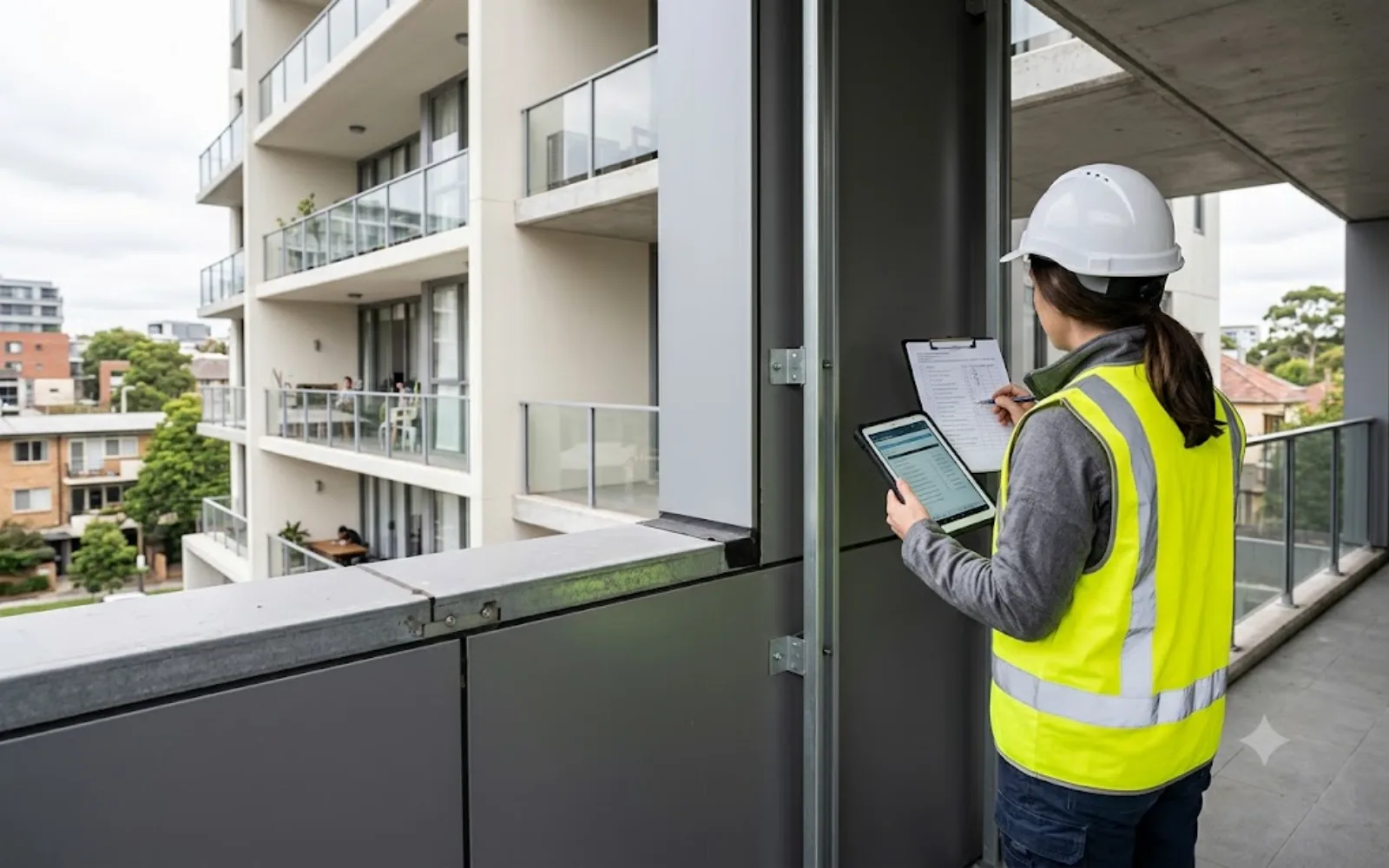
Your facade is only as compliant as the documents that prove it.
An OC can spend six figures replacing combustible cladding, and still be unable to satisfy its insurer, discharge a fire safety order, or obtain a certifier's sign-off — because the compliance evidence was never assembled properly. The physical works and the paperwork are two separate deliverables, and the second one is what closes the file.
Facade certification and documentation is the structured compliance package that demonstrates, in the format insurers and certifiers expect, that the facade meets the NCC and that every step was inspected, tested, and verified. It is built as the works proceed — through inspection and test plans, hold-point sign-offs, and fire-engineer verification — not reconstructed from memory after handover.
At Atomic Projects, we treat the compliance package as a deliverable in its own right. Whether we delivered the cladding works or are documenting a facade to close out compliance, we assemble one clean, traceable package that gives your certifier, insurer, and the OC everything they need.
How We Build the Certification & Documentation Package
- Define what the file needs to prove. We start from the end: what does the certifier need to issue their sign-off, what does the insurer's assessor require to reinstate cover, and — where relevant — what does an issuing authority need to discharge a fire safety order? That defines the evidence set from the outset.
- Establish the ITP and hold points. We set up an Inspection and Test Plan with mandatory hold points — substrate inspection, cavity barrier installation, sarking and flashing, and final facade inspection — and witness points for ongoing activities like fixing and sealant application. Each is signed off as the works reach it.
- Capture product compliance evidence. We collect current CodeMark certificates or ABCB-accepted test data for every installed product, confirming the material group classification the NCC requires for the building's construction type and rise in storeys.
- Coordinate fire-engineer verification. We arrange the fire engineer's site attendance at the required hold points and manage RFIs, shop-drawing submissions, and deficiency close-outs — culminating in the final compliance letter or report that the certifier relies on.
- Record the as-built condition. We photograph substrate, cavity, flashings, and finished facade by zone, and maintain a non-conformance register showing every issue raised, actioned, and closed — so the record is complete and traceable, not selective.
- Compile and hand over one package. Product certificates, ITP and hold-point records, the non-conformance register, fire-engineer sign-off, zoned as-built photos, and a maintenance manual — assembled into a single handover document the OC can submit without chasing loose paper from multiple parties.
Frequently Asked Questions
What exactly does a facade certification and documentation package contain?
A complete package includes: product compliance certificates (CodeMark or ABCB-accepted data) confirming the installed cladding meets NCC fire performance requirements; the ITP with hold-point sign-offs and witness records; a non-conformance register showing all issues raised and closed; the fire engineer's compliance letter or report; zoned photographic as-built records of substrate, cavity, and interface details; and a maintenance manual for the installed system. Together these give the certifier and insurer a defensible evidence trail for the whole facade.
Why do we need this if the works have already passed inspection on site?
On-site inspection confirms a moment in time; the documentation package proves the whole sequence. A certifier can't issue sign-off, and an insurer generally won't reinstate cover, on the strength of a verbal confirmation that the works looked right. They need the traceable record — who inspected what, against which standard, and with what result — at each hold point. Without that assembled evidence, the OC has compliant works but no way to demonstrate compliance, which is where files stall.
Will this package satisfy our insurer's requirements to reinstate building cover?
In most cases, yes — our packages are structured to meet the evidentiary requirements of major Australian building insurers following facade and cladding remediation. Because requirements can vary between insurers, we recommend sharing the intended package structure with the insurer's assessor early, so any specific documents they need are captured before final handover rather than requested afterwards. This is particularly important where cover was previously loaded or declined over the cladding.
Can you produce a certification package for a facade another builder installed?
In limited circumstances, yes — for example where a facade needs its compliance evidence assembled or a certifier has requested documentation that was never compiled. However, the integrity of an ITP is strongest when the party documenting the works also owned their quality. Where the original records are incomplete, we're honest about what can be verified retrospectively versus what may require intrusive inspection or fire-engineer reassessment to substantiate.
How does this package help discharge a fire safety order?
When a facade has been remediated under a fire safety order, the issuing authority needs documented proof that the compliant end-state was achieved — typically the fire engineer's sign-off supported by product certificates, ITP records, and as-built documentation. The certification package assembles exactly that evidence in a submittable form, so the OC can apply to have the order formally discharged rather than leaving it live over an undocumented outcome.
Related Services