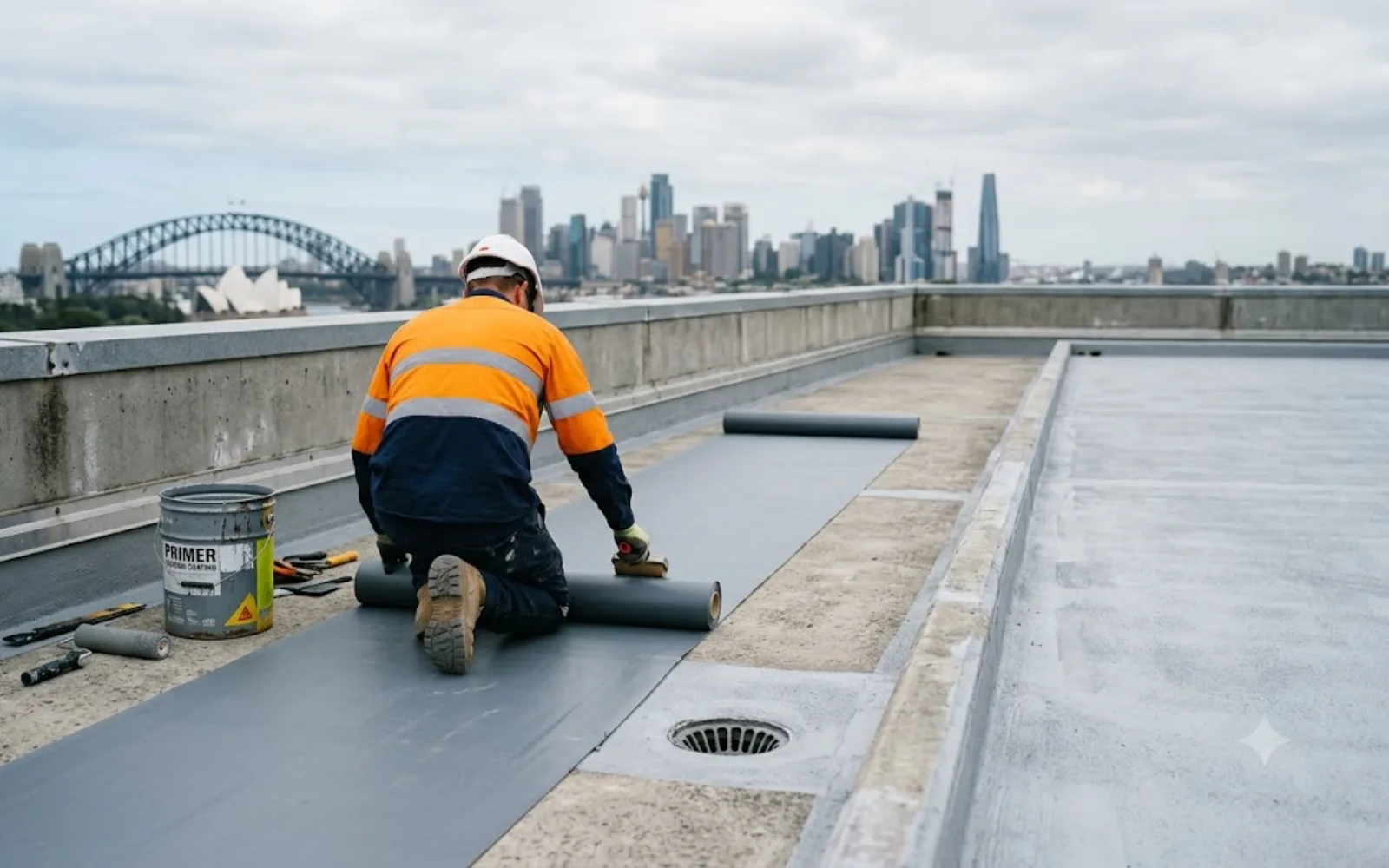
Flat and low-slope roofs do not shed water the way a pitched roof does — they hold it. Every junction, upstand, and drainage outlet is under sustained load, and once the waterproofing system reaches end of life, ponding, blistering, and lap failure follow quickly. On Sydney's older apartment blocks, podium decks, and commercial buildings, a tired flat roof is one of the most common sources of persistent, expensive water ingress into the structure below.
At Atomic Projects, flat and membrane roof renewal is the full-scope answer: we strip the failed system back to a sound substrate, correct the falls so water actually reaches the drains, and install a new membrane — torch-on, liquid-applied, or single-ply — with every upstand, penetration, and outlet properly detailed. The completed roof is flood-tested before handover, so watertightness is proven, not assumed.
This service is deliberately distinct from general roof waterproofing. It is specifically the renewal and recover of flat and low-slope roof fields — the methodical replacement of a whole failed roof system, correcting the underlying falls and detailing that caused it to fail in the first place, rather than a spot repair or a coat over the top.
How We Renew a Flat or Membrane Roof
- Survey, Fall Assessment & System Selection — We survey the existing roof, confirm the substrate (concrete, metal deck, or plywood), and measure the falls to identify ponding zones. Based on substrate, exposure, and whether the roof will be trafficable, we specify the appropriate membrane system — torch-on modified bitumen, cold-applied liquid (polyurethane or PMMA), or single-ply sheet — in line with AS 4654.2 (waterproofing membranes for external above-ground use).
- Strip-Out of the Failed System — Blistered, delaminated, or water-trapping membrane is fully removed rather than covered over. Recovering over a failed system is a false economy that traps moisture and shortens the life of the new membrane. The substrate is exposed, cleaned, and assessed for damage.
- Fall Correction & Substrate Preparation — Where falls are inadequate — the root cause of most flat-roof failure — we apply a lightweight screed or tapered system to redirect water to the outlets, targeting the minimum grades required for positive drainage under AS/NZS 3500.3 (roof drainage). Cracks, joints, and penetrations are made good and primed.
- Detailing of Upstands, Penetrations & Outlets — This is where flat roofs succeed or fail. Upstands are taken to the correct height, penetration boots and pipe collars are reinforced, and drainage outlets and overflow provisions are dressed in so the membrane is continuous and mechanically sound at every transition.
- Membrane Installation — The selected system is installed by qualified waterproofing tradespeople strictly to manufacturer specification — correct primer, laps, thickness, and cure or torch conditions — with each layer and lap inspected as work proceeds.
- Protection, Finish & Flood Testing — Where the roof is trafficable or exposed, an appropriate protection layer, overcoat, or paving is applied. The completed system is then flood (ponding) tested — held for a minimum of 24 hours — to prove integrity before handover. A waterproofing warranty and compliance documentation are provided.
Frequently Asked Questions
How is this different from your roof waterproofing and membrane systems service?
The broader waterproofing service covers membrane work across a range of roof situations, including targeted membrane repairs and new installations. Flat and membrane roof renewal is specifically the full replacement of a failed flat or low-slope roof field — stripping the old system, correcting the falls that caused it to fail, and installing a complete new membrane. If your flat roof has reached end of life and needs to be renewed rather than patched, this is the right scope.
Can you recover over the existing membrane instead of stripping it?
Only if the existing system is genuinely sound and well-bonded — which, on a roof that has failed, it usually is not. If the old membrane is blistered, lifting, or holding water, it must come off. Laying a new system over trapped moisture is the most common reason a renewed flat roof fails prematurely. We assess this honestly at survey and tell you what the substrate actually needs.
Why does correcting the falls matter so much?
Because ponding water is the single biggest killer of flat-roof membranes. Water that sits on the surface accelerates UV and chemical breakdown, finds every weakness in a lap or detail, and adds sustained load. Correcting the falls so water drains to the outlets is often the difference between a membrane that lasts two decades and one that fails in a few years. We treat it as core scope, not an optional extra.
Which membrane system will you use?
It depends on the substrate, the exposure, and how the roof is used. Torch-on modified bitumen is robust and well-proven; liquid-applied polyurethane or PMMA is excellent for complex detailing and fully-bonded seamless finishes; single-ply sheet suits larger, simpler fields. We specify the system to the roof rather than defaulting to one product, and we explain the trade-offs so the owners corporation understands what is going down and why.
Can residents stay in the building during the works?
In most cases, yes. Flat roof renewal is generally confined to the roof level and does not affect residents directly. Where torch-on systems are used, odour and hot-works management protocols are in place, and we stage works to maintain weather protection so the building is never left exposed overnight. Access to common areas is coordinated in advance.
Related Services
Flat and membrane roof renewal frequently connects with roof waterproofing and membrane systems, roof flashing and capping repairs, and box gutter and downpipe replacement. Where the source of a flat-roof leak is unclear, start with a roof leak investigation. See the full range of roof repairs and replacement services.
Atomic Projects is a Class 2 Registered Builder with over 10 years of experience renewing flat and membrane roofs across Sydney strata and commercial buildings. If your flat roof is ponding, blistering, or leaking, get in touch for an obligation-free assessment and written report.
📞 Call Us: 0410 515 509
✉️ Email Us: hello@atomicprojects.com.au
— Ben Tran, General Manager, Atomic Projects