Atomic Projects white logo

Get Your Free E Book

23 Pages of Exclusive Trade Secrets
Thank you! Your submission has been received!
Oops! Something went wrong while submitting the form.
Limited Time Only
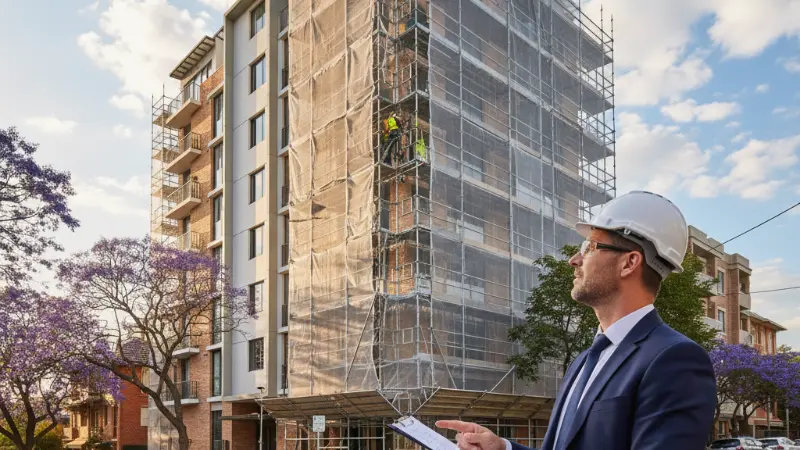
DBP Act July 2026 deadline — Class 3 and 9c buildings must use registered remedial contractors from 1 July 2026

DBP Act July 2026: What Changes for Class 3 and 9c Buildings on Day One

The DBP Act expansion takes effect on 1 July 2026. In a matter of days, every remedial building project on a Class 3 or 9c building in NSW enters a new regulatory reality.

If you manage a boarding house, student accommodation, hotel, hostel, or aged care facility — this is your final briefing. Not a background explainer. Not a preparation checklist. This is what actually changes on the ground when July 1 arrives, and what happens to buildings that aren't ready.

We've covered the DBP Act expansion in detail and published a 5-week compliance checklist for building managers. This post assumes you've read neither — and gives you everything you need in one place.

Which Buildings Are Affected?

The expansion covers two building classes defined under the National Construction Code.

Class 3 buildings include boarding houses, hostels, backpackers, hotels, motels, and student accommodation. Any residential building where unrelated people share common facilities and the building isn't individual apartments (that's Class 2, which has been regulated since 2021).

Class 9c buildings are aged care facilities — nursing homes, residential care, and supported living. If your building has a Class 3 or 9c component — even if the rest of the building is commercial or retail — the DBP Act applies to remedial work on the entire building from July 1. A mixed-use building with a small boarding house on the top floor triggers the full requirement.

New Class 3 and 9c buildings under construction have been regulated since 3 July 2023. What changes on 1 July 2026 is that remedial, alteration, refurbishment, and renovation work on existing buildings comes under the Act for the first time.

The Five Things That Change on 1 July 2026

1. Your Remedial Contractor Must Be DBP-Registered

From July 1, any practitioner performing regulated building work on your Class 3 or 9c building must hold a current registration as a building practitioner under the Design and Building Practitioners Act 2020.

This is not the same as holding a builder's licence. All registered building practitioners hold licences, but most licensed builders are not DBP-registered. The registration requires demonstrated competency for regulated building work and carries additional compliance obligations.

The practical effect: the builder who's been doing your maintenance and patch repairs for the last decade may not be qualified to touch your building after June 30. Verify their registration on the NSW Fair Trading practitioner register before signing any new work orders.

2. All Remedial Designs Must Be Lodged on the NSW Planning Portal

Before any regulated building work can start, a registered design practitioner must prepare a Construction Issued Regulated Design (CIRD) and lodge it on the NSW Planning Portal. This is a formal, auditable design document — not a sketch on site or an email between contractor and engineer.

The CIRD must include plans identifying the location of work, drawings at appropriate scale showing remedial work details, documentation demarcating new remedial work from the existing building, a schedule of materials or products, and performance requirement specifications.

The design practitioner submits the CIRD. The building practitioner then lodges it on the Portal before starting work. No lodgement, no legal commencement.

For buildings where design work was completed before July 1 but building work starts after — the design still needs formal Portal lodgement. Designs that were emailed between parties pre-July don't count as lodged. This is a common trip-point that catches building managers in the first weeks.

3. Professional Indemnity Insurance Becomes Mandatory

The exemption allowing registered building practitioners to operate without Professional Indemnity (PI) insurance expires on 30 June 2026. From July 1, every registered practitioner performing regulated work on your building must carry current PI insurance.

Ask for a Certificate of Currency. Check the expiry date — if the policy lapses mid-project, the practitioner becomes non-compliant and cannot legally continue. This is a question for your contractor today, not after work has started.

4. The Building Work Levy Applies

From 1 July 2026, the building work levy extends to Class 3 and 9c buildings. This is a one-off payment based on building size, paid before a construction certificate is issued.

Building Size Levy
1–3 storeys (under 6,000m²) $7,000
1–3 storeys (over 6,000m²) $8,400
4–8 storeys $8,400
9–19 storeys $11,000
20–30 storeys $15,500
31+ storeys $21,200

If your remedial project requires a construction certificate, factor this levy into your budget. It's separate from the long service levy you're already paying.

5. NSW Fair Trading Will Audit Remedial Work

Building Commission NSW has legislative powers to audit remedial building work on regulated buildings. Authorised officers focus on verifying that design and building practitioners are registered, that CIRDs contain sufficient detail for BCA-compliant work, and that the work itself meets the Building Code of Australia and relevant Australian Standards.

Non-compliant work can trigger education, formal warnings, Building Work Rectification Orders, Stop Work Orders, Prohibition Orders, and financial penalties. In the worst case, non-compliant remedial work may need to be audited retrospectively or demolished and redone by a registered practitioner.

The Building Commission has increased its compliance team specifically for the Class 3/9c expansion. This isn't a regulation that sits unenforced.

What Counts as Regulated Remedial Work?

This is where building managers most commonly get tripped up. The DBP Act regulates work involving building elements — structural components, waterproofing, fire safety systems, facades, load-bearing walls, and performance solutions.

Regulated (after July 1): concrete repairs and structural strengthening; waterproofing membrane replacement (with specific exemptions for single-dwelling bathroom renovations); facade remediation and cladding replacement; fire safety upgrades and passive fire protection; balcony repairs involving structural or waterproofing elements; and any work requiring a performance solution under the BCA.

Generally exempt: painting and cosmetic finishes; fixture and fitting replacement; carpet, flooring, and surface treatments that don't affect building elements; minor maintenance that doesn't alter building elements; and work classified as exempt development under the State Environmental Planning Policy. The grey area sits around waterproofing. Waterproofing is only excluded from the DBP Act if it meets all three conditions in clause 13 of the DBP Regulation: it's carried out as a result of alterations to a bathroom, kitchen, laundry, or toilet; the work relates to a single dwelling only; and it qualifies as exempt development. In a boarding house or aged care facility with shared wet areas, common area waterproofing will almost always be regulated.

When in doubt, treat it as regulated. The cost of compliance is documentation. The cost of non-compliance is demolition and redo.

Emergency Remedial Work: The Only Exception

The DBP Act provides one narrow exception to the design-first requirement. Emergency remedial building work can proceed without a pre-lodged CIRD — but only if it meets strict criteria: the work is urgent and cannot wait for the standard design-and-lodge process; it addresses an immediate risk to health, safety, or property; and a compliance declaration is lodged with NSW Fair Trading within 7 days of completing the work.

NSW Fair Trading conducts random and targeted audits of emergency work claims. If declared emergency work doesn't meet the exemption criteria, substantial fines and disciplinary action follow. This is not a loophole — it's a genuinely limited safety valve for genuine emergencies like burst pipes flooding multiple floors or structural failure requiring immediate shoring.

The Contractor Gap: Why This Matters More Than You Think

Here's the problem most building managers haven't priced in: the pool of DBP-registered remedial contractors is significantly smaller than the general builder market.

When the Act applied only to Class 2 buildings, the demand for registered practitioners matched a manageable supply. Adding every Class 3 and 9c building in NSW to that demand — thousands of boarding houses, hundreds of aged care facilities — puts immediate pressure on a limited supply of registered professionals.

If you're procuring remedial work for a July or August start, the registered contractors you need are already being booked by building managers who started their compliance preparation months ago. Every week you wait narrows your options.

The same constraint applies to design practitioners. Your consulting engineer must be registered as a design practitioner to prepare and lodge CIRDs. Not all structural or civil engineers hold design practitioner registration.

What Building Managers Should Do This Week

If you have remedial work in progress: Verify your contractor's DBP registration and PI insurance immediately. If they're not registered, you need a transition plan.

If you have remedial work contracted but not started: Confirm the contractor is DBP-registered and PI-insured. Confirm the design practitioner is registered. Confirm the CIRD will be lodged on the Planning Portal before work commences after July 1.

If you have remedial work in your capital works plan for the next 12 months: Begin procurement from registered practitioners now. Don't wait until the project timeline requires it — the contractor pool is tightening.

If you're not sure whether your building is affected: Check your building classification. If any part of the building is Class 3 or 9c, you're covered from July 1.

How to Verify a Contractor's DBP Registration

  1. Ask the contractor for their registration number. Any registered practitioner can provide this immediately. Hesitation or deflection is a red flag.

  2. Verify on the NSW Fair Trading register. Search by name or registration number. The register shows registration class, status, and expiry.

  3. Request a PI insurance Certificate of Currency. Check the policy covers the type of work, the building class, and remains current through the project duration.

A contractor who can produce all three within 24 hours is ready for post-July work. A contractor who can't isn't — regardless of their track record, price, or relationship with your building.

What Atomic Projects Brings to Class 3 and 9c Buildings

We've been delivering remedial building work under the DBP Act since it first applied to Class 2 buildings in 2021. Our team holds current DBP registration, carries PI insurance, and lodges every project through the NSW Planning Portal. We've delivered defect rectification and remedial building services across Sydney's apartment buildings under the full DBP compliance framework.

The Class 3/9c expansion doesn't change how we work — it means more buildings now require what we've been doing all along.

If your boarding house, student accommodation, or aged care facility has remedial work pending and you need a registered practitioner, contact our team for a compliance review or project quote. Our process starts with a building investigation report so the scope is right before any work begins.

Frequently Asked Questions

Could the July 1 deadline be deferred again? The 1 July 2026 date was confirmed by Building Commission NSW following a 12-month deferral from the original July 2025 commencement. As of June 2026, there is no indication of a further deferral. The amended regulation is published and the date is locked.

Does the DBP Act apply if our remedial work costs less than a certain amount? There is no cost threshold. The Act applies based on the nature of the work (building elements, performance solutions), not the dollar value. A $5,000 waterproofing repair on a common area balcony is regulated the same as a $500,000 facade remediation.

What if our building is mostly commercial but has a small Class 3 component? The Class 3 component triggers DBP Act coverage for remedial work on that part of the building. If the remedial work involves the Class 3 portion or shared building elements, you need registered practitioners.

Can we use our existing maintenance contractor for post-July work? Only if they're DBP-registered. The relationship, price, and familiarity with your building are irrelevant if they're not on the register. Engaging an unregistered practitioner after July 1 exposes your building to compliance action and your owners or operators to liability.

What's the penalty for non-compliance? Penalties range from formal warnings to financial penalties, Building Work Rectification Orders, Stop Work Orders, and Prohibition Orders. In serious cases, non-compliant work may need to be removed and redone by a registered practitioner — at significantly greater cost than doing it right the first time.

DBP Act July 2026: What Changes for Class 3 and 9c Buildings on Day One

DBP Act July 2026 deadline — Class 3 and 9c buildings must use registered remedial contractors from 1 July 2026

The DBP Act expansion takes effect on 1 July 2026. In a matter of days, every remedial building project on a Class 3 or 9c building in NSW enters a new regulatory reality.

If you manage a boarding house, student accommodation, hotel, hostel, or aged care facility — this is your final briefing. Not a background explainer. Not a preparation checklist. This is what actually changes on the ground when July 1 arrives, and what happens to buildings that aren't ready.

We've covered the DBP Act expansion in detail and published a 5-week compliance checklist for building managers. This post assumes you've read neither — and gives you everything you need in one place.

Which Buildings Are Affected?

The expansion covers two building classes defined under the National Construction Code.

Class 3 buildings include boarding houses, hostels, backpackers, hotels, motels, and student accommodation. Any residential building where unrelated people share common facilities and the building isn't individual apartments (that's Class 2, which has been regulated since 2021).

Class 9c buildings are aged care facilities — nursing homes, residential care, and supported living. If your building has a Class 3 or 9c component — even if the rest of the building is commercial or retail — the DBP Act applies to remedial work on the entire building from July 1. A mixed-use building with a small boarding house on the top floor triggers the full requirement.

New Class 3 and 9c buildings under construction have been regulated since 3 July 2023. What changes on 1 July 2026 is that remedial, alteration, refurbishment, and renovation work on existing buildings comes under the Act for the first time.

The Five Things That Change on 1 July 2026

1. Your Remedial Contractor Must Be DBP-Registered

From July 1, any practitioner performing regulated building work on your Class 3 or 9c building must hold a current registration as a building practitioner under the Design and Building Practitioners Act 2020.

This is not the same as holding a builder's licence. All registered building practitioners hold licences, but most licensed builders are not DBP-registered. The registration requires demonstrated competency for regulated building work and carries additional compliance obligations.

The practical effect: the builder who's been doing your maintenance and patch repairs for the last decade may not be qualified to touch your building after June 30. Verify their registration on the NSW Fair Trading practitioner register before signing any new work orders.

2. All Remedial Designs Must Be Lodged on the NSW Planning Portal

Before any regulated building work can start, a registered design practitioner must prepare a Construction Issued Regulated Design (CIRD) and lodge it on the NSW Planning Portal. This is a formal, auditable design document — not a sketch on site or an email between contractor and engineer.

The CIRD must include plans identifying the location of work, drawings at appropriate scale showing remedial work details, documentation demarcating new remedial work from the existing building, a schedule of materials or products, and performance requirement specifications.

The design practitioner submits the CIRD. The building practitioner then lodges it on the Portal before starting work. No lodgement, no legal commencement.

For buildings where design work was completed before July 1 but building work starts after — the design still needs formal Portal lodgement. Designs that were emailed between parties pre-July don't count as lodged. This is a common trip-point that catches building managers in the first weeks.

3. Professional Indemnity Insurance Becomes Mandatory

The exemption allowing registered building practitioners to operate without Professional Indemnity (PI) insurance expires on 30 June 2026. From July 1, every registered practitioner performing regulated work on your building must carry current PI insurance.

Ask for a Certificate of Currency. Check the expiry date — if the policy lapses mid-project, the practitioner becomes non-compliant and cannot legally continue. This is a question for your contractor today, not after work has started.

4. The Building Work Levy Applies

From 1 July 2026, the building work levy extends to Class 3 and 9c buildings. This is a one-off payment based on building size, paid before a construction certificate is issued.

Building Size Levy
1–3 storeys (under 6,000m²) $7,000
1–3 storeys (over 6,000m²) $8,400
4–8 storeys $8,400
9–19 storeys $11,000
20–30 storeys $15,500
31+ storeys $21,200

If your remedial project requires a construction certificate, factor this levy into your budget. It's separate from the long service levy you're already paying.

5. NSW Fair Trading Will Audit Remedial Work

Building Commission NSW has legislative powers to audit remedial building work on regulated buildings. Authorised officers focus on verifying that design and building practitioners are registered, that CIRDs contain sufficient detail for BCA-compliant work, and that the work itself meets the Building Code of Australia and relevant Australian Standards.

Non-compliant work can trigger education, formal warnings, Building Work Rectification Orders, Stop Work Orders, Prohibition Orders, and financial penalties. In the worst case, non-compliant remedial work may need to be audited retrospectively or demolished and redone by a registered practitioner.

The Building Commission has increased its compliance team specifically for the Class 3/9c expansion. This isn't a regulation that sits unenforced.

What Counts as Regulated Remedial Work?

This is where building managers most commonly get tripped up. The DBP Act regulates work involving building elements — structural components, waterproofing, fire safety systems, facades, load-bearing walls, and performance solutions.

Regulated (after July 1): concrete repairs and structural strengthening; waterproofing membrane replacement (with specific exemptions for single-dwelling bathroom renovations); facade remediation and cladding replacement; fire safety upgrades and passive fire protection; balcony repairs involving structural or waterproofing elements; and any work requiring a performance solution under the BCA.

Generally exempt: painting and cosmetic finishes; fixture and fitting replacement; carpet, flooring, and surface treatments that don't affect building elements; minor maintenance that doesn't alter building elements; and work classified as exempt development under the State Environmental Planning Policy. The grey area sits around waterproofing. Waterproofing is only excluded from the DBP Act if it meets all three conditions in clause 13 of the DBP Regulation: it's carried out as a result of alterations to a bathroom, kitchen, laundry, or toilet; the work relates to a single dwelling only; and it qualifies as exempt development. In a boarding house or aged care facility with shared wet areas, common area waterproofing will almost always be regulated.

When in doubt, treat it as regulated. The cost of compliance is documentation. The cost of non-compliance is demolition and redo.

Emergency Remedial Work: The Only Exception

The DBP Act provides one narrow exception to the design-first requirement. Emergency remedial building work can proceed without a pre-lodged CIRD — but only if it meets strict criteria: the work is urgent and cannot wait for the standard design-and-lodge process; it addresses an immediate risk to health, safety, or property; and a compliance declaration is lodged with NSW Fair Trading within 7 days of completing the work.

NSW Fair Trading conducts random and targeted audits of emergency work claims. If declared emergency work doesn't meet the exemption criteria, substantial fines and disciplinary action follow. This is not a loophole — it's a genuinely limited safety valve for genuine emergencies like burst pipes flooding multiple floors or structural failure requiring immediate shoring.

The Contractor Gap: Why This Matters More Than You Think

Here's the problem most building managers haven't priced in: the pool of DBP-registered remedial contractors is significantly smaller than the general builder market.

When the Act applied only to Class 2 buildings, the demand for registered practitioners matched a manageable supply. Adding every Class 3 and 9c building in NSW to that demand — thousands of boarding houses, hundreds of aged care facilities — puts immediate pressure on a limited supply of registered professionals.

If you're procuring remedial work for a July or August start, the registered contractors you need are already being booked by building managers who started their compliance preparation months ago. Every week you wait narrows your options.

The same constraint applies to design practitioners. Your consulting engineer must be registered as a design practitioner to prepare and lodge CIRDs. Not all structural or civil engineers hold design practitioner registration.

What Building Managers Should Do This Week

If you have remedial work in progress: Verify your contractor's DBP registration and PI insurance immediately. If they're not registered, you need a transition plan.

If you have remedial work contracted but not started: Confirm the contractor is DBP-registered and PI-insured. Confirm the design practitioner is registered. Confirm the CIRD will be lodged on the Planning Portal before work commences after July 1.

If you have remedial work in your capital works plan for the next 12 months: Begin procurement from registered practitioners now. Don't wait until the project timeline requires it — the contractor pool is tightening.

If you're not sure whether your building is affected: Check your building classification. If any part of the building is Class 3 or 9c, you're covered from July 1.

How to Verify a Contractor's DBP Registration

  1. Ask the contractor for their registration number. Any registered practitioner can provide this immediately. Hesitation or deflection is a red flag.

  2. Verify on the NSW Fair Trading register. Search by name or registration number. The register shows registration class, status, and expiry.

  3. Request a PI insurance Certificate of Currency. Check the policy covers the type of work, the building class, and remains current through the project duration.

A contractor who can produce all three within 24 hours is ready for post-July work. A contractor who can't isn't — regardless of their track record, price, or relationship with your building.

What Atomic Projects Brings to Class 3 and 9c Buildings

We've been delivering remedial building work under the DBP Act since it first applied to Class 2 buildings in 2021. Our team holds current DBP registration, carries PI insurance, and lodges every project through the NSW Planning Portal. We've delivered defect rectification and remedial building services across Sydney's apartment buildings under the full DBP compliance framework.

The Class 3/9c expansion doesn't change how we work — it means more buildings now require what we've been doing all along.

If your boarding house, student accommodation, or aged care facility has remedial work pending and you need a registered practitioner, contact our team for a compliance review or project quote. Our process starts with a building investigation report so the scope is right before any work begins.

Frequently Asked Questions

Could the July 1 deadline be deferred again? The 1 July 2026 date was confirmed by Building Commission NSW following a 12-month deferral from the original July 2025 commencement. As of June 2026, there is no indication of a further deferral. The amended regulation is published and the date is locked.

Does the DBP Act apply if our remedial work costs less than a certain amount? There is no cost threshold. The Act applies based on the nature of the work (building elements, performance solutions), not the dollar value. A $5,000 waterproofing repair on a common area balcony is regulated the same as a $500,000 facade remediation.

What if our building is mostly commercial but has a small Class 3 component? The Class 3 component triggers DBP Act coverage for remedial work on that part of the building. If the remedial work involves the Class 3 portion or shared building elements, you need registered practitioners.

Can we use our existing maintenance contractor for post-July work? Only if they're DBP-registered. The relationship, price, and familiarity with your building are irrelevant if they're not on the register. Engaging an unregistered practitioner after July 1 exposes your building to compliance action and your owners or operators to liability.

What's the penalty for non-compliance? Penalties range from formal warnings to financial penalties, Building Work Rectification Orders, Stop Work Orders, and Prohibition Orders. In serious cases, non-compliant work may need to be removed and redone by a registered practitioner — at significantly greater cost than doing it right the first time.

Take the next step.

Fill out the form below and let's build something that lasts.

Phone: Call us at 0410 515 509

Email: Send us a message at hello@atomicprojects.com.au

Form: Fill out the form — we usually respond within 1 business day.

Max file size 10MB.
Uploading...
fileuploaded.jpg
Upload failed. Max size for files is 10 MB.
Thank you! Your submission has been received!
Oops! Something went wrong while submitting the form.