


Why planter boxes on Sydney strata buildings leak, what a compliant AS 4654.2 repair involves, how long it takes, and whether the owners corporation or the lot owner pays.
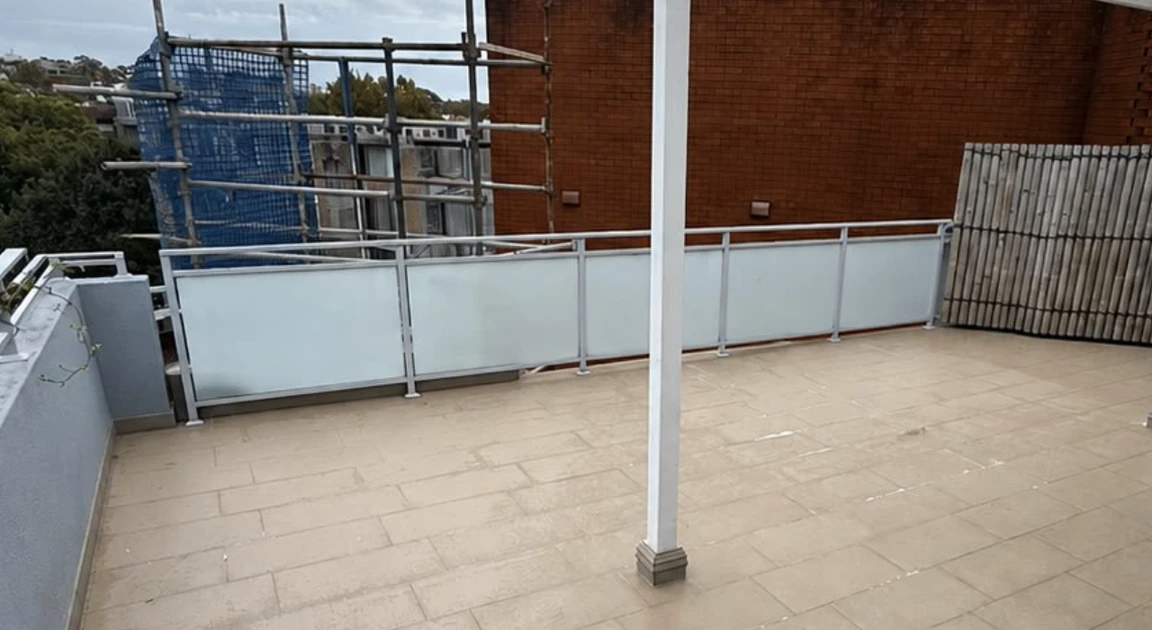
Planter boxes are one of the most common — and most expensive — sources of water ingress on Sydney strata buildings. They sit on podiums, balconies and rooftops, hold wet soil against the structure 365 days a year, and almost always fail at the same points. By the time water shows up in the apartment or carpark below, the membrane has usually been failing for years and the slab underneath is already affected.
This guide is written for owners corporations, strata managers and building committees who are dealing with a leaking planter — or trying to stop one from leaking in the first place. It covers why planters fail, what a compliant repair actually looks like, the standard that governs it, roughly how long it takes, and the question that stalls more committees than any other: who pays.
In NSW, the owners corporation almost always pays. Planter box waterproofing membranes are common property, and under section 106 of the Strata Schemes Management Act 2015 the owners corporation has a statutory duty to maintain and repair common property. A lot owner only picks up the cost where an exclusive-use by-law or owner-added finish shifts that duty.
The practical test is where the membrane sits. The waterproofing, the structural slab and the drainage are common property even when the plants, soil or surface tiles belong to a lot. Strata insurance may cover resulting damage to a lot below, but it generally will not cover the cost of fixing defective waterproofing itself — so the repair bill lands with the owners corporation. The strata plan and any by-laws should always be checked before responsibility is assigned.
Planter boxes leak because they trap water permanently against the structure. The three failures that cause almost every leak are a missing or damaged root barrier, no working drainage layer, and waterproofing that stops at soil level instead of turning up above it. Any one of these lets water sit against the membrane until it finds a path through.
Unlike a balcony, a planter never dries out. Soil holds moisture, roots grow toward the membrane, and if the drainage layer is blocked or was never installed, the membrane sits under permanent hydrostatic pressure. Roots then find the smallest defect — a lapped joint, a penetration, a tired corner — and open it up. Because many planters are built integral to the slab, that water migrates straight into the structure rather than draining away, which is why a planter leak so often ends up as concrete cancer in the slab below. Getting the waterproofing right is the whole job, which is why planters sit at the centre of almost every building-wide waterproofing remediation program we run.
A compliant planter is built in layers, each with a job. From the slab up: substrate preparation, a root-resistant waterproofing membrane (or membrane plus a separate root barrier), a protection board, a drainage cell, a geotextile filter fabric, then the growing medium. Subsoil drainage must connect to a working outlet so water can escape.
Miss any layer and the system fails. The membrane must be rated for external above-ground use and either be root-resistant or protected by a dedicated root barrier. Drainage is non-negotiable — a drainage cell and filter fabric keep soil out of the drainage path and let water reach the outlet instead of ponding on the membrane. The same discipline applies to the planters that sit alongside roof gardens and podiums, which is why the detailing overlaps heavily with concrete roof waterproofing and the wider flat-roof membrane options and what repairs cost.
Planter boxes fall under AS 4654.2, the Australian Standard for waterproofing membranes for external above-ground use, read together with the National Construction Code. AS 4654.2 governs membrane selection, upturn heights, falls and terminations. Where structural concrete is repaired as part of the works, AS 3600 applies to the concrete itself.
AS 4654.2 is the reason a correct planter detail turns the membrane up above the maximum soil and water retention level rather than stopping at the soil surface, and sets the falls needed to move water to the drainage outlet. The Master Builders Association's Guide to Planter Box Waterproofing (Book 3) is the widely used industry reference that expands on these details. A membrane that merely coats the base of the planter is not compliant and will not last.
There are three repair scopes, chosen by how far the failure has spread. A localised repair re-terminates the membrane at an isolated failure point. A full strip-and-reinstate removes soil and plants, demolishes to the slab and rebuilds the whole build-up. Where water has reached the structure, concrete repair is added before anything is re-waterproofed.
The honest answer is that a planter with a failed membrane almost always needs a full strip-out — patching rarely holds, because the root barrier and drainage are usually the problem and you cannot fix those without opening the planter up. The table below sets out the three scopes and roughly what each involves.
| Repair scope | When it's used | What's involved | Indicative timeframe |
| Localised repair | Isolated leak, membrane and drainage otherwise sound | Targeted strip-out at the failure point, re-terminate membrane and penetrations | ~1–2 weeks |
| Full strip & re-waterproof | Widespread membrane failure, no root barrier, or failed drainage | Remove plants and soil, demolish to slab, reinstate full build-up to AS 4654.2 | ~3–6 weeks per planter run |
| Rebuild with structural repair | Leak has reached the slab (concrete cancer / spalling) | Concrete repair to AS 3600 first, then full re-waterproof and rebuild | ~6–12 weeks |
On large podiums the planters are usually tackled alongside the surrounding balcony and podium remediation so the whole deck is watertight when the scaffold comes down.
Planter remediation is priced by scope, not by a flat rate. The cost drivers are the number and size of planters, how much soil and planting has to be removed and reinstated, whether the slab needs concrete repair, and access. A single isolated leak is a modest repair; a podium full of integral planters with structural damage is a major program.
The biggest hidden cost is almost always what is found once the planter is opened: the slab underneath has frequently been wet for years. That is why a proper assessment, not a phone quote, is the only reliable way to budget. An engineer's inspection or a defect investigation will confirm whether the membrane alone has failed or whether the structure needs attention too — and it is far cheaper to find that out before the funds are committed.
A localised planter repair typically runs one to two weeks. A full strip-and-reinstate runs around three to six weeks per planter run. If the slab needs concrete repair first, allow six to twelve weeks. Curing times for the concrete and the new membrane are fixed and cannot be rushed without risking a second failure.
The long pole is almost never the waterproofing itself — it is the demolition, any structural repair, and the reinstatement of soil and planting. Sequencing matters: the membrane has to be tested and the concrete cured before the build-up goes back, so a program that tries to save time by skipping the hold points is the one that leaks again.
Yes, and it is one of the most common causes on strata buildings. A planter holds wet soil permanently against the slab, so a failed membrane keeps the concrete saturated. Water reaches the reinforcing steel, the steel corrodes and expands, and the concrete cracks and spalls — concrete cancer. Left alone, a cheap waterproofing fix becomes a structural repair.
This is why planter leaks should never be deferred to the next budget cycle. The membrane is the cheap part; the slab is not. Catching a planter leak while it is still a waterproofing problem, rather than a structural one, is the single biggest saving an owners corporation can make on this type of defect.
As a Class 2 DBP Registered Building Practitioner, Atomic Projects has delivered $20M+ of remedial work across 100+ Sydney strata buildings — from $50k balcony repairs to $5M+ facade programs. On strata remediation projects such as our work on the Pacific Highway at Killara and on Shelley Street, planter and podium waterproofing is detailed to AS 4654.2 and inspected before the build-up goes back, so the repair is done once.
If a planter on your building is leaking — or you want it assessed before it reaches the slab — book a free planter box waterproofing assessment. We will tell you whether it is a membrane problem or a structural one, and what it will take to fix it properly.

Send photos, the engineer's report, or just the symptoms — whatever you've got. A registered builder reads it and calls you back. No call centre, no obligation.