


What the NSW Cladding Taskforce means for your strata building in 2026 — how to check if you're affected, where Project Remediate stands, and what to do next.
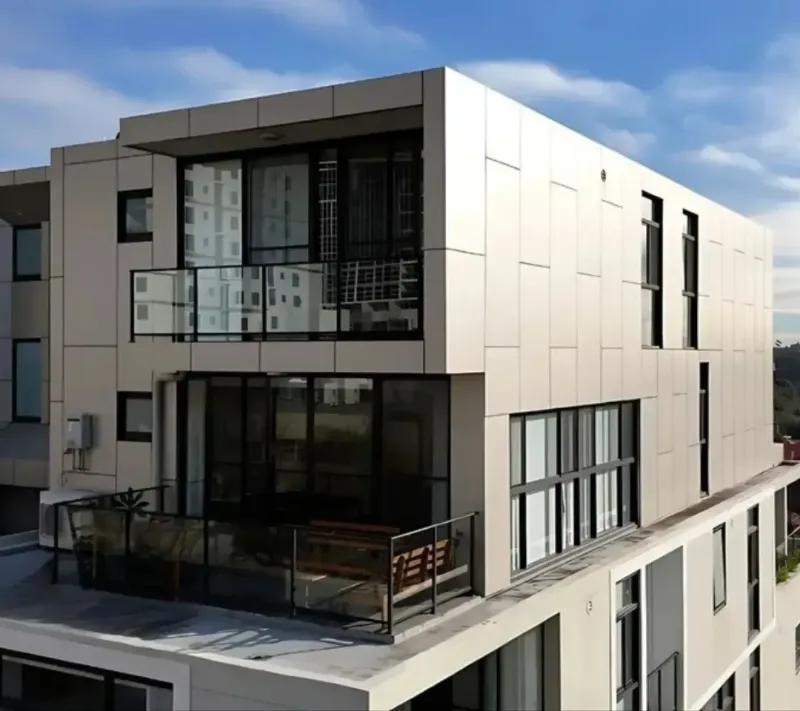
If your strata building has aluminium composite panels or other external cladding, the words Cladding Taskforce probably carry some weight — and some worry. Eight years after the Grenfell Tower fire, combustible cladding remains one of the most consequential issues an owners corporation in NSW can face. It touches fire safety, insurance, finance and the value of every lot. This guide explains what the NSW Cladding Taskforce actually is, how to tell whether your building is affected, where Project Remediate stands in 2026, and the practical steps a strata committee should take now.
The NSW Cladding Taskforce is the state government body set up in 2017 to find and manage buildings with dangerous external cladding. It has audited more than 185,000 building records and inspected over 4,000 buildings, and it now sits within Building Commission NSW. Fire and Rescue NSW helps assess risk, and high-risk buildings are referred to councils for action.
The Taskforce was created after the 2014 Lacrosse fire in Melbourne and the 2017 Grenfell Tower fire in London showed how quickly combustible cladding can carry a fire up a façade. Its job is to identify affected buildings, confirm which materials are non-compliant, and push remediation through the relevant consent authority — usually a local council or the Department of Planning. It does not pay for the work or carry it out; it identifies risk and directs owners toward a fix, which for most strata buildings means a coordinated remedial building program rather than a single trade.
Check three things: whether your building is on the NSW cladding register, what your section 10.7 planning certificate says, and whether you have received a fire safety order from council or Fire and Rescue NSW. Class 2 apartment buildings with external combustible cladding must be registered. An independent façade assessment then confirms the exact material and its fire risk.
Under the Environmental Planning and Assessment Regulation, owners of certain buildings with external combustible cladding — multi-storey apartments, aged-care facilities, hospitals, hotels and public-use buildings — must register them with the government. If your building was built or re-clad in the relevant period and you are unsure of its status, the safe move is a materials assessment by a qualified façade consultant. That is also the first step toward replacing non-compliant panels with a certified façade system if the assessment confirms a problem.
Project Remediate is a voluntary NSW program offering eligible Class 2 residential buildings a 10-year interest-free loan plus managed project delivery to replace high-risk cladding. Registrations have now closed — no new buildings can enrol. Of 338 high-risk buildings identified in a 2021 audit, 76 remained in the program by late 2025, with 30 completed and 46 still underway.
The program is run by Building Commission NSW, with Hansen Yuncken as managing contractor and the loan administered by Lannock Strata Finance; owners repay monthly by direct debit only after the work is complete. The government reports more than $105 million of targeted investment, and the program — originally a three-year scheme to 2024 — has been extended to 2027. Most owners corporations that were eligible ultimately withdrew and remediated privately, which is now the only path for buildings that never enrolled.
In almost all cases the owners corporation pays, usually through a special levy or a strata loan, because external walls are common property. Project Remediate's interest-free loan spreads the cost over 10 years for buildings already enrolled, but the owners still repay it. Costs vary widely — some Sydney buildings have faced levies from $70,000 to $150,000 per unit.
Because the façade is common property, the cost sits with the owners collectively, not with individual lot owners whose units happen to sit behind the worst panels. Cost blowouts are common once scaffold goes up and hidden defects appear — one Pyrmont complex saw its bill roughly double from $7 million to $14 million after balustrade issues were found, and scaffolding alone can run around $25,000 a week. Lenders and insurers are watching closely, too: as covered in our note on the new 10-year defect cover now reshaping strata risk, unresolved cladding is increasingly a barrier to affordable insurance and finance.
NSW bans aluminium composite panels (ACPs) with a core of more than 30% polyethylene by mass in any external wall, under the Building Products (Safety) Act 2017. These high-polyethylene panels spread fire rapidly and are the main target of remediation. Compliant replacements use solid aluminium, mineral-core or other non-combustible systems tested to standards such as AS 5113.
The polyethylene core is the problem: it is essentially a layer of plastic sandwiched between thin aluminium skins, and under fire it melts and burns, carrying flame vertically across a building. Rendered expanded polystyrene (EPS) in some wall systems raises similar concerns. The fix is not to re-skin with another cheap panel but to specify compliant alternatives such as Vitradual and solid-aluminium systems that meet the National Construction Code and pass full-scale façade fire testing.
Doing nothing is usually the most expensive option. Councils and Fire and Rescue NSW can issue fire safety orders compelling the work, insurers routinely decline or load cover on buildings with unresolved cladding, and lenders and buyers discount affected lots. A documented remediation plan — even one still in progress — protects owners far more than inaction does.
The risk is not only regulatory. A building with known combustible cladding and no plan is harder to insure, harder to sell in and harder to borrow against. By contrast, a committee that can show an assessment, a scope and a funding path is treated very differently by insurers and lenders — the problem is being managed, not ignored.
With Project Remediate closed to new entrants, most buildings now remediate privately. The program's interest-free loan and managed delivery suit owners already enrolled who want certainty and cannot fund the work upfront. A private program usually gives more control over scope, contractor and timing, and strata lawyers note it is often cheaper. The right path depends on eligibility, cash position and how much of the job you want to manage.
| Factor | Project Remediate (enrolled buildings) | Private remediation |
| Open to new buildings in 2026 | No — registrations closed | Yes |
| Finance | 10-year interest-free government loan | Special levy or commercial strata loan |
| Project management | Government-appointed managing contractor | Owners corporation appoints its own team |
| Control over scope & contractor | Limited | Full |
| Typical cost | Often higher (per strata lawyers) | Often lower; owners control variations |
| Timeframe | ~6 months construction + defects period | Set by your contractor and scope |
Start by confirming the facts: commission an independent façade assessment, check your cladding-register status and section 10.7 certificate, and get a fire-engineering opinion if one is not already on file. Then scope the compliant replacement, obtain costed proposals, and brief owners early on funding options. Acting with a clear plan is what keeps insurance and finance available.
As a Class 2 DBP Registered Building Practitioner, Atomic Projects has delivered façade and remediation programs across 100-plus Sydney strata buildings, from $50k balcony repairs to $5M-plus façade works, with more than $20M delivered in total. If your committee has had a letter from council, a fire safety order, or simply an insurer asking hard questions about your cladding, the cheapest first move is clarity. Get a free façade assessment, and you will know exactly where your building stands before you spend a cent on the work itself — the same disciplined approach we bring to all of our remedial building services.

Send photos, the engineer's report, or just the symptoms — whatever you've got. A registered builder reads it and calls you back. No call centre, no obligation.