Atomic Projects white logo

Get Your Free E Book

23 Pages of Exclusive Trade Secrets
Thank you! Your submission has been received!
Oops! Something went wrong while submitting the form.
Limited Time Only
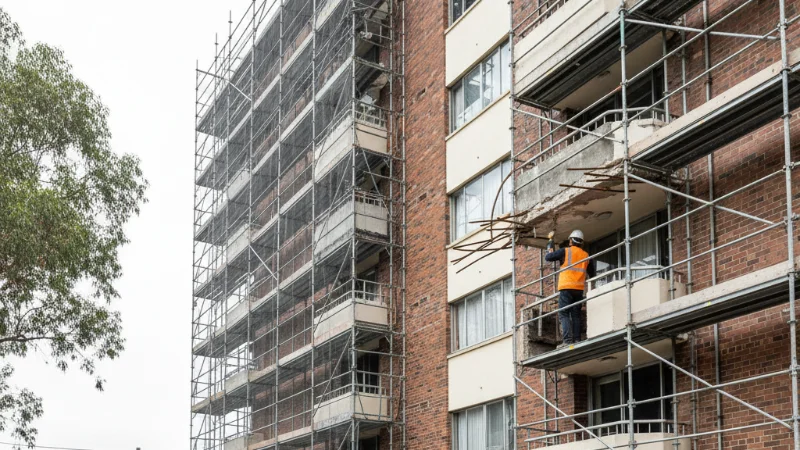
Structural repair contractor Sydney — diagnostic concrete investigation on strata apartment building

How to Choose a Structural Repair Contractor in Sydney (Strata Guide)

Your engineer's report has landed. The building has structural defects — cracking in the slab soffits, spalling on the columns, corrosion of reinforcing steel in the balcony beams. The report recommends remedial works and the owners corporation needs to appoint a contractor.

This is where most strata committees make their most expensive mistake. They get three quotes, pick the cheapest one, and discover 18 months later that the repair has failed — because the contractor they chose was pricing a patch job while the building needed a structural remediation.

Choosing a structural repair contractor is not the same as choosing a painter or a plumber. The work is complex, the stakes are high (structural failure is a safety issue, not just a maintenance issue), and the difference between a competent contractor and an incompetent one is invisible until the repair fails.

Here's what to look for — and what to avoid.

Why Structural Repair Is Different From General Building Maintenance

General maintenance — painting, cleaning, minor plumbing — follows a straightforward process. You describe what you want, the contractor prices it, the work gets done. The scope is visible, the methodology is standard, and the outcome is immediately apparent.

Structural repair is fundamentally different. The defect you can see on the surface — a crack, a spall, a rust stain — is rarely the full extent of the problem. Concrete damage, in particular, is deceptive. A building can have six visible spalls and forty concealed defects that haven't surfaced yet. The contractor who only prices the six visible spalls will deliver a cheaper quote, but the repair will fail when the concealed defects progress.

This is why the contractor's diagnostic capability matters as much as their repair capability. A structural repair contractor who can't investigate the building properly can't scope the work properly, can't price the work accurately, and can't repair the building permanently.

The result is a cycle that strata committees know too well: repair, fail, re-repair, pay twice. If you're still in the earlier stages of identifying defects, our guide to the signs your building needs remedial work covers what to watch for before commissioning an engineer's report.

The Six Things That Separate Good Structural Repair Contractors From Bad Ones

1. They investigate before they quote

This is the single most important differentiator. A competent structural repair contractor will insist on investigating the building before pricing the work. That investigation should include, at minimum, a delamination survey (hammer-sounding all accessible concrete to find concealed defects), carbonation depth testing (measuring how far the chemical front has advanced toward the steel), and a moisture assessment (identifying the water source that's driving the corrosion).

For larger or more complex buildings, the investigation should also include half-cell potential mapping (electrochemical testing that produces a corrosion probability map of every concrete element) and chloride profiling (measuring salt contamination levels at the steel depth, essential for coastal buildings).

If a contractor walks the building, looks at the cracks, measures the area, and gives you a price — that's a visual inspection, not an investigation. You're being quoted on incomplete information. For a detailed explanation of what a proper concrete investigation looks like, see our guide to the diagnostic-first approach to concrete.

The investigation typically costs $5,000–$15,000 depending on building size. On any project over $50,000, it pays for itself by preventing scope blowouts and repair failures.

2. They hold the right licences for the work

In NSW, structural repair on Class 2 buildings (residential apartment buildings over 3 storeys) requires specific licensing under the Design and Building Practitioners Act 2020. The contractor must hold a Class 2 builder's licence issued by NSW Fair Trading.

This isn't optional. Work performed by an unlicensed contractor on a Class 2 building may not be certifiable, may void insurance coverage, and creates personal liability for the committee members who approved the appointment.

Before engaging any structural repair contractor, verify their licence through the NSW Fair Trading licence check. Ask for their licence number and check it yourself — don't rely on their word or their website.

Beyond the Class 2 licence, check for current public liability insurance (minimum $20 million for strata work), workers' compensation insurance, and Home Building Compensation Fund coverage (for residential buildings under 3 storeys). A contractor who can't produce these documents on request is a contractor you shouldn't engage.

3. They work from an engineer's specification — or they create one

Structural repair should never be performed to a contractor's own description. The repair methodology — what gets removed, how the steel is treated, what materials are used for the patch, what protective coatings are applied — should be specified by a structural engineer.

A good structural repair contractor will either work from your existing engineer's specification or, if you don't have one, will engage a structural engineer to prepare a specification based on the investigation findings. They won't make it up as they go.

Why does this matter? Because the specification is your quality benchmark. Without it, you have no way to verify whether the repair was done correctly. You're trusting the contractor's judgement on repair methodology, material selection, and scope — and if they get it wrong, you have no documented standard to hold them to.

Ask every contractor: "Will you work from an engineer's specification?" If the answer is anything other than yes, move on.

4. They document their QA process

Structural repair involves multiple stages where quality can be compromised: concrete removal (did they remove enough?), steel treatment (did they clean and prime all exposed reinforcement?), patch application (was the material mixed correctly and applied to the right thickness?), and protective coating (was it applied in the right number of coats at the right coverage rate?).

A competent contractor will have a documented quality assurance process — typically an Inspection and Test Plan (ITP) — that defines hold points (stages where work stops until an inspection is passed), test methods, acceptance criteria, and documentation requirements.

Ask to see their ITP template. If they don't have one, that tells you something about how they manage quality on site.

Ask what records they produce during the work. At minimum, you should expect daily site diaries, photographic records of each repair stage (before removal, after removal, steel treatment, patch application, finished), test certificates for materials, and a completion report with final photographs.

5. They address root causes, not just symptoms

Concrete corrosion is caused by something — moisture ingress through failed waterproofing, carbonation advancing through porous concrete, chloride contamination from salt exposure. If the repair addresses the concrete damage but not the cause, the damage will recur.

A good structural repair contractor will include root cause identification in their scope. If the corrosion was driven by a failed waterproofing membrane above the slab, the scope should include waterproofing remediation — not just concrete patching. If the damage is chloride-driven, the scope should include protective coatings or barriers to prevent further contamination.

Ask each contractor: "What's causing the damage, and how does your scope address that cause?" If they can't answer clearly, they're pricing a band-aid.

6. They can show you completed projects of similar scope

Structural repair on a 6-storey strata building is fundamentally different from concrete patching on a ground-level carpark. The contractor should have demonstrable experience on buildings similar to yours — same building type, similar defect types, comparable scope.

Ask for 3–5 project references for buildings of similar size and complexity. Call the strata manager or committee chair. Ask whether the work was completed on time, on budget, and whether any defects have reappeared since completion.

A contractor with genuine experience will welcome this scrutiny. One without it will deflect.

Red Flags: When to Walk Away

These are the warning signs that a structural repair contractor is not equipped for the job:

"We can start next week." Structural repair requires planning — investigation, engineering, material procurement, access design (scaffolding or rope access). A contractor who can start immediately either doesn't understand the scope or is planning to figure it out as they go.

The quote is dramatically cheaper than the others. If you have three quotes and one is 40% below the other two, that contractor is either pricing less scope (they'll hit you with variations once they start), using inferior materials, or cutting corners on methodology. On structural work, the cheapest quote is almost always the most expensive outcome.

They can't explain their repair methodology. Ask: "Walk me through how you'll repair a corroded reinforcement bar in a balcony soffit." The answer should include concrete removal to beyond the corrosion zone, mechanical cleaning of the steel, application of a steel primer, patch repair with a polymer-modified repair mortar, and a protective coating system. If the answer is vague, the contractor doesn't know what they're doing.

They quote without investigating. Covered above — but worth repeating. Any contractor who gives you a fixed price for structural repair based solely on a visual inspection is guessing. The quote will be wrong. The question is whether it's wrong in your favour (unlikely) or theirs (almost certain).

They won't provide their licence number upfront. A legitimate contractor has nothing to hide. If they're evasive about licensing, insurance, or qualifications, there's a reason.

How the Quoting Process Should Work

Here's what a proper structural repair quoting process looks like for a strata building:

Step 1: Investigation. The contractor (or a specialist engaged by the contractor) investigates the building using the diagnostic methods described above. This may be quoted separately or included in the overall scope. Typical cost: $5,000–$15,000.

Step 2: Engineering specification. Based on the investigation findings, a structural engineer prepares a repair specification. This defines the repair methodology, materials, acceptance criteria, and scope for every affected element.

Step 3: Detailed quote. The contractor prices the work against the engineer's specification — element by element, repair type by repair type. The quote should be itemised enough that you can see exactly what you're paying for.

Step 4: Methodology meeting. Before work starts, the contractor should present their methodology to the committee — how they'll access the building, what the repair sequence is, what disruption residents should expect, and what the QA process looks like.

If a contractor skips steps 1 and 2 and jumps straight to step 3, the quote is based on assumptions — and assumptions become variations.

For a breakdown of what structural repair typically costs in Sydney, see our remedial works cost guide.

NSW Strata Requirements You Need to Know

The April 2026 amendments to the Strata Schemes Management Act introduced requirements that directly affect how strata committees procure structural repair work:

Independent quotes. All strata schemes, regardless of size, must obtain at least two independent quotes for any work valued at $30,000 or more. For structural repair on multi-storey buildings, this threshold is almost always exceeded.

Urgent repair obligations. The Act defines urgent repairs (including structural failures that pose immediate safety risks) and sets timelines for action. Committees that delay necessary structural work expose themselves to personal liability.

Capital works fund. Major structural repair should be funded through the capital works fund, not the administrative fund. The 10-year capital works plan should include provision for anticipated structural maintenance based on the building's age, construction type, and condition. Our guide to the capital works fund and remedial works explains how to plan and stage major structural programs.

These requirements reinforce why the investigation-first approach matters. You need accurate scope information to produce accurate quotes — and you need at least two of them.

Getting Started

If your building has an engineer's report recommending structural repairs, the next step is engaging a contractor who investigates before they quote, works from engineering specifications, and can demonstrate relevant strata experience.

At Atomic Projects, we deliver concrete and structural repairs on Class 2–9 buildings across Sydney. Our process starts with a building investigation report and ends with documented QA records that satisfy your engineer, your insurer, and your committee.

For a complete overview of our remedial building services, or to request a structural repair assessment, contact our team.

Frequently Asked Questions

How much does structural repair cost for a strata building in Sydney?

Costs vary widely based on building size, defect type, access requirements, and scope. Minor concrete repairs on a small building might start at $30,000–$60,000. Major structural remediation on a mid-rise building typically ranges from $150,000 to $500,000+. Full facade and structural programs on high-rise buildings can exceed $1 million. The investigation determines the scope, and the scope determines the cost.

How long does structural repair take on a strata building?

Timeline depends on scope and access. A small concrete repair project (6–10 balconies) might take 8–12 weeks on site. A major structural remediation on a mid-rise building typically runs 4–8 months. The investigation and engineering phase adds 4–8 weeks before site work begins. Weather delays can extend concrete work, particularly during Sydney's wet season.

Do I need a Class 2 builder for structural repair?

If your building is a Class 2 structure (residential apartment building over 3 storeys) under the NCC, then yes — the Design and Building Practitioners Act 2020 requires a Class 2 licensed builder for structural work. For buildings outside Class 2 (commercial, industrial), standard builder licensing applies but you should still verify appropriate qualifications.

What's the difference between structural repair and cosmetic repair?

Structural repair addresses defects that affect the load-bearing capacity or structural integrity of the building — corroded reinforcement, cracked beams, failed columns, deteriorated slabs. Cosmetic repair addresses surface-level issues — paint peeling, minor render cracking, surface staining. The distinction matters because structural defects can compromise building safety, while cosmetic defects are aesthetic. A proper investigation determines which category the defects fall into.

Can we do structural repairs in stages?

Yes, but with caveats. Staging works when the investigation has mapped the full scope and the engineer has confirmed that deferring certain elements won't compromise the repairs already completed. Staging does NOT work when it means only repairing visible damage and ignoring concealed defects — those deferred defects will progress and potentially undermine the completed repairs.

How to Choose a Structural Repair Contractor in Sydney (Strata Guide)

Structural repair contractor Sydney — diagnostic concrete investigation on strata apartment building

Your engineer's report has landed. The building has structural defects — cracking in the slab soffits, spalling on the columns, corrosion of reinforcing steel in the balcony beams. The report recommends remedial works and the owners corporation needs to appoint a contractor.

This is where most strata committees make their most expensive mistake. They get three quotes, pick the cheapest one, and discover 18 months later that the repair has failed — because the contractor they chose was pricing a patch job while the building needed a structural remediation.

Choosing a structural repair contractor is not the same as choosing a painter or a plumber. The work is complex, the stakes are high (structural failure is a safety issue, not just a maintenance issue), and the difference between a competent contractor and an incompetent one is invisible until the repair fails.

Here's what to look for — and what to avoid.

Why Structural Repair Is Different From General Building Maintenance

General maintenance — painting, cleaning, minor plumbing — follows a straightforward process. You describe what you want, the contractor prices it, the work gets done. The scope is visible, the methodology is standard, and the outcome is immediately apparent.

Structural repair is fundamentally different. The defect you can see on the surface — a crack, a spall, a rust stain — is rarely the full extent of the problem. Concrete damage, in particular, is deceptive. A building can have six visible spalls and forty concealed defects that haven't surfaced yet. The contractor who only prices the six visible spalls will deliver a cheaper quote, but the repair will fail when the concealed defects progress.

This is why the contractor's diagnostic capability matters as much as their repair capability. A structural repair contractor who can't investigate the building properly can't scope the work properly, can't price the work accurately, and can't repair the building permanently.

The result is a cycle that strata committees know too well: repair, fail, re-repair, pay twice. If you're still in the earlier stages of identifying defects, our guide to the signs your building needs remedial work covers what to watch for before commissioning an engineer's report.

The Six Things That Separate Good Structural Repair Contractors From Bad Ones

1. They investigate before they quote

This is the single most important differentiator. A competent structural repair contractor will insist on investigating the building before pricing the work. That investigation should include, at minimum, a delamination survey (hammer-sounding all accessible concrete to find concealed defects), carbonation depth testing (measuring how far the chemical front has advanced toward the steel), and a moisture assessment (identifying the water source that's driving the corrosion).

For larger or more complex buildings, the investigation should also include half-cell potential mapping (electrochemical testing that produces a corrosion probability map of every concrete element) and chloride profiling (measuring salt contamination levels at the steel depth, essential for coastal buildings).

If a contractor walks the building, looks at the cracks, measures the area, and gives you a price — that's a visual inspection, not an investigation. You're being quoted on incomplete information. For a detailed explanation of what a proper concrete investigation looks like, see our guide to the diagnostic-first approach to concrete.

The investigation typically costs $5,000–$15,000 depending on building size. On any project over $50,000, it pays for itself by preventing scope blowouts and repair failures.

2. They hold the right licences for the work

In NSW, structural repair on Class 2 buildings (residential apartment buildings over 3 storeys) requires specific licensing under the Design and Building Practitioners Act 2020. The contractor must hold a Class 2 builder's licence issued by NSW Fair Trading.

This isn't optional. Work performed by an unlicensed contractor on a Class 2 building may not be certifiable, may void insurance coverage, and creates personal liability for the committee members who approved the appointment.

Before engaging any structural repair contractor, verify their licence through the NSW Fair Trading licence check. Ask for their licence number and check it yourself — don't rely on their word or their website.

Beyond the Class 2 licence, check for current public liability insurance (minimum $20 million for strata work), workers' compensation insurance, and Home Building Compensation Fund coverage (for residential buildings under 3 storeys). A contractor who can't produce these documents on request is a contractor you shouldn't engage.

3. They work from an engineer's specification — or they create one

Structural repair should never be performed to a contractor's own description. The repair methodology — what gets removed, how the steel is treated, what materials are used for the patch, what protective coatings are applied — should be specified by a structural engineer.

A good structural repair contractor will either work from your existing engineer's specification or, if you don't have one, will engage a structural engineer to prepare a specification based on the investigation findings. They won't make it up as they go.

Why does this matter? Because the specification is your quality benchmark. Without it, you have no way to verify whether the repair was done correctly. You're trusting the contractor's judgement on repair methodology, material selection, and scope — and if they get it wrong, you have no documented standard to hold them to.

Ask every contractor: "Will you work from an engineer's specification?" If the answer is anything other than yes, move on.

4. They document their QA process

Structural repair involves multiple stages where quality can be compromised: concrete removal (did they remove enough?), steel treatment (did they clean and prime all exposed reinforcement?), patch application (was the material mixed correctly and applied to the right thickness?), and protective coating (was it applied in the right number of coats at the right coverage rate?).

A competent contractor will have a documented quality assurance process — typically an Inspection and Test Plan (ITP) — that defines hold points (stages where work stops until an inspection is passed), test methods, acceptance criteria, and documentation requirements.

Ask to see their ITP template. If they don't have one, that tells you something about how they manage quality on site.

Ask what records they produce during the work. At minimum, you should expect daily site diaries, photographic records of each repair stage (before removal, after removal, steel treatment, patch application, finished), test certificates for materials, and a completion report with final photographs.

5. They address root causes, not just symptoms

Concrete corrosion is caused by something — moisture ingress through failed waterproofing, carbonation advancing through porous concrete, chloride contamination from salt exposure. If the repair addresses the concrete damage but not the cause, the damage will recur.

A good structural repair contractor will include root cause identification in their scope. If the corrosion was driven by a failed waterproofing membrane above the slab, the scope should include waterproofing remediation — not just concrete patching. If the damage is chloride-driven, the scope should include protective coatings or barriers to prevent further contamination.

Ask each contractor: "What's causing the damage, and how does your scope address that cause?" If they can't answer clearly, they're pricing a band-aid.

6. They can show you completed projects of similar scope

Structural repair on a 6-storey strata building is fundamentally different from concrete patching on a ground-level carpark. The contractor should have demonstrable experience on buildings similar to yours — same building type, similar defect types, comparable scope.

Ask for 3–5 project references for buildings of similar size and complexity. Call the strata manager or committee chair. Ask whether the work was completed on time, on budget, and whether any defects have reappeared since completion.

A contractor with genuine experience will welcome this scrutiny. One without it will deflect.

Red Flags: When to Walk Away

These are the warning signs that a structural repair contractor is not equipped for the job:

"We can start next week." Structural repair requires planning — investigation, engineering, material procurement, access design (scaffolding or rope access). A contractor who can start immediately either doesn't understand the scope or is planning to figure it out as they go.

The quote is dramatically cheaper than the others. If you have three quotes and one is 40% below the other two, that contractor is either pricing less scope (they'll hit you with variations once they start), using inferior materials, or cutting corners on methodology. On structural work, the cheapest quote is almost always the most expensive outcome.

They can't explain their repair methodology. Ask: "Walk me through how you'll repair a corroded reinforcement bar in a balcony soffit." The answer should include concrete removal to beyond the corrosion zone, mechanical cleaning of the steel, application of a steel primer, patch repair with a polymer-modified repair mortar, and a protective coating system. If the answer is vague, the contractor doesn't know what they're doing.

They quote without investigating. Covered above — but worth repeating. Any contractor who gives you a fixed price for structural repair based solely on a visual inspection is guessing. The quote will be wrong. The question is whether it's wrong in your favour (unlikely) or theirs (almost certain).

They won't provide their licence number upfront. A legitimate contractor has nothing to hide. If they're evasive about licensing, insurance, or qualifications, there's a reason.

How the Quoting Process Should Work

Here's what a proper structural repair quoting process looks like for a strata building:

Step 1: Investigation. The contractor (or a specialist engaged by the contractor) investigates the building using the diagnostic methods described above. This may be quoted separately or included in the overall scope. Typical cost: $5,000–$15,000.

Step 2: Engineering specification. Based on the investigation findings, a structural engineer prepares a repair specification. This defines the repair methodology, materials, acceptance criteria, and scope for every affected element.

Step 3: Detailed quote. The contractor prices the work against the engineer's specification — element by element, repair type by repair type. The quote should be itemised enough that you can see exactly what you're paying for.

Step 4: Methodology meeting. Before work starts, the contractor should present their methodology to the committee — how they'll access the building, what the repair sequence is, what disruption residents should expect, and what the QA process looks like.

If a contractor skips steps 1 and 2 and jumps straight to step 3, the quote is based on assumptions — and assumptions become variations.

For a breakdown of what structural repair typically costs in Sydney, see our remedial works cost guide.

NSW Strata Requirements You Need to Know

The April 2026 amendments to the Strata Schemes Management Act introduced requirements that directly affect how strata committees procure structural repair work:

Independent quotes. All strata schemes, regardless of size, must obtain at least two independent quotes for any work valued at $30,000 or more. For structural repair on multi-storey buildings, this threshold is almost always exceeded.

Urgent repair obligations. The Act defines urgent repairs (including structural failures that pose immediate safety risks) and sets timelines for action. Committees that delay necessary structural work expose themselves to personal liability.

Capital works fund. Major structural repair should be funded through the capital works fund, not the administrative fund. The 10-year capital works plan should include provision for anticipated structural maintenance based on the building's age, construction type, and condition. Our guide to the capital works fund and remedial works explains how to plan and stage major structural programs.

These requirements reinforce why the investigation-first approach matters. You need accurate scope information to produce accurate quotes — and you need at least two of them.

Getting Started

If your building has an engineer's report recommending structural repairs, the next step is engaging a contractor who investigates before they quote, works from engineering specifications, and can demonstrate relevant strata experience.

At Atomic Projects, we deliver concrete and structural repairs on Class 2–9 buildings across Sydney. Our process starts with a building investigation report and ends with documented QA records that satisfy your engineer, your insurer, and your committee.

For a complete overview of our remedial building services, or to request a structural repair assessment, contact our team.

Frequently Asked Questions

How much does structural repair cost for a strata building in Sydney?

Costs vary widely based on building size, defect type, access requirements, and scope. Minor concrete repairs on a small building might start at $30,000–$60,000. Major structural remediation on a mid-rise building typically ranges from $150,000 to $500,000+. Full facade and structural programs on high-rise buildings can exceed $1 million. The investigation determines the scope, and the scope determines the cost.

How long does structural repair take on a strata building?

Timeline depends on scope and access. A small concrete repair project (6–10 balconies) might take 8–12 weeks on site. A major structural remediation on a mid-rise building typically runs 4–8 months. The investigation and engineering phase adds 4–8 weeks before site work begins. Weather delays can extend concrete work, particularly during Sydney's wet season.

Do I need a Class 2 builder for structural repair?

If your building is a Class 2 structure (residential apartment building over 3 storeys) under the NCC, then yes — the Design and Building Practitioners Act 2020 requires a Class 2 licensed builder for structural work. For buildings outside Class 2 (commercial, industrial), standard builder licensing applies but you should still verify appropriate qualifications.

What's the difference between structural repair and cosmetic repair?

Structural repair addresses defects that affect the load-bearing capacity or structural integrity of the building — corroded reinforcement, cracked beams, failed columns, deteriorated slabs. Cosmetic repair addresses surface-level issues — paint peeling, minor render cracking, surface staining. The distinction matters because structural defects can compromise building safety, while cosmetic defects are aesthetic. A proper investigation determines which category the defects fall into.

Can we do structural repairs in stages?

Yes, but with caveats. Staging works when the investigation has mapped the full scope and the engineer has confirmed that deferring certain elements won't compromise the repairs already completed. Staging does NOT work when it means only repairing visible damage and ignoring concealed defects — those deferred defects will progress and potentially undermine the completed repairs.

Take the next step.

Fill out the form below and let's build something that lasts.

Phone: Call us at 0410 515 509

Email: Send us a message at hello@atomicprojects.com.au

Form: Fill out the form — we usually respond within 1 business day.

Max file size 10MB.
Uploading...
fileuploaded.jpg
Upload failed. Max size for files is 10 MB.
Thank you! Your submission has been received!
Oops! Something went wrong while submitting the form.