Not every window problem is a leak. Older aluminium windows are thermal bridges and acoustic weak points: they conduct heat straight through the frame, run with condensation on cold mornings, and let street and aircraft noise pour into apartments. For residents, that shows up as high energy bills, mould on reveals, and bedrooms they can't sleep in on a busy road.
Our acoustic and thermal window upgrade service replaces or upgrades that glazing to modern, high-performance systems — thermally broken frames, double or acoustic glazing, and improved seals — chosen to target the specific problem the building has, whether that's noise, heat, condensation, or all three.
This is remediation with an upside residents actually feel. Where a building is already committing to window works, upgrading the glazing package at the same time turns a maintenance spend into a lasting improvement in comfort and running cost, delivered within the compliance requirements that govern any window replacement.
How We Deliver Acoustic & Thermal Upgrades
- Define the problem. We establish what's actually being solved — external noise, winter heat loss, summer heat gain, condensation, or a combination — because the right glazing specification depends on it.
- Specify the glazing package. We select thermally broken framing and double or acoustic glazing sized to the target performance, with glass to AS 1288 and the whole unit compliant with AS 2047 and the National Construction Code's energy provisions.
- Survey and plan. Each opening is surveyed and the works sequenced with temporary weatherproofing and resident access planned so occupied units are never left exposed.
- Remove and prepare. Existing units are removed and the opening made good and prepared to receive the upgraded frame.
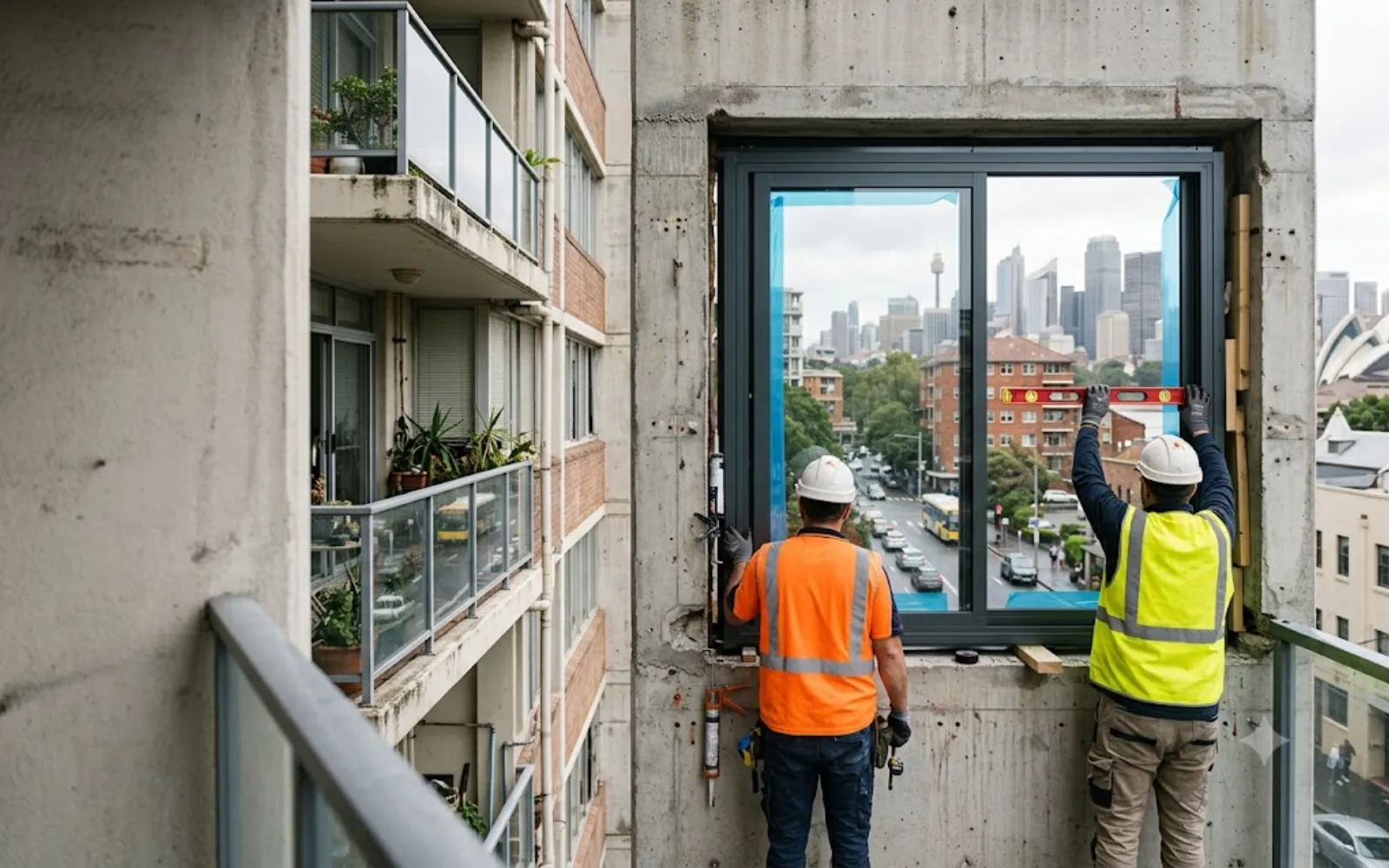
- Install, flash and seal. New units are set to line and level, flashed to shed water outward, and perimeter-sealed to deliver both the weather seal and the acoustic seal the upgrade depends on — acoustic performance is lost if the perimeter leaks air.
- Verify and hand over. Installation and operation are checked, perimeters water-tested, and compliance and product documentation provided for the building's records.
Frequently Asked Questions
What's the difference between thermal and acoustic glazing — do we need both?
They solve different problems, though they often overlap. Thermally broken frames and double glazing reduce heat transfer and condensation; acoustic glazing (typically laminated glass, sometimes with differing pane thicknesses) reduces noise. Many upgrade packages deliver both, but the exact specification depends on your priority. On a quiet but cold elevation, thermal performance leads; on a busy road, acoustic performance leads. We specify to the problem rather than selling a one-size package.
Will upgraded windows actually reduce traffic or aircraft noise noticeably?
Yes, when specified and sealed correctly. Acoustic glazing with the right glass build can materially cut perceived external noise. The critical detail is the perimeter seal — acoustic performance collapses if air leaks around the frame — which is why we treat sealing as part of the acoustic specification, not an afterthought. Realistic expectations matter: we can substantially reduce noise, not eliminate it entirely.
Do thermal upgrades help with condensation and mould on window reveals?
Very often, yes. Condensation forms when warm internal air meets a cold surface — and an un-broken aluminium frame is one of the coldest surfaces in a room. Thermally broken frames and double glazing raise the internal surface temperature of the window, which reduces the condensation that drives mould on reveals and sills. Ventilation and internal humidity also play a part, so we'll flag where those are contributing.
What compliance requirements apply to upgraded windows?
Any window replacement must meet AS 2047 for weather and structural performance against the building's wind classification, use glazing compliant with AS 1288 for safety, and satisfy the National Construction Code, including its energy-efficiency provisions. Thermal and acoustic upgrades are delivered within — not around — these requirements, and we provide the supporting documentation.
Can the owners corporation fund window upgrades, and can individual owners upgrade their own?
Where windows are common property, upgrading them is generally an owners corporation matter funded through the capital works fund under the NSW Strata Schemes Management Act 2015, and building-wide upgrades usually require a general meeting resolution. Individual owners wanting to upgrade their own windows typically need owners corporation approval because the works affect common property and the building's external appearance. We can provide documentation to support either path.
Related Services