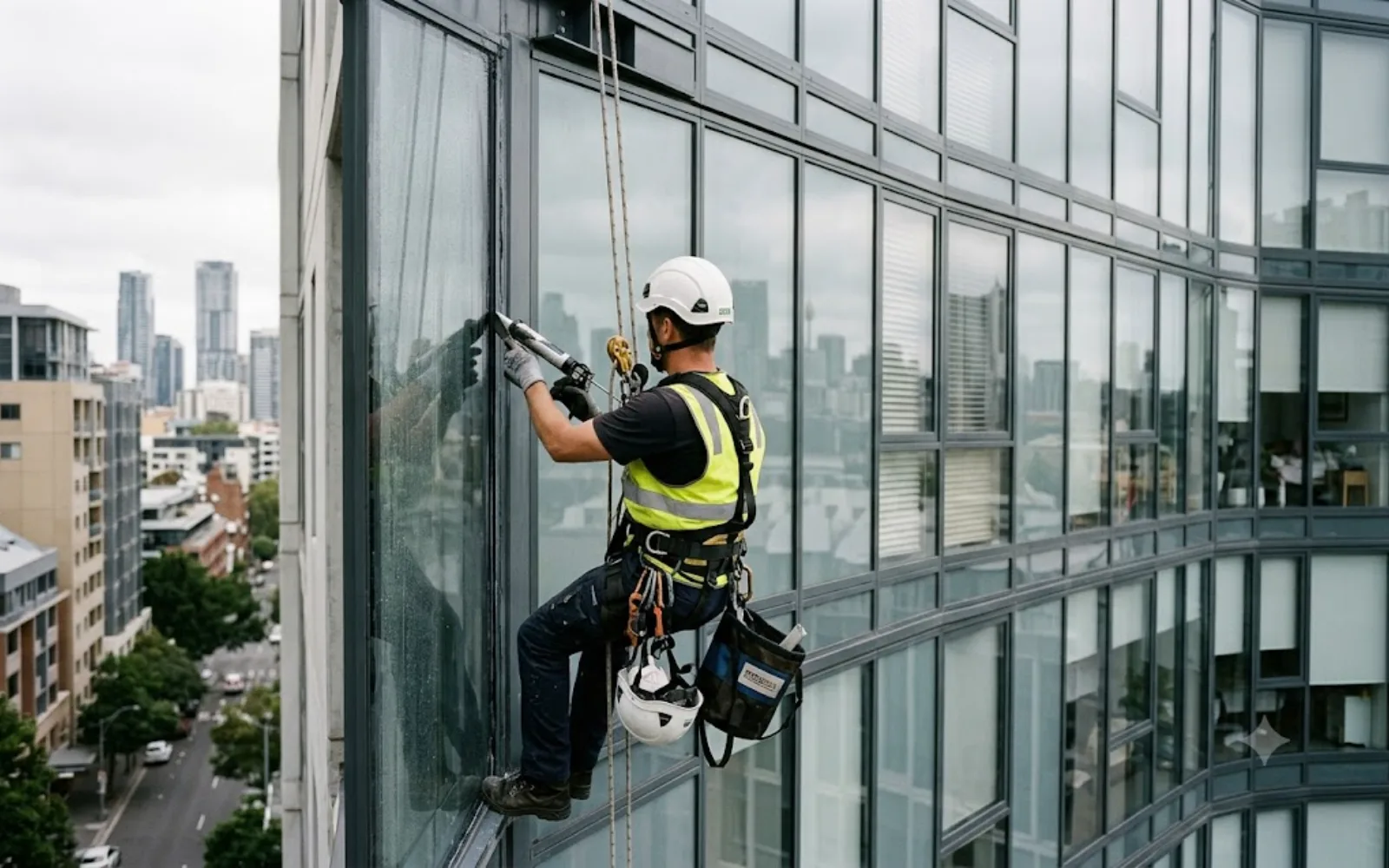
A curtain wall is a facade that carries no floor load — a skin of glazing and framing hung off the structure to keep weather out. Its watertightness depends on a chain of components working together: perimeter and joint sealants, glazing gaskets, pressure plates, and the internal drainage paths that are designed to collect and discharge any water that gets past the outer line. When links in that chain age or were poorly installed, the system starts to leak, and the entry point is rarely where the water appears inside.
Our curtain wall remediation service targets those failing components rather than the whole facade. Full curtain-wall replacement is a major undertaking; in the great majority of cases the framing is sound and the leaks are coming from perished seals, failed gaskets, blocked or defeated drainage, or defective junctions that can be remediated in place.
We work the system methodically — diagnose where the chain has broken, remediate those specific failures, and verify the result under test — so the facade is watertight again without the cost and disruption of stripping and re-cladding.
How We Remediate Curtain Wall
- System assessment. We review the curtain-wall type and its detailing, inspect seals, gaskets, pressure plates and drainage, and map reported leaks against the facade to locate the failing zones.
- Diagnostic water testing. Controlled water testing to the principles of AS/NZS 4284 is applied to isolate exactly which joints, gaskets or drainage paths are letting water through, rather than assuming.
- Clear and restore drainage. Weep paths and internal gutters that are blocked or defeated are cleared and restored so the system can once again discharge incidental water as intended.
- Renew seals and gaskets. Perished perimeter and joint sealant is cut out and replaced with compatible high-performance sealant, and failed glazing gaskets are renewed to reseat the glass.
- Repair junctions and fixings. Defective pressure plates, cover caps and junctions with adjacent facade elements are refixed and resealed to close off leak paths.
- Retest and document. Remediated areas are retested to confirm watertightness, with results and photographs recorded in a completion report for the owners corporation.
Frequently Asked Questions
Does a leaking curtain wall mean the whole facade has to be replaced?
Almost never. Curtain-wall leaks overwhelmingly come from ageing seals, failed gaskets, blocked drainage or defective junctions — all of which can be remediated in place while the framing stays exactly where it is. Full replacement is reserved for cases of genuine structural or systemic failure. Our assessment confirms which components are actually at fault so the scope stays proportionate.
Why does water appear on a different floor from where it's getting in?
Because a curtain wall is a drained system with internal cavities and paths. Water that enters at a failed gasket or junction travels within the system before it finds a way out into the building, which can be a floor or two below the entry point. This is exactly why guesswork fails and why we water-test to isolate the true source before remediating.
What is a drained-and-ventilated curtain wall, and why does drainage matter?
Most modern curtain walls are designed on the principle that some water will get past the outer seal, so they include internal gutters and weep paths to collect it and drain it back out. When those paths are blocked by debris, sealed over during earlier repairs, or were never formed correctly, the system loses its safety net and water is pushed inside instead. Restoring drainage is often as important as renewing the seals themselves.
Is curtain-wall remediation an owners corporation responsibility?
Yes — a curtain wall is part of the common-property building envelope, so its remediation falls to the owners corporation under the NSW Strata Schemes Management Act 2015. Depending on scale, the works are typically funded from the capital works fund and may require a general meeting resolution. We provide documented diagnosis, scope and costings formatted for committee decision-making and capital works planning.
How long does curtain-wall remediation take and how disruptive is it?
It depends on the extent of failure, but component remediation is far quicker and less disruptive than replacement. Work is carried out from facade access equipment outside the building, windows and glazing stay in place, and we coordinate access zones with the building manager so residents are only affected in defined, notified periods.
Related Services